Runway
Rick Owens SS27 finds lightness inside a monumental world
Stone brings industrial materials, ceremonial lines and airborne volume into a collection whose drama depends on more than darkness.
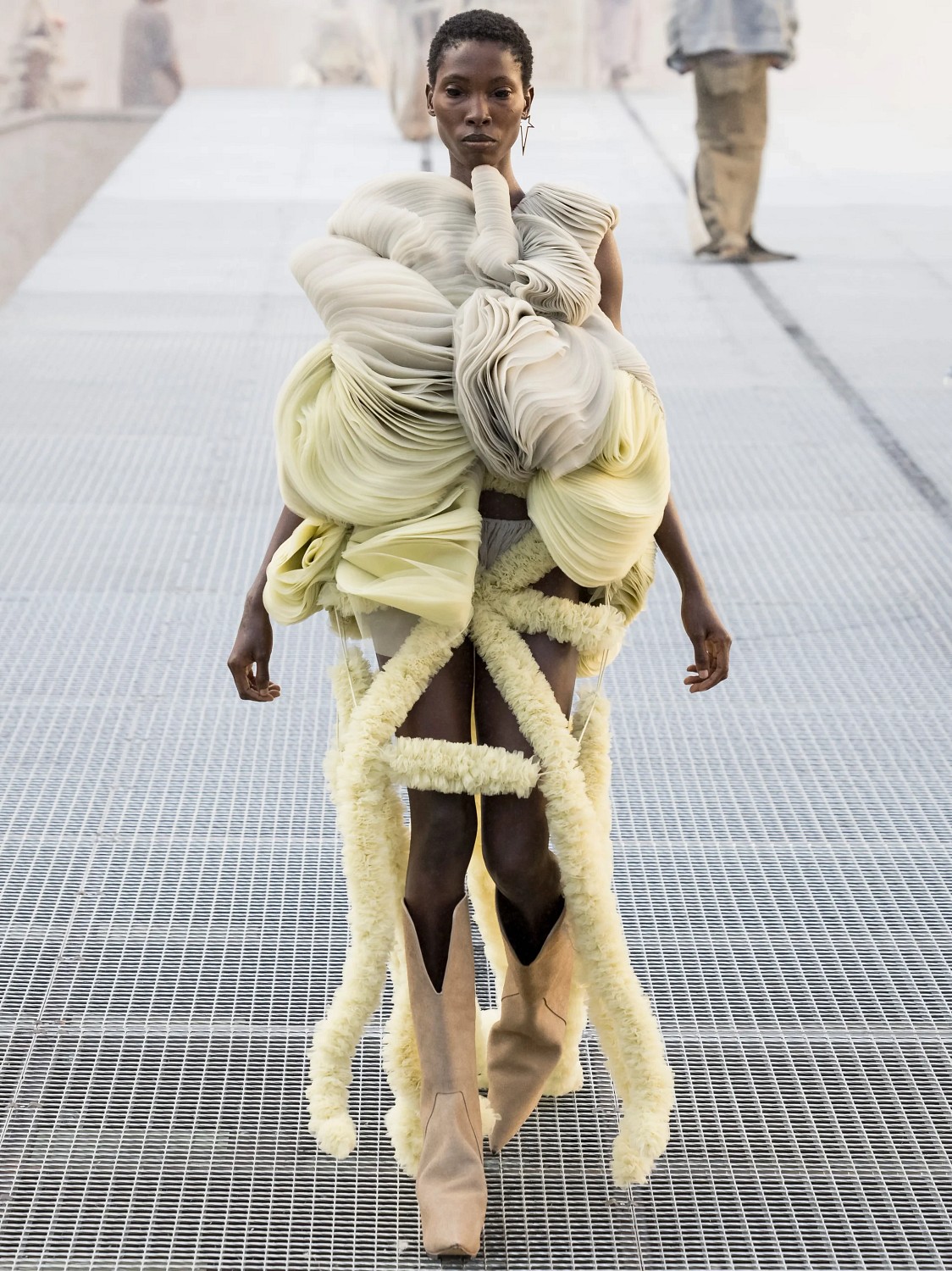
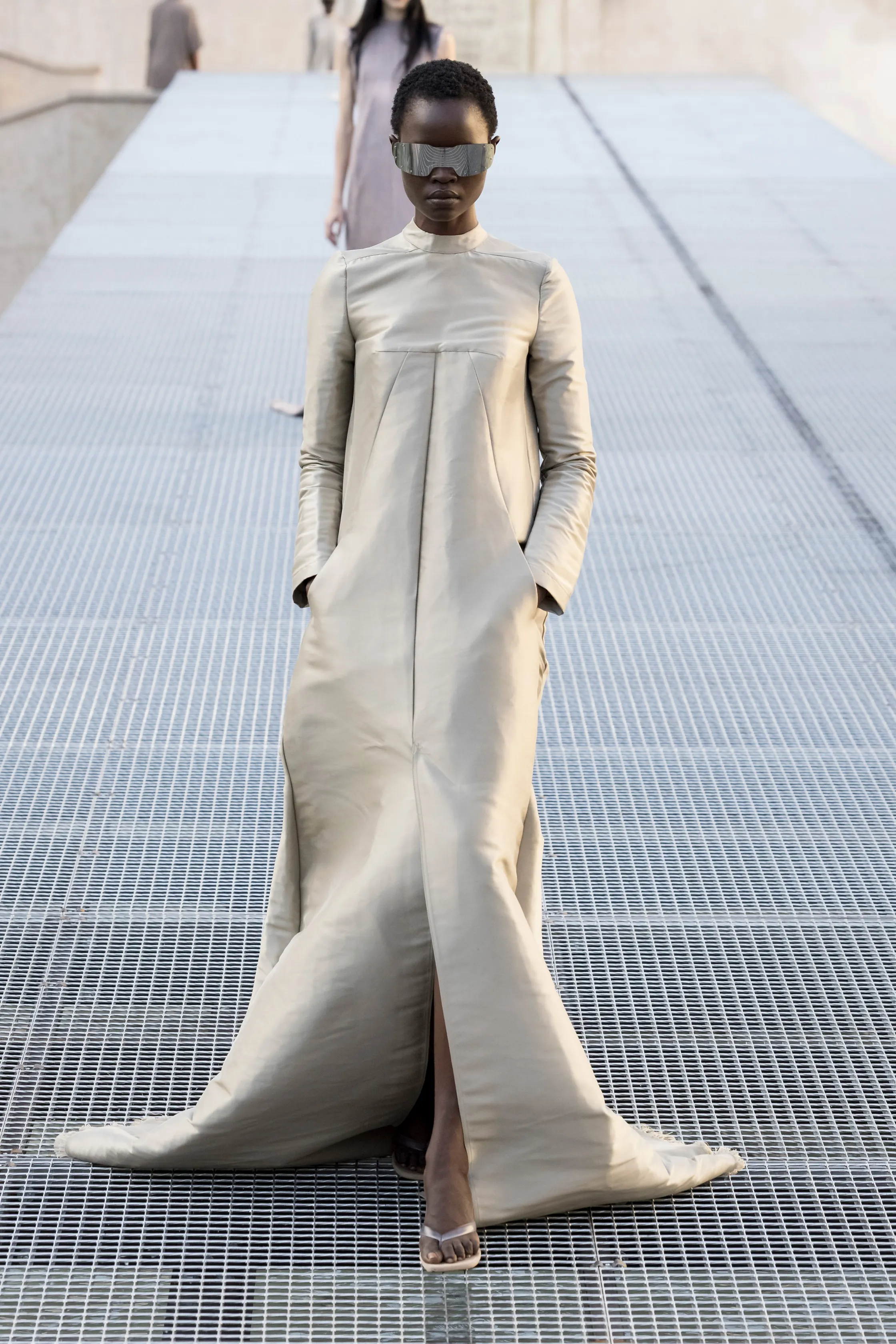
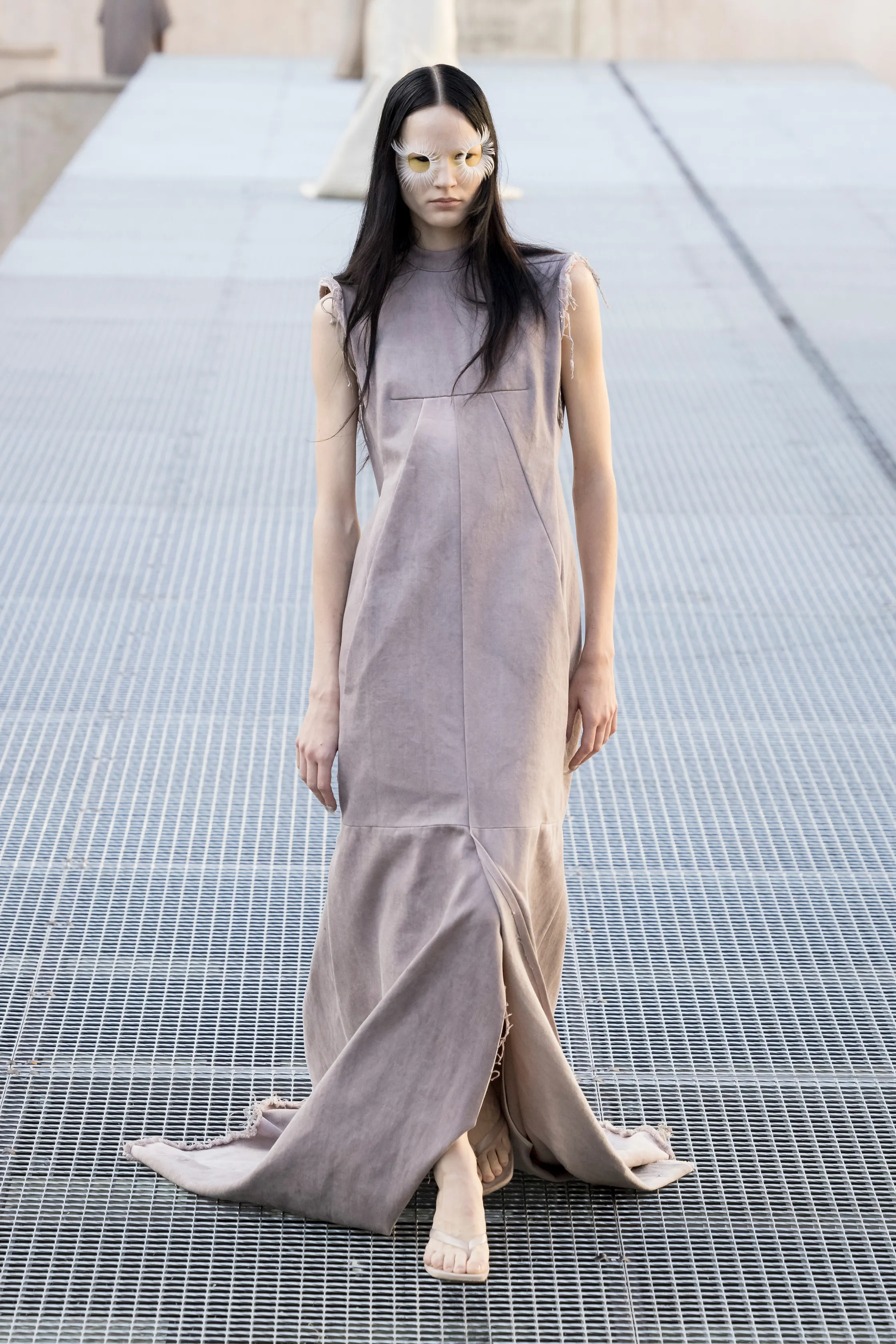
Rick Owens’s Spring/Summer 2027 womenswear collection, Stone, made the body’s approach part of the event. On 1 October 2026, models descended a long ramp above the pool at the Palais de Tokyo, with fountains rising beside them. The clothes met that monumental setting with ceremonial lines, industrially derived materials and surprising lightness. Contemporary accounts describe a collection that preserved Owens’s singular world while changing its emotional temperature.
For StraitsG’s Singapore audience, this is a useful reminder that a designer’s identity need not depend on repeating one mood. Owens is often understood through darkness, severe proportions and an alternative image of the body. Stone makes those associations less complete. Airborne fabric and more luminous effects can exist within the same world without becoming an unrelated soft collection. The design interest lies in how the familiar framework absorbs those changes.
The long approach gives clothing time
The ramp and water setting extended the visual encounter with each model. A garment could be understood as an approaching shape before its surface and construction became clearer. This choreography made time part of the collection’s communication. The reader is invited to think about how clothing reveals itself progressively rather than as a single front-facing image.
Our interpretation is that Owens’s spectacle works most convincingly when it helps the clothes register. Monumentality can overwhelm a collection, making the setting more memorable than the objects. Here, the long approach establishes a scale against which the garments’ volume and motion can be read. It is still a designed performance, not evidence of everyday use. Yet it offers a useful way of looking: first the silhouette, then the movement, then the material that produces the effect.
## Industrial matter acquires ceremony
Reports identify double-duchesse material made from upcycled industrial webbing in long robes, alongside other substantial and more delicate fabrications. This brings an unexpected origin into clothing with a ceremonial presence. The material narrative is specific, but it should not be extended into an unsupported claim about the whole collection’s environmental impact.
The design significance lies in transformation. A material associated with securing or carrying objects enters a garment that frames a person. Its industrial origin can remain part of the story while the finished object acquires another meaning. This is a strong reminder that the prestige of a starting material and the value of a design are not the same. A convincing transformation makes the material do something expressive, rather than relying on its unusual provenance as sufficient explanation.
Volume becomes less heavy
Among the reported contrasts were substantial column-like forms and a parachute-silk trapeze gown. Owens also introduced cropped jackets and flared denim into the daywear proposition. The range matters because it prevents monumentality from becoming one fixed degree of weight or severity. A large silhouette can appear airborne; a smaller garment can still carry the designer’s strong sense of line.
For a wearer, that distinction opens another route into the world. Someone may respond to a dramatic volume but prefer a different material or scale. Another person may take the proportional relationship into more everyday clothes. The useful design principle is how the silhouette treats the space around the body. It can protect, extend or release it. Those effects can be studied without requiring the person to reproduce the entire runway image.
Otherness is also a matter of construction
The collection’s final experiments included tulle and elastic structures, described in reviews as a distinctly Owens interpretation of intimate clothing. Their interest lies in how far they move from the usual image of lingerie while retaining a relationship to the exposed body. Familiar seasonal categories become unrecognisable inside his design system.
This is where a strongly developed aesthetic can do more than offer a signature. It can reconsider a shared fashion subject on its own terms. The result does not need to become widely wearable to be valuable as a design proposition. Still, critical attention should remain specific: how is the structure supported, what kind of motion does it permit, and how does it frame the person? Originality becomes more meaningful when its physical logic can be examined.
A Singapore interpretation at a different scale
Our local styling reading would begin with proportion and the relation between a firm line and a softer surface. A long, clean lower half can sit beneath a compact top. A flowing garment may gain strength from a controlled shoulder or neckline. One unusual silhouette can be enough to suggest the collection’s independence without requiring a complete monumental outfit.
Practical selection should take the individual garment seriously. Large volume can offer freedom or become difficult to manage, depending on construction. A lightweight surface may still have warm layers beneath it. Singapore dressing also asks how a piece behaves while seated, travelling and moving through shared spaces. These are considerations for an editorial adaptation, not a claim that the runway garments were made for tropical conditions. The owner’s life should determine the scale at which the design idea becomes useful.
The monumental and the intimate are not necessarily opposites in an outfit. A large shape can give the person inside it a sense of privacy, while a small exposed detail can create a closer emotional register. Their relationship depends on where the design directs attention. This makes Owens’s work useful to study even for readers who prefer a smaller scale of dressing. A strong outline can coexist with a softer point of contact, and an unusual volume can be balanced by a familiar gesture. The relevant idea is the distribution of force, rather than an obligation to look imposing. A person can decide which part of the silhouette should command space and which should remain responsive. That choice allows the collection’s dramatic language to become a source of proportion and feeling without requiring its complete theatrical environment to be recreated.
A designer world that can change
The strength of a singular visual language is that a change can be measured against something recognisable. Owens does not need to abandon his vocabulary for lightness to become meaningful. The viewer notices it precisely because the surrounding system remains clear. A softer or more airborne piece introduces another emotional register into a world that already has a defined architecture.
Rick Owens SS27 makes that development the collection’s most interesting subject. Stone is monumental, but its monumentality is not uniformly heavy. It offers ceremony, industrial transformation and a more open relationship with air and movement. For StraitsG readers, the value lies both in the specific design experiments and in the larger possibility they demonstrate: a wardrobe with a strong personal identity can continue to evolve, allowing new sensations to enter without surrendering the qualities that made it recognisable in the first place.
Gallery
3 images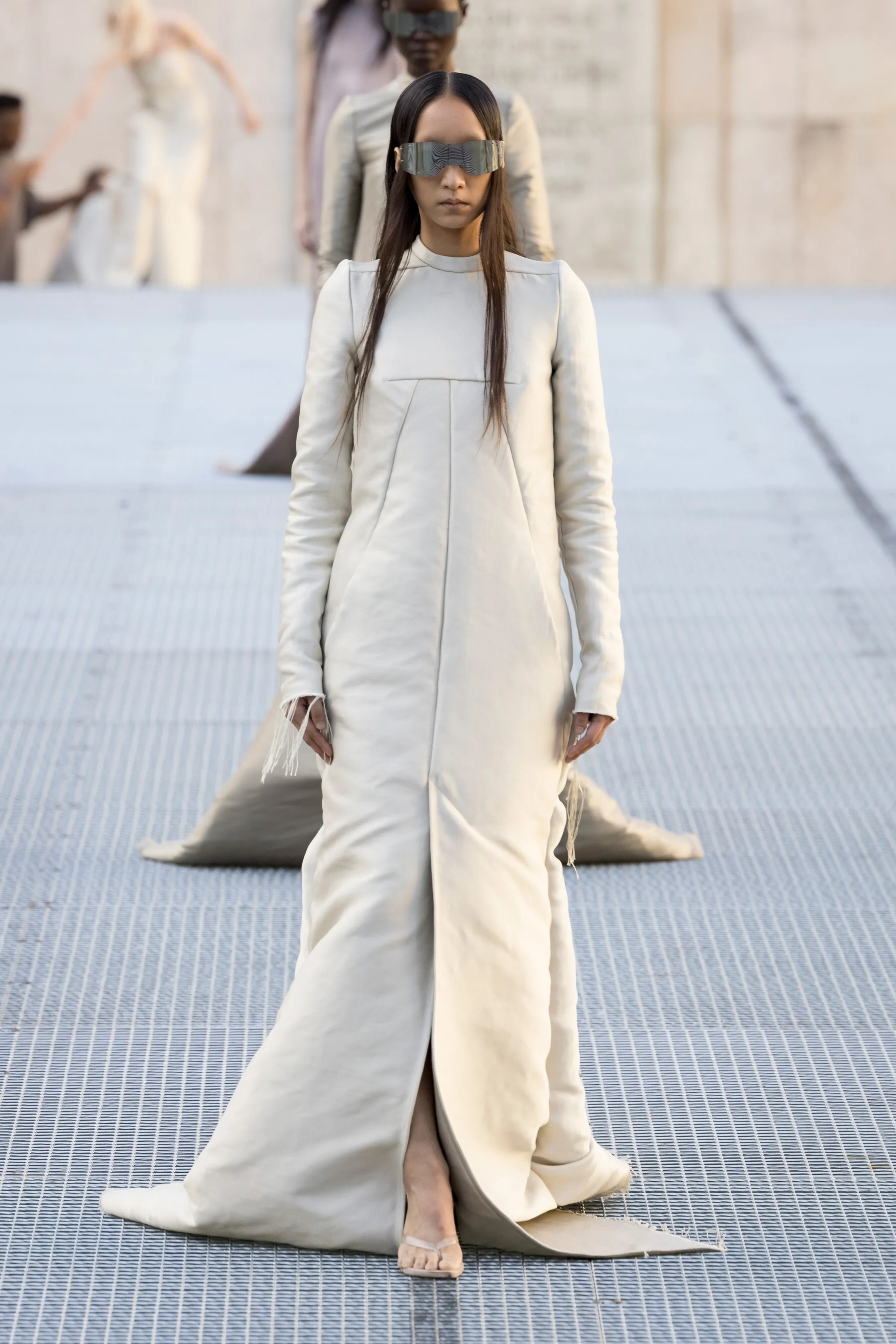
About the author
Anaelle Lise
Fashion editor and writer covering design, image-making and the creative networks connecting Southeast Asia.