Runway
Carven SS27 makes room for an unfinished gesture
Kai Nesselrath’s debut uses lightness, draping and the idea of a woman at work to introduce a more intimate form of polish.
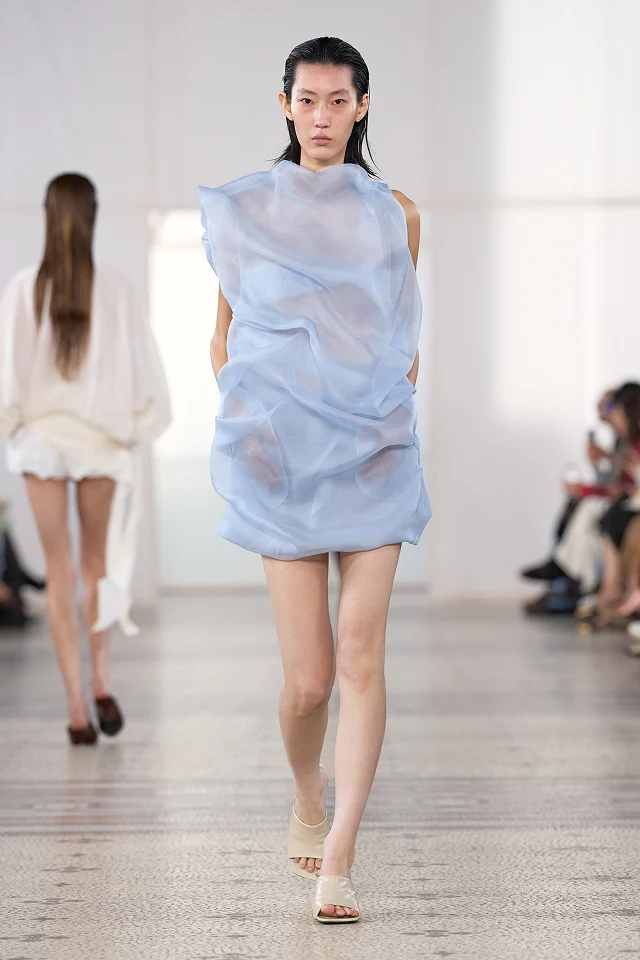
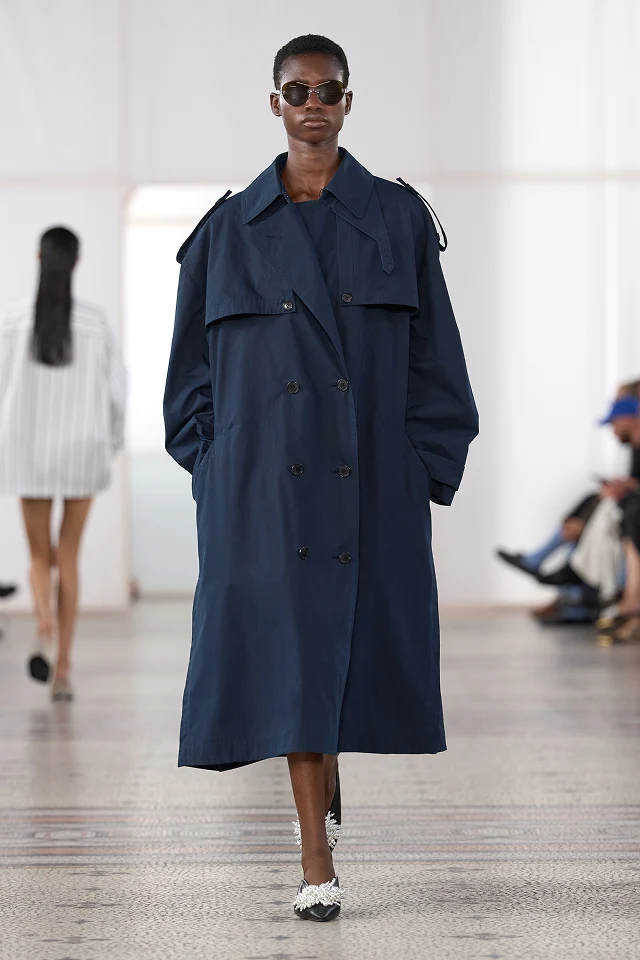
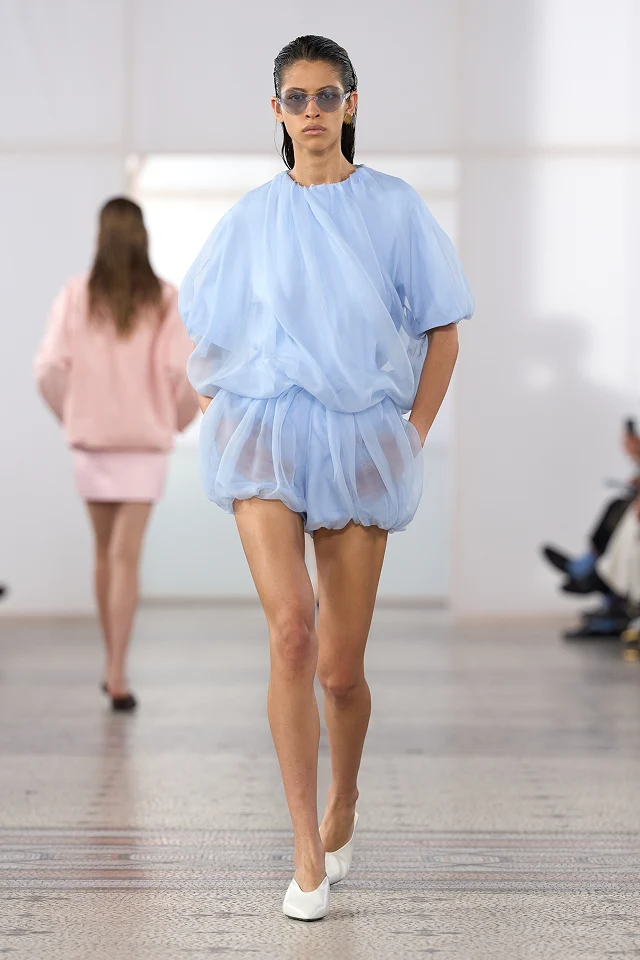
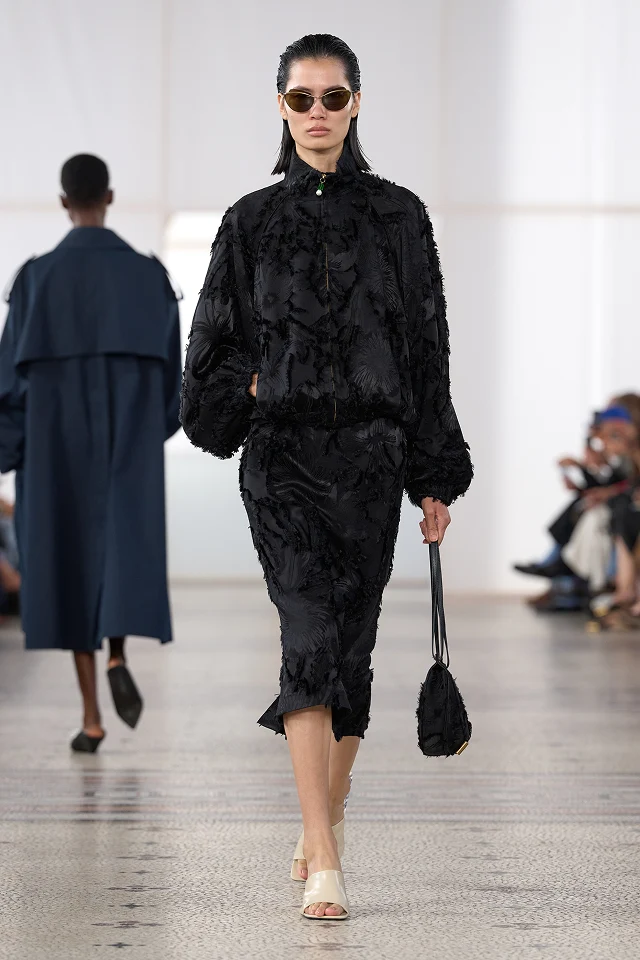
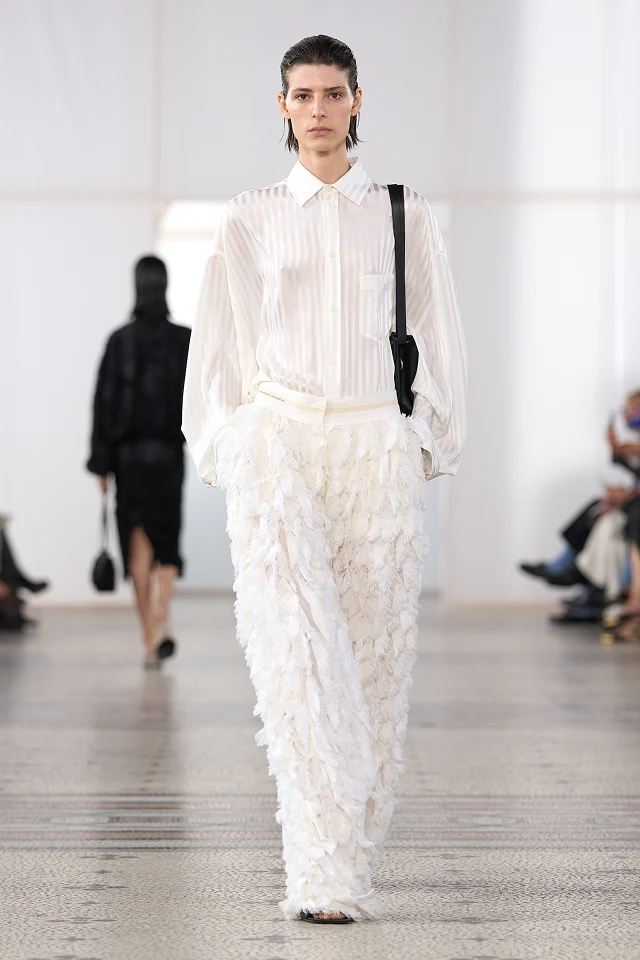
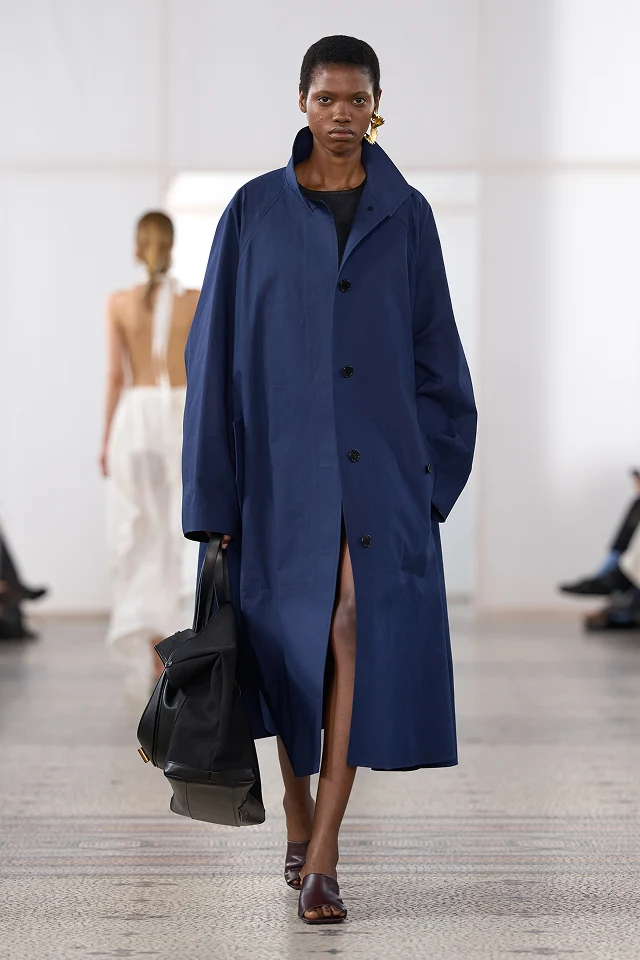
Carven’s Spring/Summer 2027 collection introduced Kai Nesselrath with a deliberately quiet proposition. At his 1 October 2026 debut in Paris, the designer drew on the image of sheets folding around the body and the energy of a woman who makes and does things. Contemporary reports identify draped dresses, pale tones, workwear references and an intentionally unfinished quality. Rather than depend on a dramatic break, the collection offered a set of gestures through which a new direction could begin to emerge.
For StraitsG’s Singapore readership, the debut is interesting because it treats ease as a design subject. A polished wardrobe does not have to look permanently arranged. It can allow a sense of movement, interruption and the wearer’s active life. The challenge is to make that looseness feel considered. Nesselrath’s collection invites a discussion about clothes that appear approachable while still carrying the precision and character needed to distinguish them from ordinary basics.
The morning sheet becomes a design image
The reported starting idea of bed sheets gives the collection an intimate scale. A sheet changes form through the body and the hand, gathering and folding without needing a fixed silhouette. Translating that quality into a garment introduces a productive difficulty: the clothing must look spontaneous while remaining secure enough to wear.
Our interpretation is that this is a form of controlled informality. The wearer sees a suggestion of an unplanned gesture, but the design has to resolve where that gesture begins and ends. A convincing drape cannot depend on remaining motionless in front of a mirror. It needs to retain its character as the body changes position. This makes tailoring relevant even when the final image looks far removed from a traditional suit or structured coat.
A woman who does things
Nesselrath’s official comments, quoted in reporting on the show, connect the collection to Marie-Louise Carven as a hands-on woman. The work-in-progress quality is tied to action rather than a purely decorative idea of imperfection. That gives the collection’s ease a more concrete foundation: clothing should leave space for the person to continue with their life.
The concept is persuasive when it changes design decisions. An outfit can communicate activity through pockets, proportion or the way a layer is handled, but those signals should also be examined as practical features. A useful-looking garment that restricts movement contradicts its own narrative. The reader can ask whether the clothes allow the energy they describe. This is a stronger test than simply deciding whether the collection appears young, modern or relaxed.
Polish survives in small details
Runway accounts identify pale blue and pink ensembles, extended silhouettes, draped pieces and green used as a recurring visual element. Accessories included gold earrings associated with pencil shavings and pencil-like hair pieces. These details connect the softer clothing image with a more precise, quietly playful register.
The small scale of those interventions is important. A discreet accessory can give a calm outfit specificity without turning it into a themed costume. It can also make the designer’s point of view more legible than a large declaration. The critical question is whether a detail adds something that the clothes need. If its reference is understandable only through explanatory notes, its visual effect still has to be convincing on its own. The object should reward both recognition and simply being worn.
The difference between ease and incompletion
A work-in-progress image can be appealing because it suggests openness. It can also become a convenient explanation for a detail that does not feel resolved. The viewer needs to distinguish the two. An empty loop, loose flap or irregular edge should contribute to a meaningful relationship within the garment rather than rely solely on a narrative to justify its presence.
That is particularly important in a quiet collection. When the overall vocabulary is restrained, a small unresolved decision can carry disproportionate weight. There are fewer distractions. The strongest design creates a sense that the wearer can change the image without feeling responsible for fixing it. A garment may look open-ended while still being complete in its construction. This distinction gives the debut a specific standard against which its softer and more experimental pieces can be assessed.
A Singapore reading of approachable elegance
Our local styling interpretation would focus on a clear, relaxed silhouette with one personal detail. A softly draped dress may need little additional decoration. A calm set of separates can gain character through an unusual earring or a modest colour contrast. The collection’s morning-like ease can be interpreted through the relationship between pieces rather than copied as an exact bed-sheet reference.
Singapore’s everyday conditions make fabric and construction important to that interpretation. Lightness in appearance does not establish breathability, and a draped piece needs to remain comfortable through sitting and movement. Check where it touches the body, whether it requires adjustment and how its closure works. These are practical considerations for choosing clothing. They support the collection’s broader proposition by keeping the wearer’s freedom central to the assessment, rather than treating ease as a look that must be carefully maintained.
Approachability also depends on how much effort a garment asks of its owner. A draped piece may appear easy but require careful adjustment; a more structured one may settle into place immediately. The useful comparison is therefore practical rather than visual. How does the object behave after the first five minutes? Can it be worn with familiar shoes and carried through the intended day? Does it invite several combinations or depend on one exact styling? These questions help distinguish a convincing image of ease from ease as an actual experience. They are especially relevant to a collection that introduces its identity through modest gestures. A quiet garment earns attention through the quality of those small decisions, and its owner should be able to enjoy them without feeling that the apparent spontaneity requires constant work to preserve.
A beginning that leaves space to develop
A quiet debut can be difficult to judge because its strongest qualities may be intended to accumulate. A particular colour relationship, a recurring finish or a way of draping can become more recognisable over time. That does not exempt the first collection from criticism. It means the critique should identify what is visible now and which ideas appear capable of becoming a sustained vocabulary.
Carven SS27 introduces intimacy, movement and an unfinished gesture as possible foundations for Nesselrath’s direction. For StraitsG readers, its most useful takeaway is the possibility of polish that does not appear overly managed. The wardrobe can feel composed while leaving room for the person’s activity and changing needs. The debut becomes most persuasive where that openness is supported by clear making, allowing a garment to look spontaneous without making the wearer responsible for its stability.
Gallery
7 images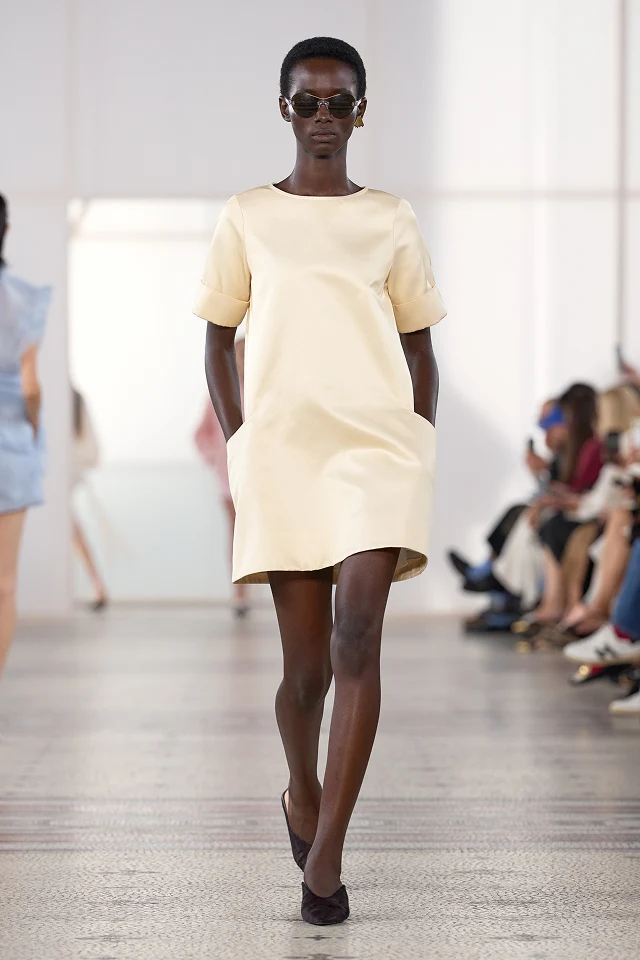

About the author
Nicole Cohen
Fashion editor and writer covering design, image-making and the creative networks connecting Southeast Asia.