Runway
Issey Miyake SS27 makes the space around the body visible
Satoshi Kondo’s Figure of Ma turns fabric, air and motion into a design conversation, with new material experiments extending the house’s research.
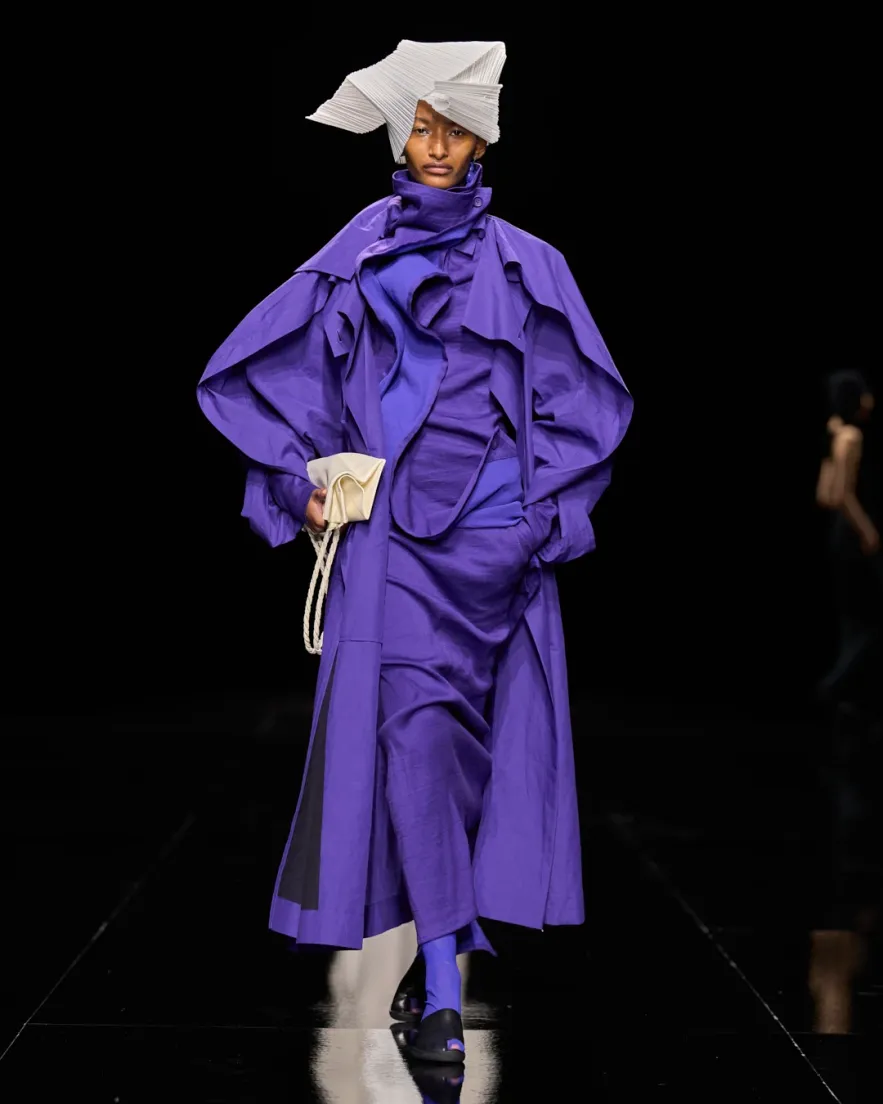
Issey Miyake’s Spring/Summer 2027 collection began with an experience that precedes the garment: people handling a large piece of fabric together. Presented at the Dojo de Paris on 2 October 2026, Satoshi Kondo’s Figure of Ma explored the space between cloth and body. The official account connects this research with freedom, generosity and a collaboration with pianist Koki Nakano. Independent reporting records an opening performance in which dancers made fabric swell and change through their movement.
For StraitsG’s Singapore readership, the collection offers a particularly useful way to discuss clothing. The space around the body is often treated as an absence, measured only by whether a garment is fitted or loose. Here, it becomes an active design condition. A garment’s character can depend on how it holds air, moves away from the skin and responds to a changing posture. The result makes wearing part of the design’s meaning.
Ma becomes a physical question
The collection’s title identifies a Japanese idea of the space between, applied here to the relationship between body and fabric. It should not be reduced to a decorative label for oversized clothing. In this context, the interest is in what happens within that interval: motion, contact, expansion and the changing shape of the garment.
Our interpretation is that this changes the reader’s method of looking. Instead of beginning only with a fixed silhouette, ask how the object behaves when a person moves through it. Does the cloth follow closely? Does it create another outline at a distance? Does the space change as the wearer walks? These questions make the body an active participant. A garment becomes something that happens over time rather than an image completed before anyone puts it on.
Air can be part of the construction
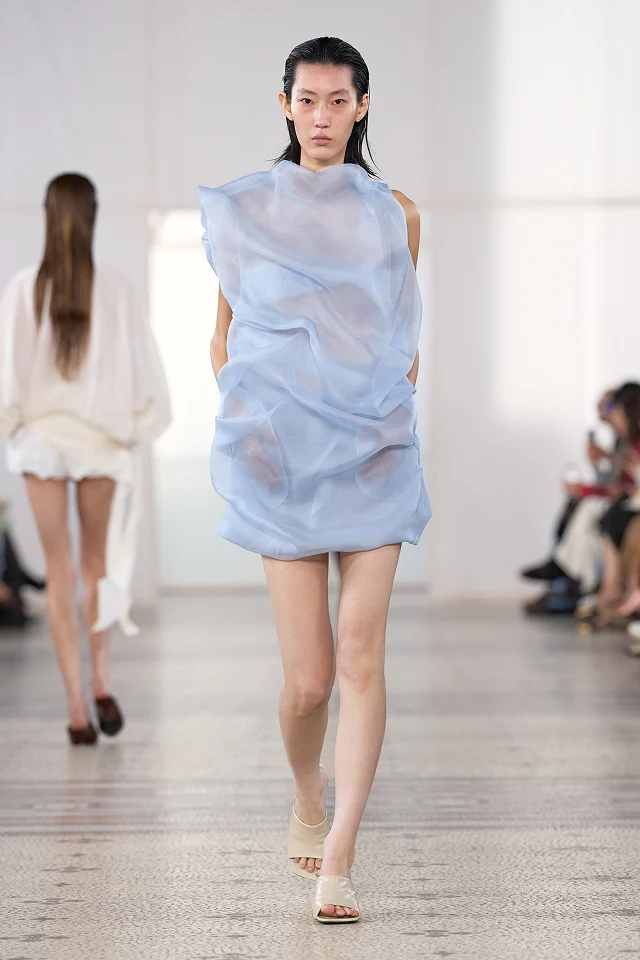
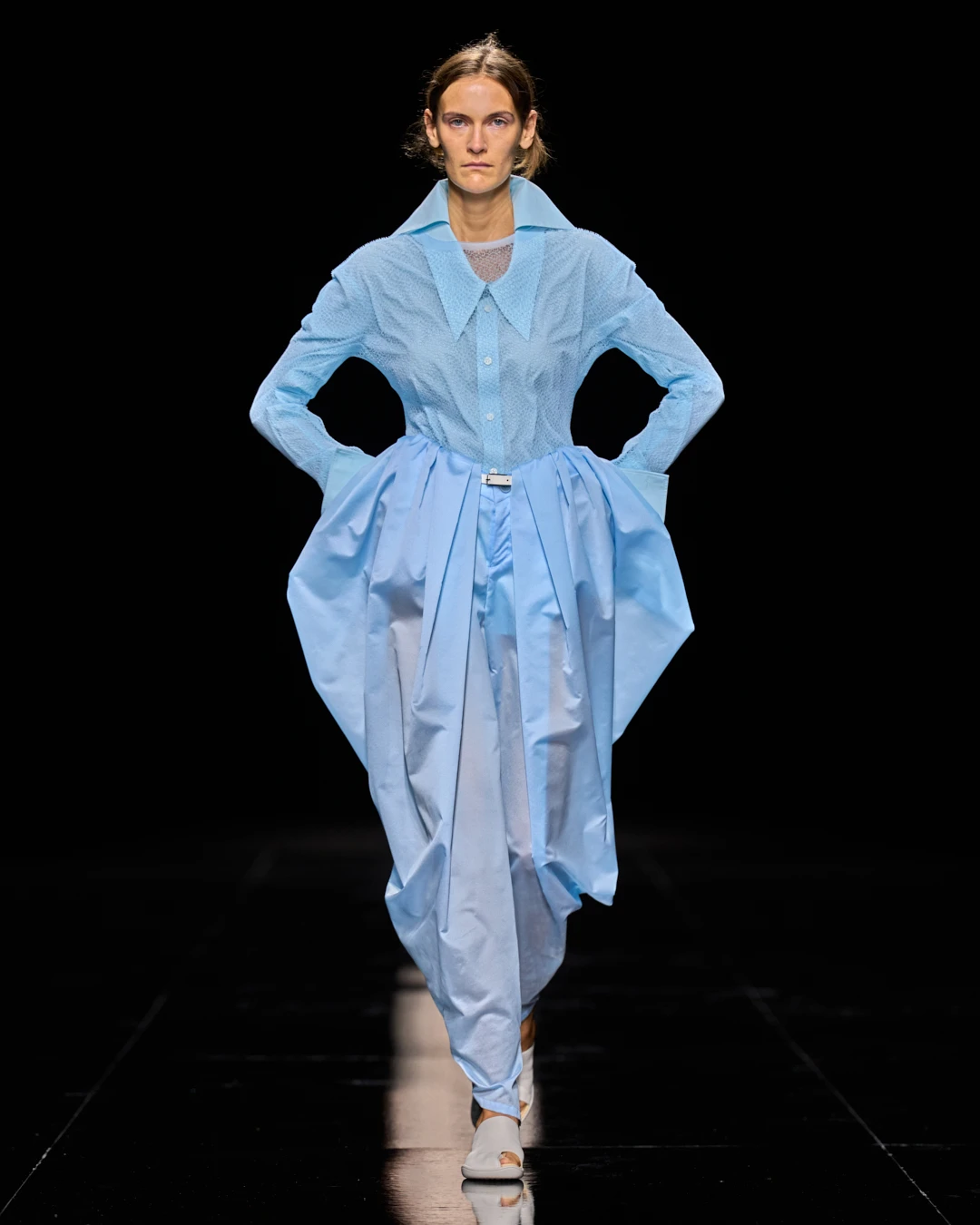
The official collection description identifies Ballooning pieces with a shorter front, longer back and drawstring adjustment, made from fine nylon ripstop. Other series use draping, pleats and sheer surfaces to create different relationships with volume. These are specific methods through which the broader idea becomes clothing rather than remaining a performance concept.
Air is interesting because it allows volume without necessarily requiring a solid support. A garment can appear substantial while containing considerable open space. The effect depends on cut and material behaviour, and it can change with movement. For a viewer, this is another reason not to treat a photograph as a complete account. The outline may be temporary. Its appearance is produced by the encounter between the cloth, the body and the surrounding conditions.
Technology records a gesture
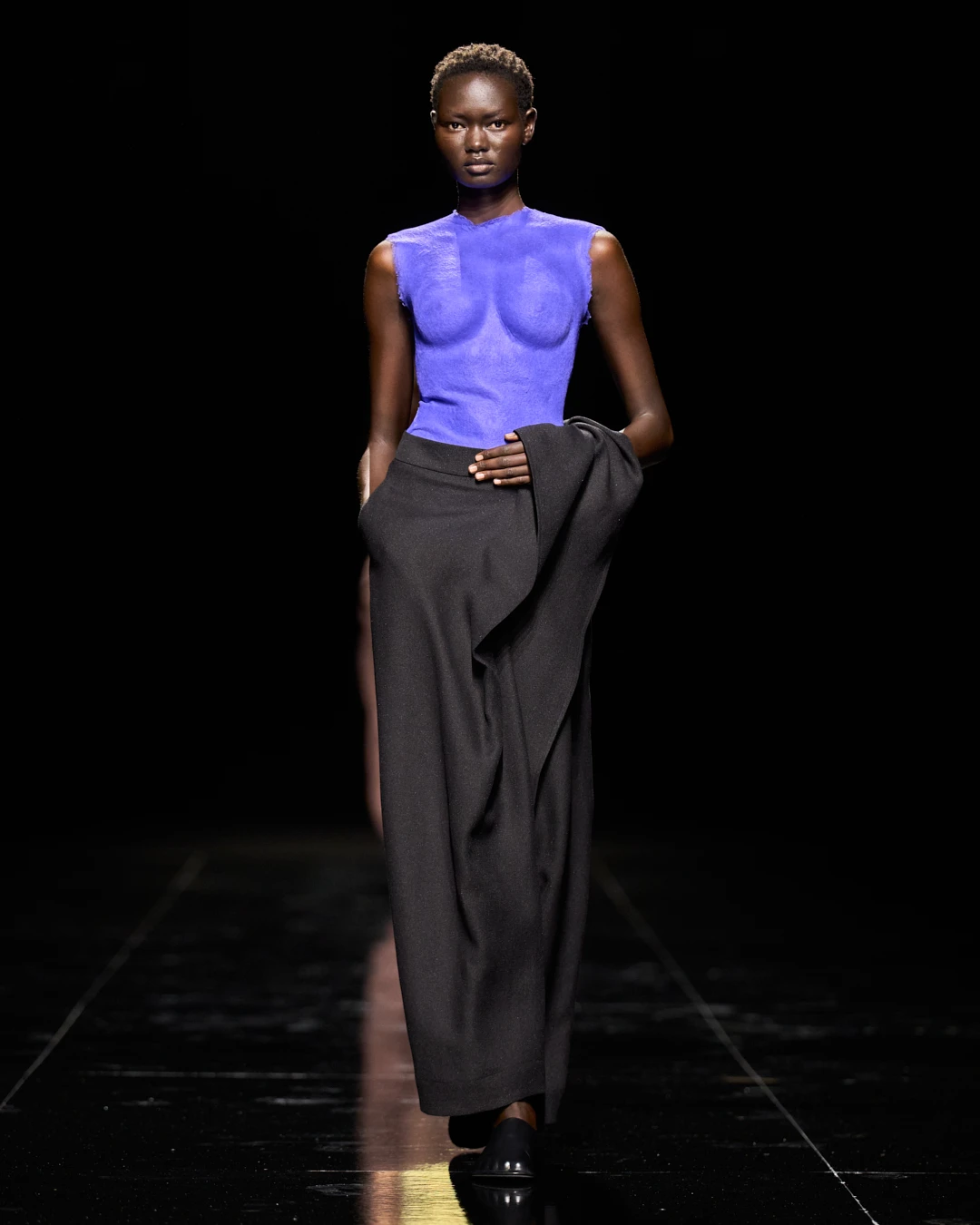
The collection also introduced Cocoon Body through a collaboration with Wacoal. The official explanation identifies three-dimensional moulding technology adapted from intimate apparel, with draped forms captured and translated into a production process. This is a different approach to the body: a shape can preserve the memory of cloth being handled even before a wearer enters it.
The design question is therefore broader than whether technology makes production more efficient. It can record a gesture and carry that gesture into another material form. The resulting object may sit between clothing and an impression of clothing. That ambiguity is worth examining closely. A technical innovation becomes relevant to fashion when it changes what can be expressed or experienced, not simply because the process sounds advanced. The garment still has to establish a meaningful relationship with the person wearing it.
Movement is evidence
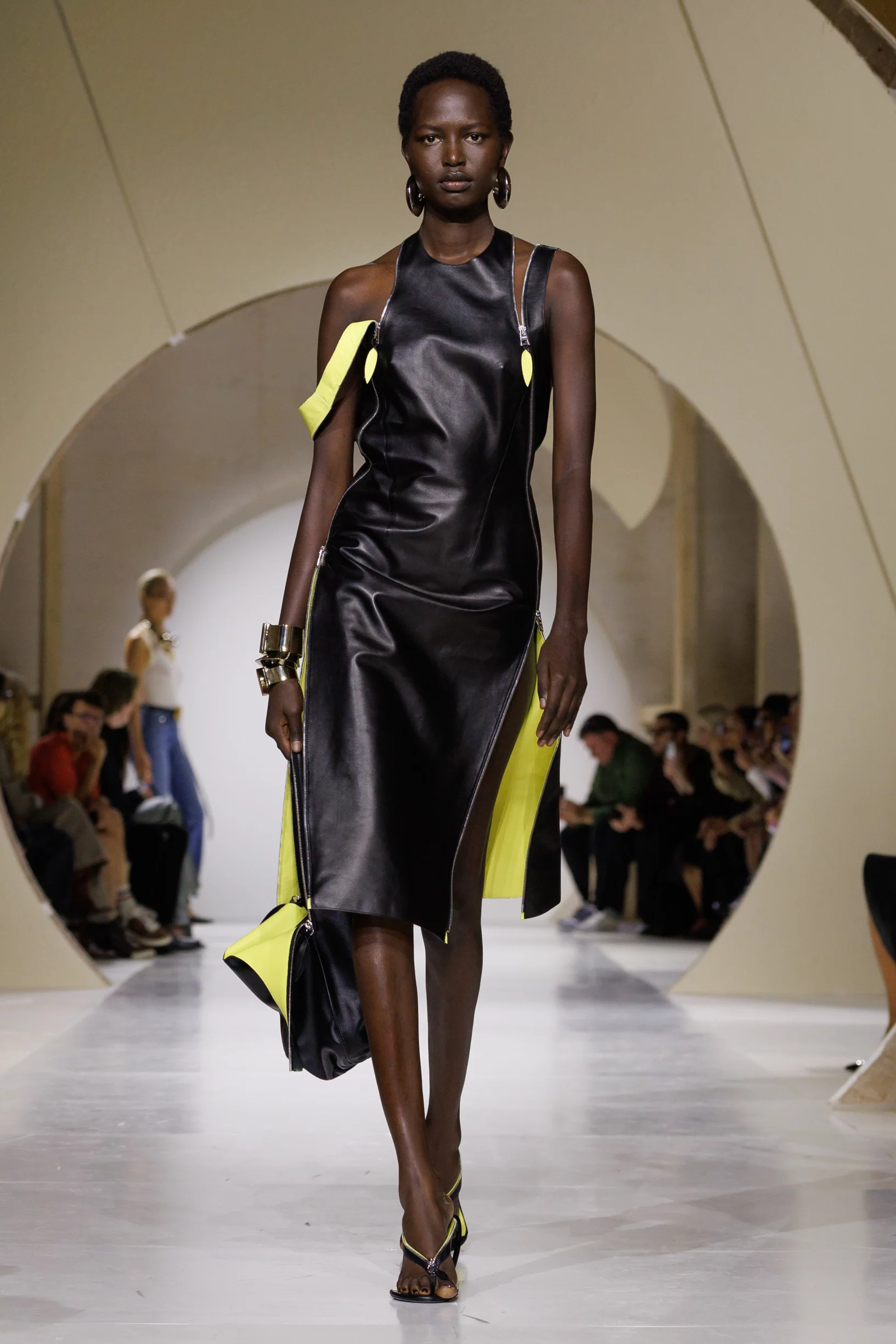
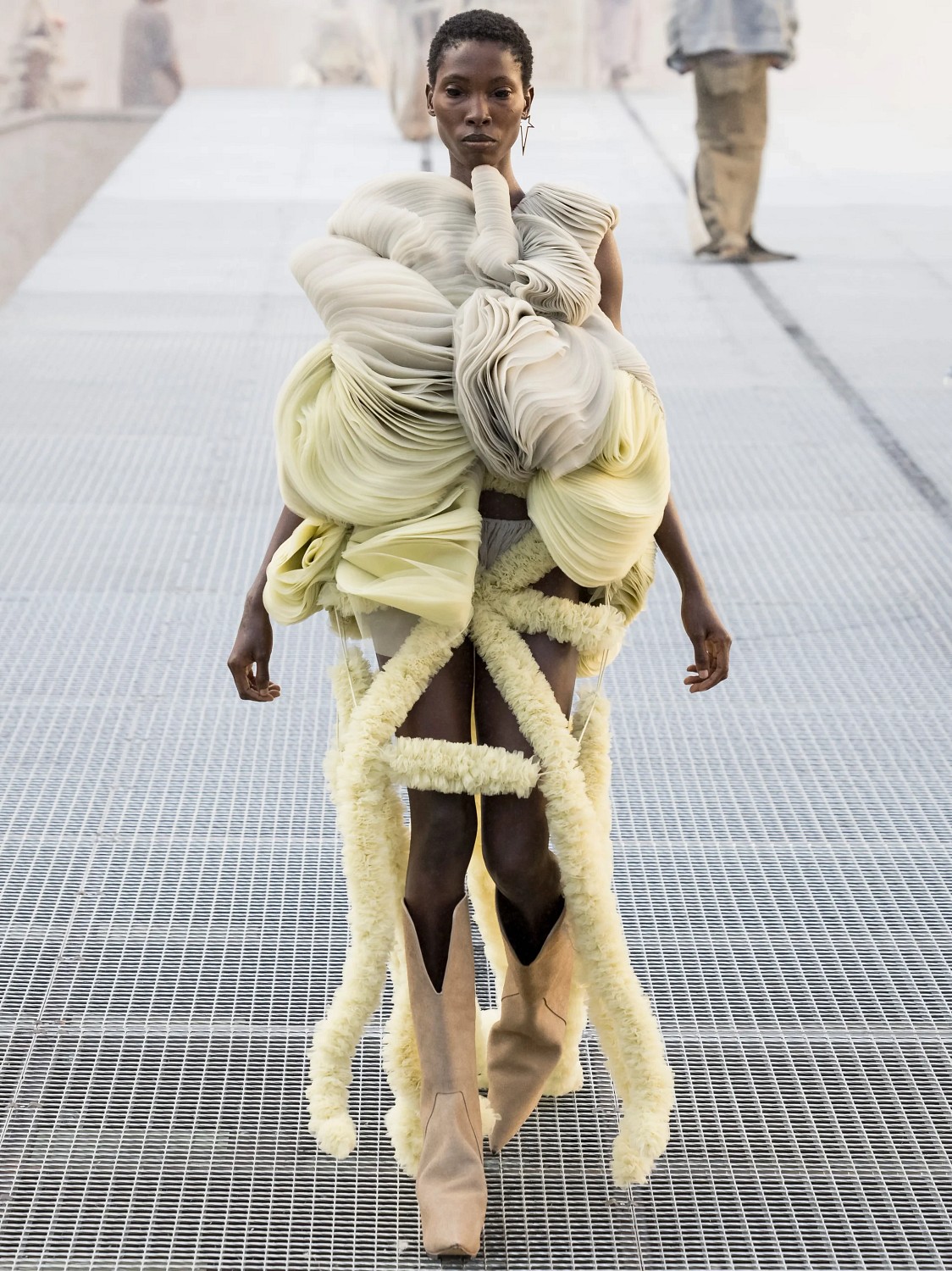
Independent accounts describe billowing silhouettes, fluid pleats, sculptural forms and bright colour. The opening performance makes the collection’s interest in movement explicit, but its value depends on whether the clothes continue that interest afterwards. The dance cannot carry the entire argument on their behalf. [2][3]
This provides a clear critical standard. Look at the garments moving as well as standing. Consider whether their volume changes purposefully or merely becomes unstable. Ask whether the wearer appears free to move naturally or must maintain a particular posture for the design to work. These are not questions of conventional practicality alone. They are questions about whether the physical result supports the collection’s stated investigation. A collection concerned with freedom should make its relationship with the body perceptible.
A Singapore reading of the space between
Our local interpretation would begin with ease and adjustability. Clothes that leave room around the body can offer another way to think about summer dressing, especially when the shape can be changed through gathering or draping. One expressive volume may be enough within an otherwise straightforward outfit. A calmer companion can make the garment’s motion more visible rather than competing with it.
The distinction between visual airiness and thermal comfort remains important. A sheer or open-looking garment may still have a composition that affects how it feels. Fabric, layering and the points where the piece contacts the body need individual assessment. Singapore readers can take the collection’s spatial idea into the fitting room by checking walking, reaching and sitting. The useful aim is to find an object that responds well to the owner’s movement, rather than simply choose the most dramatic silhouette.
The collection also changes how fit can be discussed. A garment may have an intentional distance from the body rather than simply being the wrong size. The wearer needs to understand where that distance belongs and which points should still feel secure. A floating volume may be balanced by a stable neckline or closure, while an adjustable edge can help the object accommodate different postures. This is a more specific conversation than deciding whether loose clothes are universally comfortable. Ease has to be designed and assessed in relation to the individual body. The idea of ma offers a vocabulary for that assessment, directing attention towards the space that allows movement and towards the places where the garment supports itself. Fit becomes a relationship between contact and release, with both needed for an expressive piece to feel convincing in use.
Research that remains connected to sensation
Fashion technology can become remote when it is discussed only through process. Figure of Ma keeps an emotional and physical starting point: the pleasure of handling fabric and discovering what it can do. That connection gives the technical work a clearer purpose. Research extends an experience instead of replacing it with an abstract demonstration.
Issey Miyake SS27 is most persuasive where that relationship remains visible. Kondo’s collection treats the interval between body and garment as a source of form, allowing air, motion and material experiments to enter the same conversation. For StraitsG readers, it offers a precise and generous way to understand design. A garment does not have to hold the body tightly to describe it. It can make room around it, and that room can become the place where individuality, comfort and visual expression begin to develop.
Gallery
3 images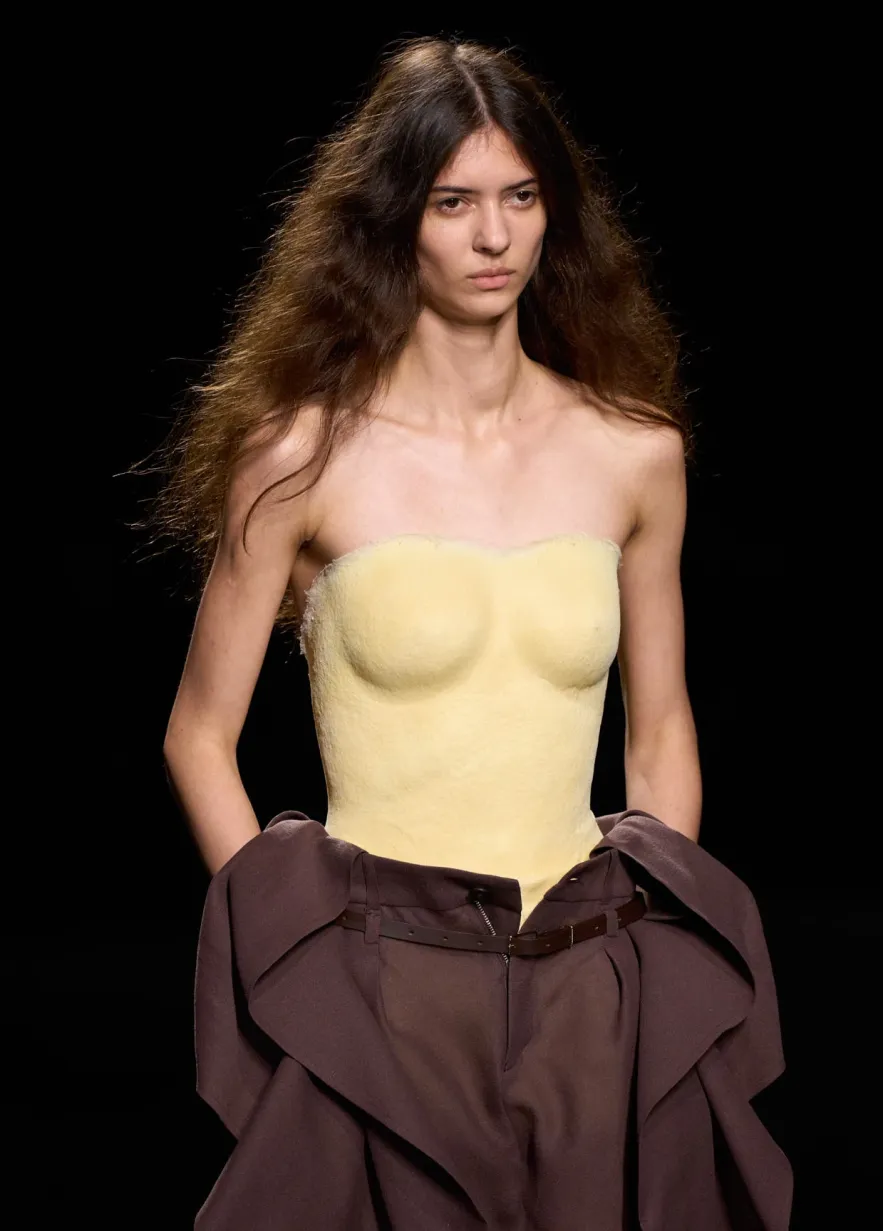
About the author
Nicole Cohen
Fashion editor and writer covering design, image-making and the creative networks connecting Southeast Asia.