Runway
Loewe SS27 brings Spanish craft into an American wardrobe
Jack McCollough and Lazaro Hernandez reshape preppy staples through leatherwork, resin and a more direct proposition for daily dressing.
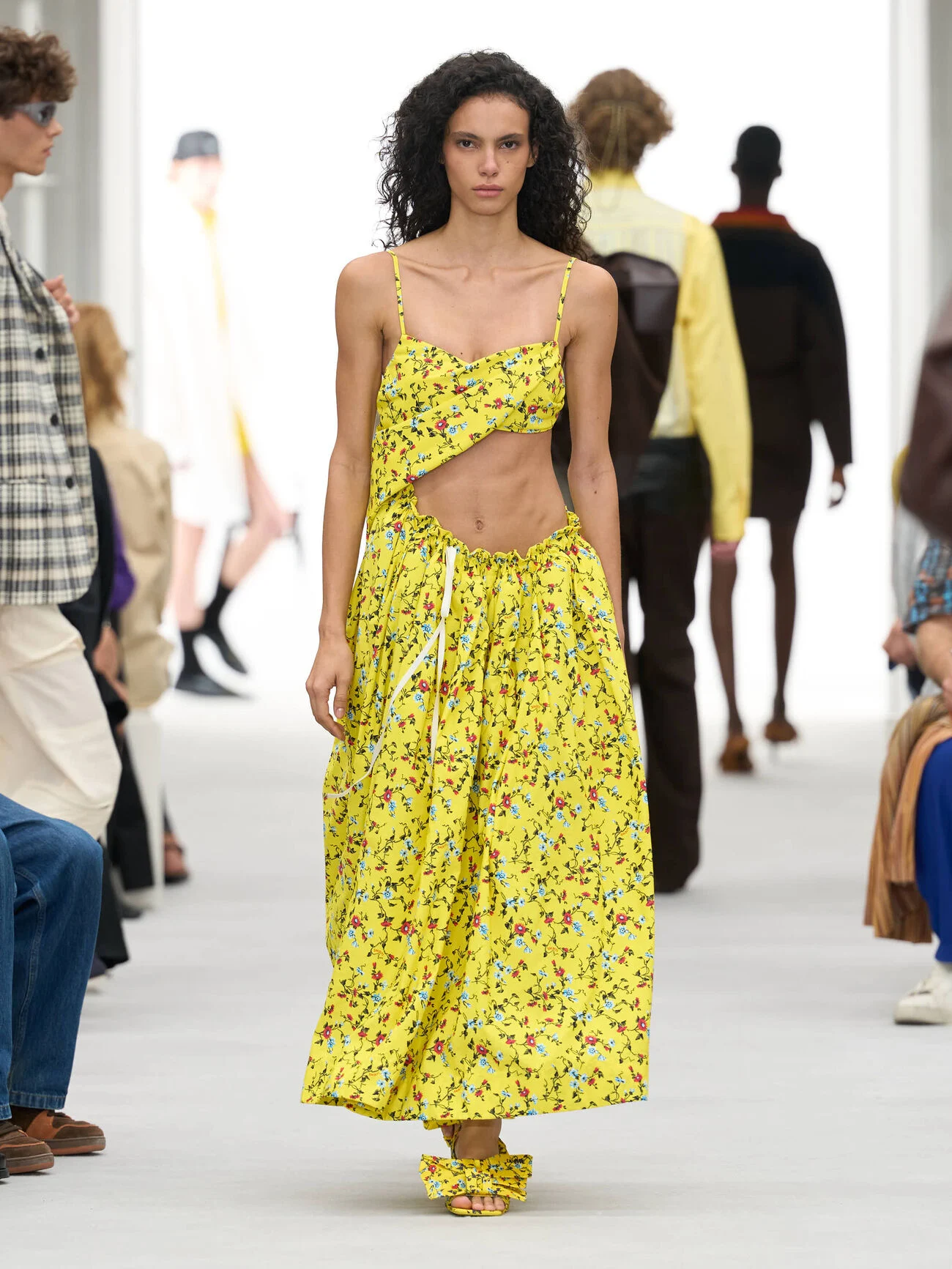
Loewe’s Spring/Summer 2027 collection asked how a new house language could become a wardrobe. At the 2 October 2026 show inside the Château de Vincennes, Jack McCollough and Lazaro Hernandez brought American sportswear associations into contact with the Spanish house’s craft. The presentation retained an architectural setting, but the clothes moved towards familiar categories and a closer relationship with daily dressing. The collection is interesting where those categories become slightly unreliable, transformed through material and construction while remaining recognisable.
For StraitsG’s Singapore audience, that combination offers a clear route into Loewe’s current direction. A polo, trench, sporting silhouette or boat shoe supplies an accessible starting point for interpretation. The design work then changes how the object is understood. The viewer does not have to choose between a completely conceptual fashion image and an ordinary wardrobe. The collection suggests that familiar clothes can contain an unusual level of thought and making.
## A theatre for proximity
The show’s set was arranged in the round, with a circular structure veiled in sheer material. Contemporary accounts identify the architecture as a theatrical frame for a more distilled clothing proposition. This relationship is worth noting: spectacle did not have to reside in every garment because the setting already established a larger world around them.
Our reading is that proximity changes what a collection needs to demonstrate. Clothing seen close to an audience can invite attention to surface and handling. It does not always need a monumental silhouette to remain compelling. For a digital reader, the equivalent is to move beyond the complete look and examine the garment’s points of transformation. Where does a familiar object become strange, and does that change make it more interesting to wear?
Preppy clothes lose their certainty
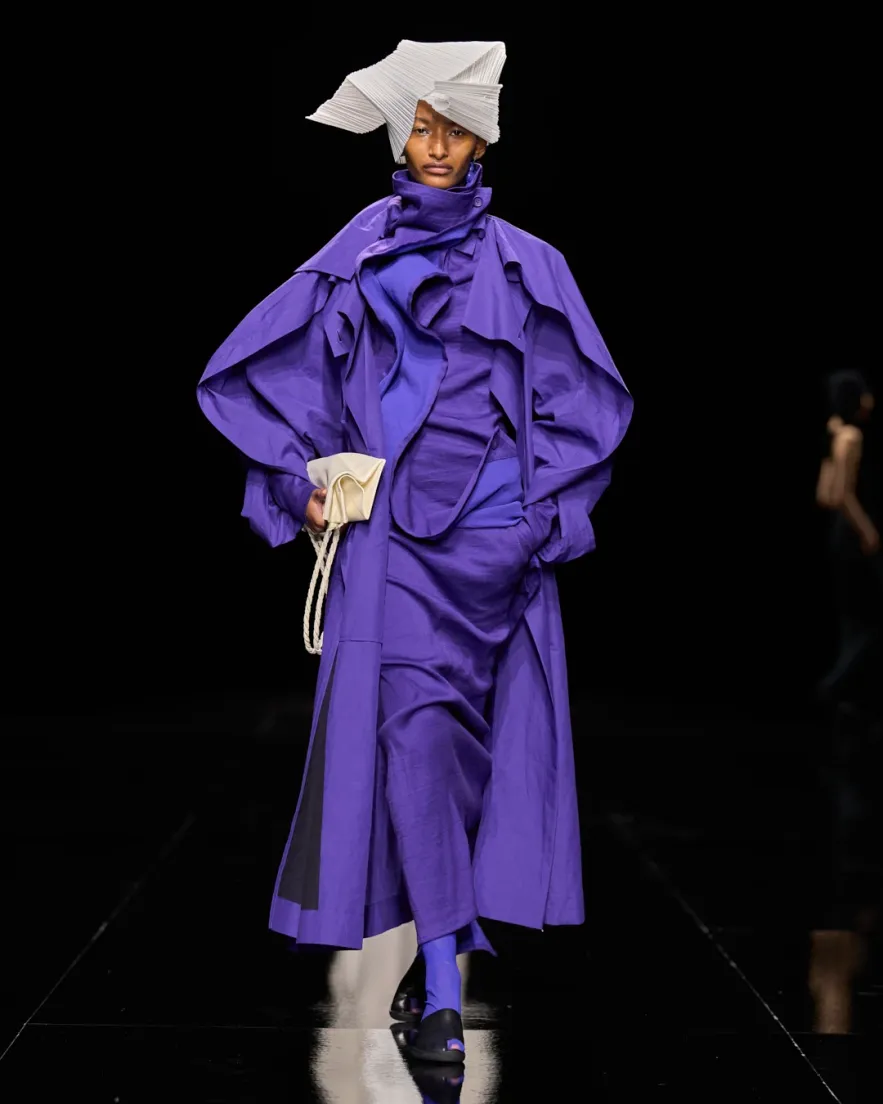
The collection included reversed polos, resin collars, boat shoes with bright laces and familiar sporting references. These details unsettle the conventions of a wardrobe usually associated with predictable combinations. Instead of reproducing a complete preppy image, the designers alter individual components and allow them to encounter other registers. [2][3]
This gives the reference a different relevance outside its original social setting. A polo need not communicate membership of a particular club. It can become a design object whose neckline, orientation and relationship with the body are open to adjustment. A sporting shoe can acquire a more expressive role through colour or scale. The useful question is what remains recognisable after the change. Too little transformation can feel nostalgic; too much may remove the familiarity that makes the alteration meaningful.
## Leather changes familiar categories
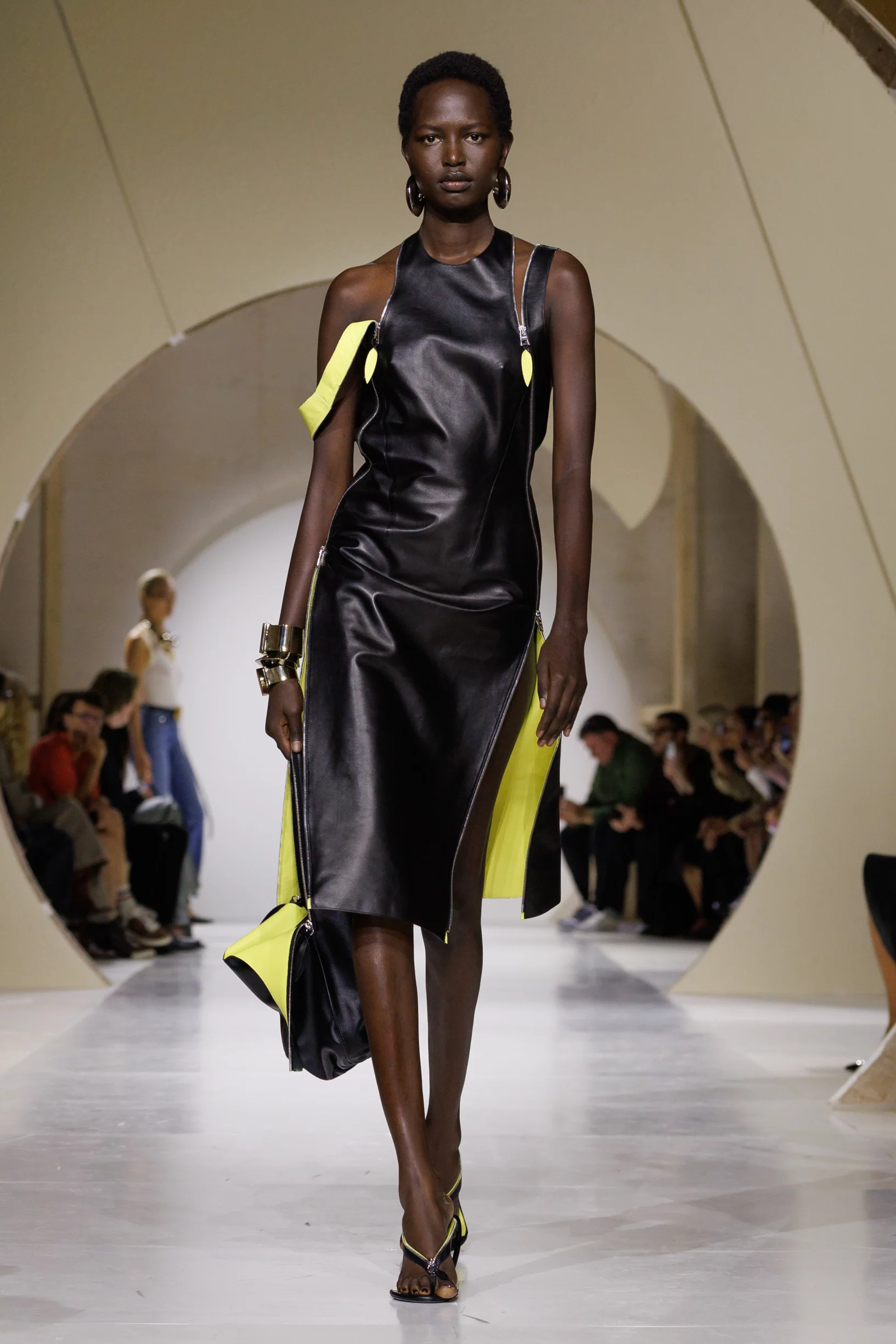
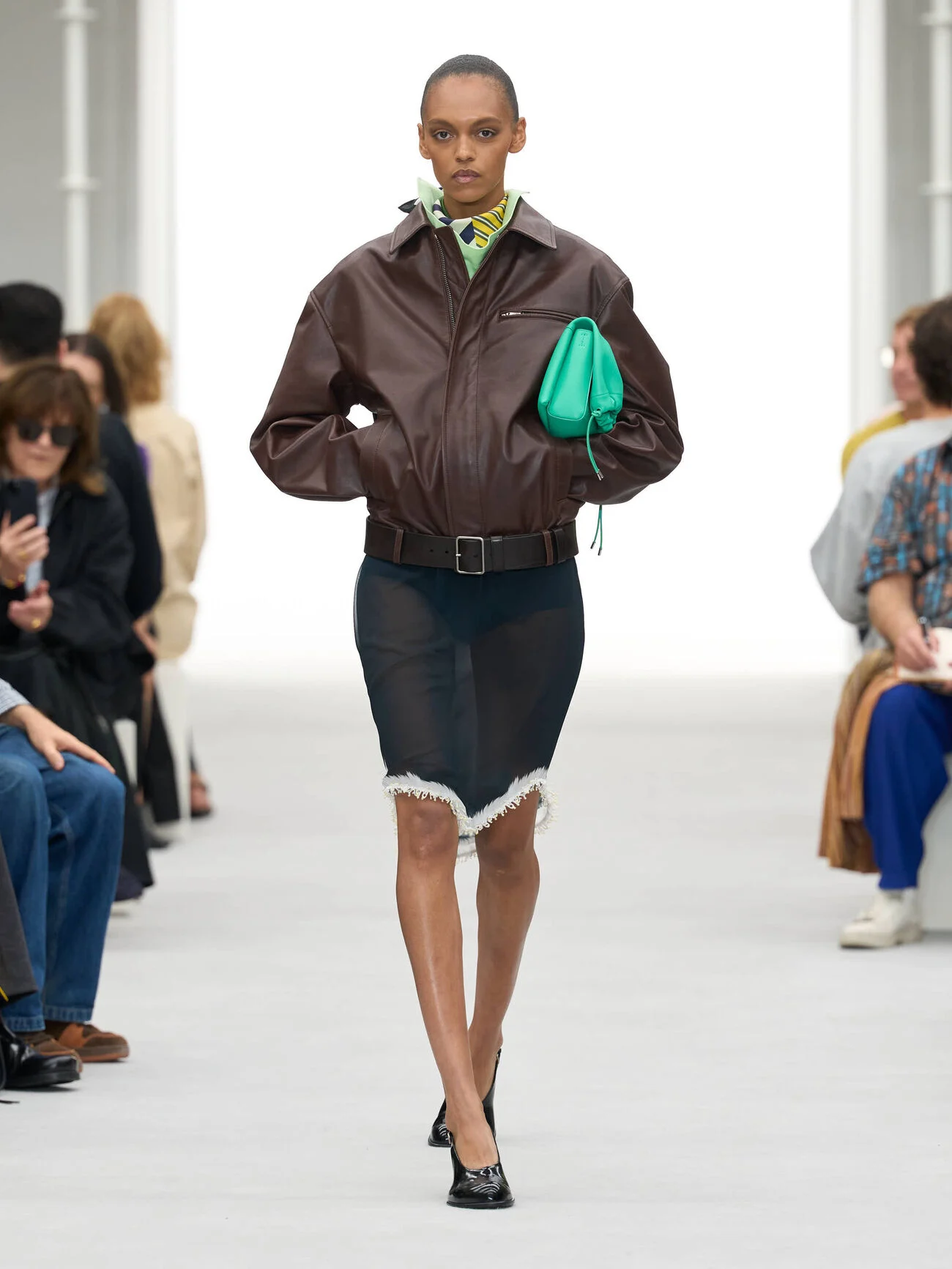
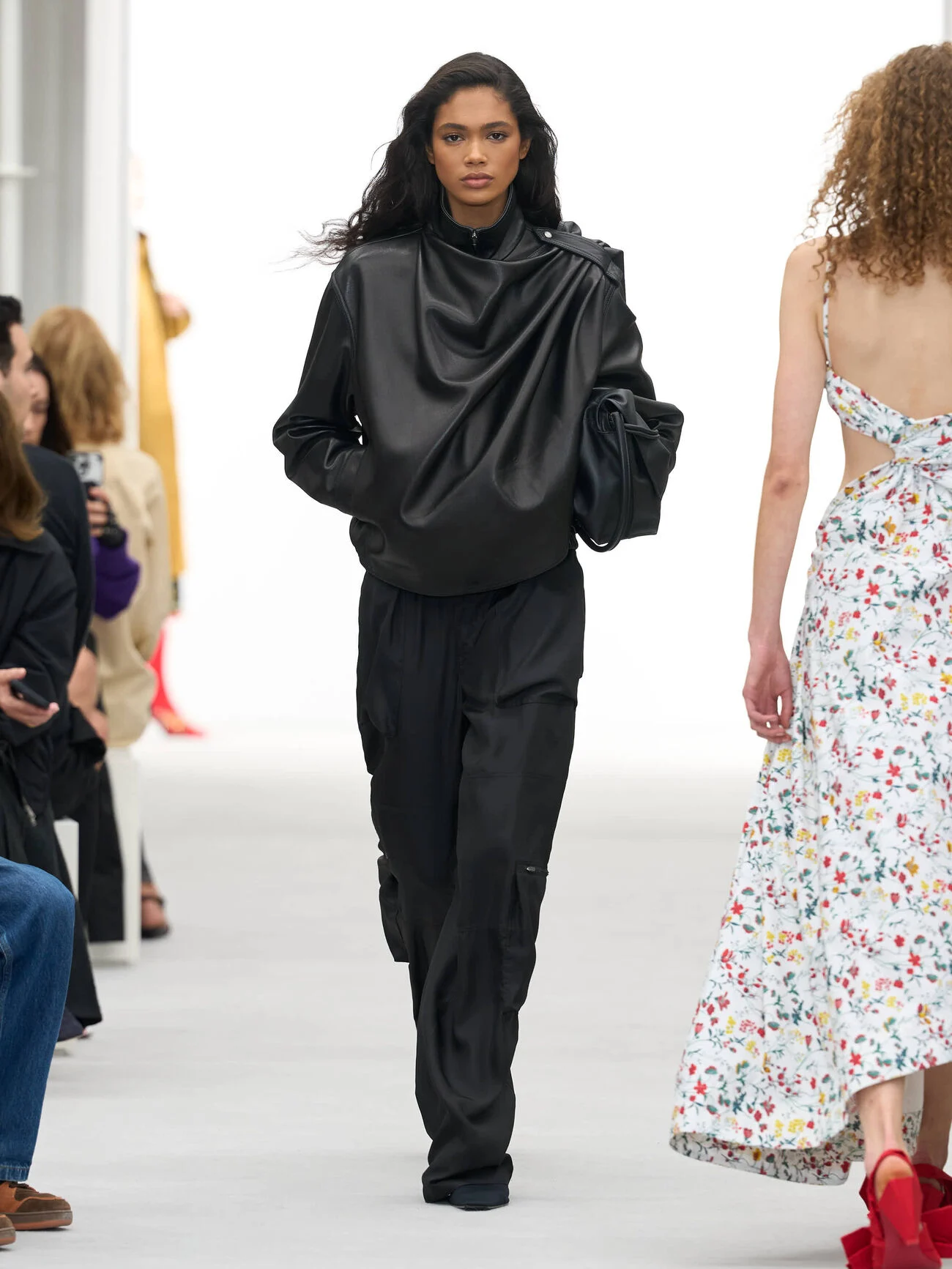
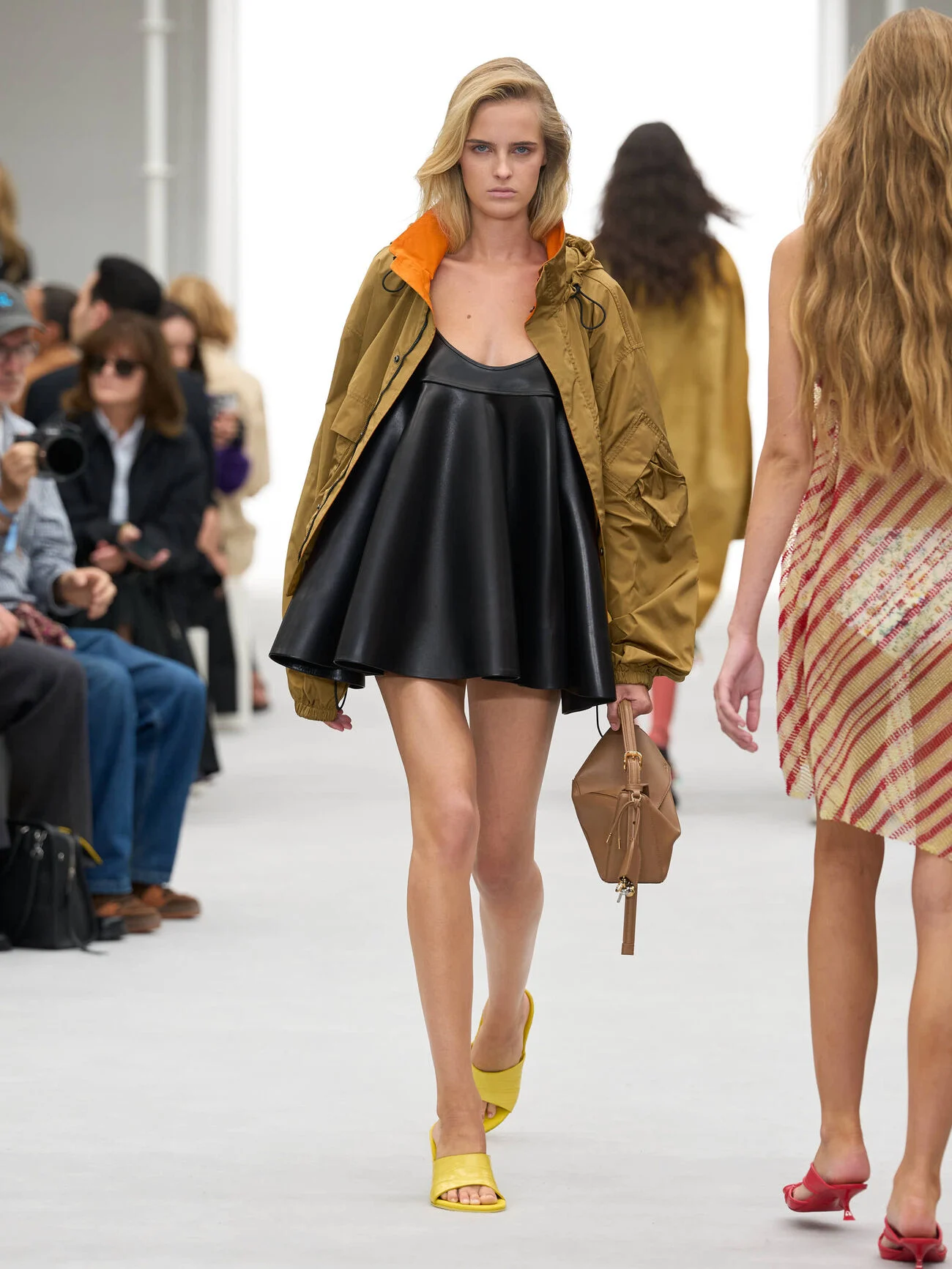
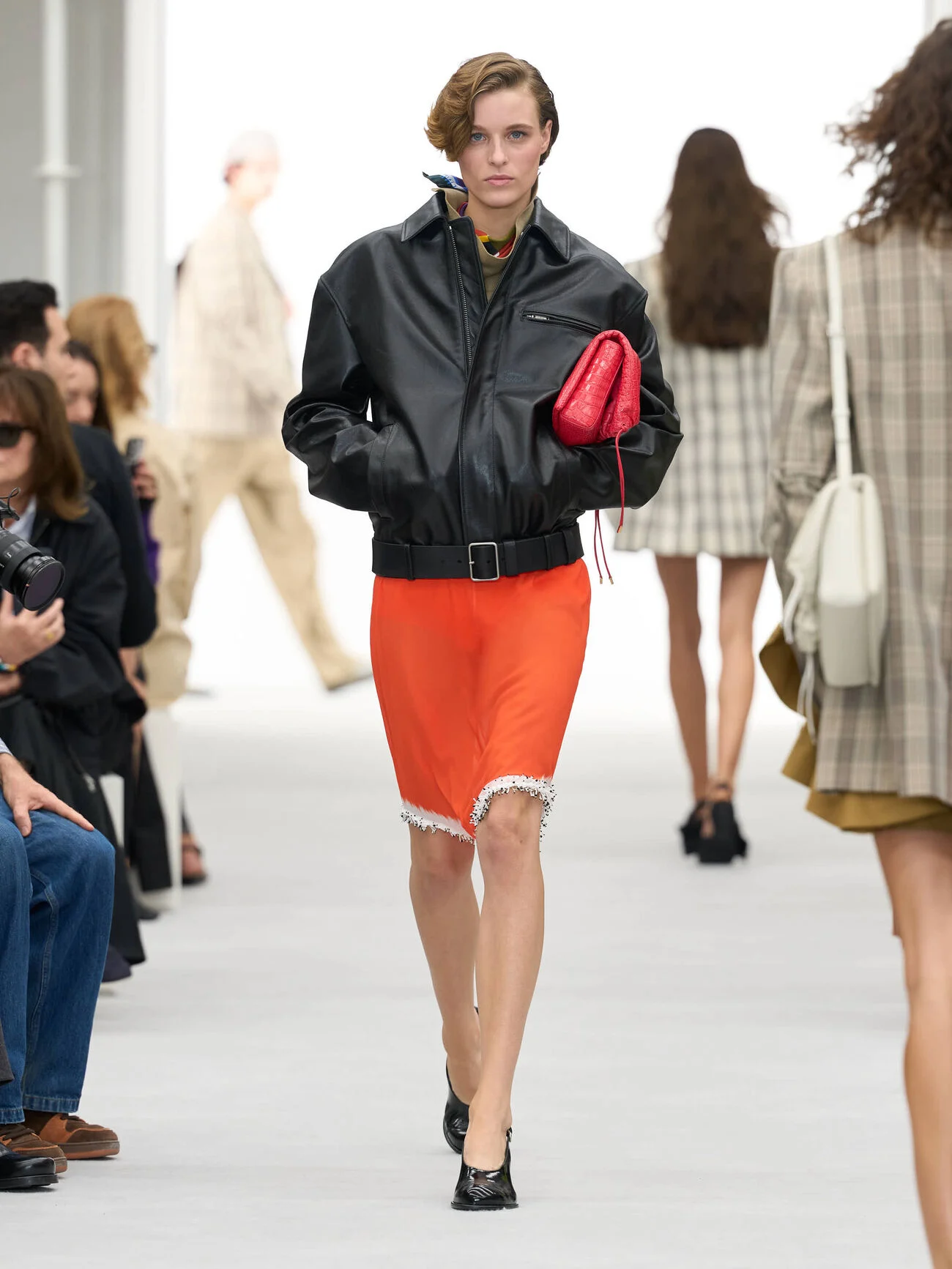
W Magazine’s account records summer-weight skived leather in pieces associated with shirts and sportswear, alongside moulded nappa forms and an East-West interpretation of the Puzzle bag. The official Loewe site confirms the collection as the designers’ third show for the house. Together, these sources establish both continuity of direction and a specific commitment to material transformation. [2][4]
Leatherwork can be more consequential than a decorative flourish because it changes the object’s substance. A familiar category becomes something that may behave, catch light and develop with use in a different way. This is where the house’s craft needs to justify itself through the garment rather than only through reputation. The transformation should contribute to an experience. A technical feat that remains invisible to wearing may be impressive, but its wardrobe value is a separate question.
## Sport becomes a starting shape
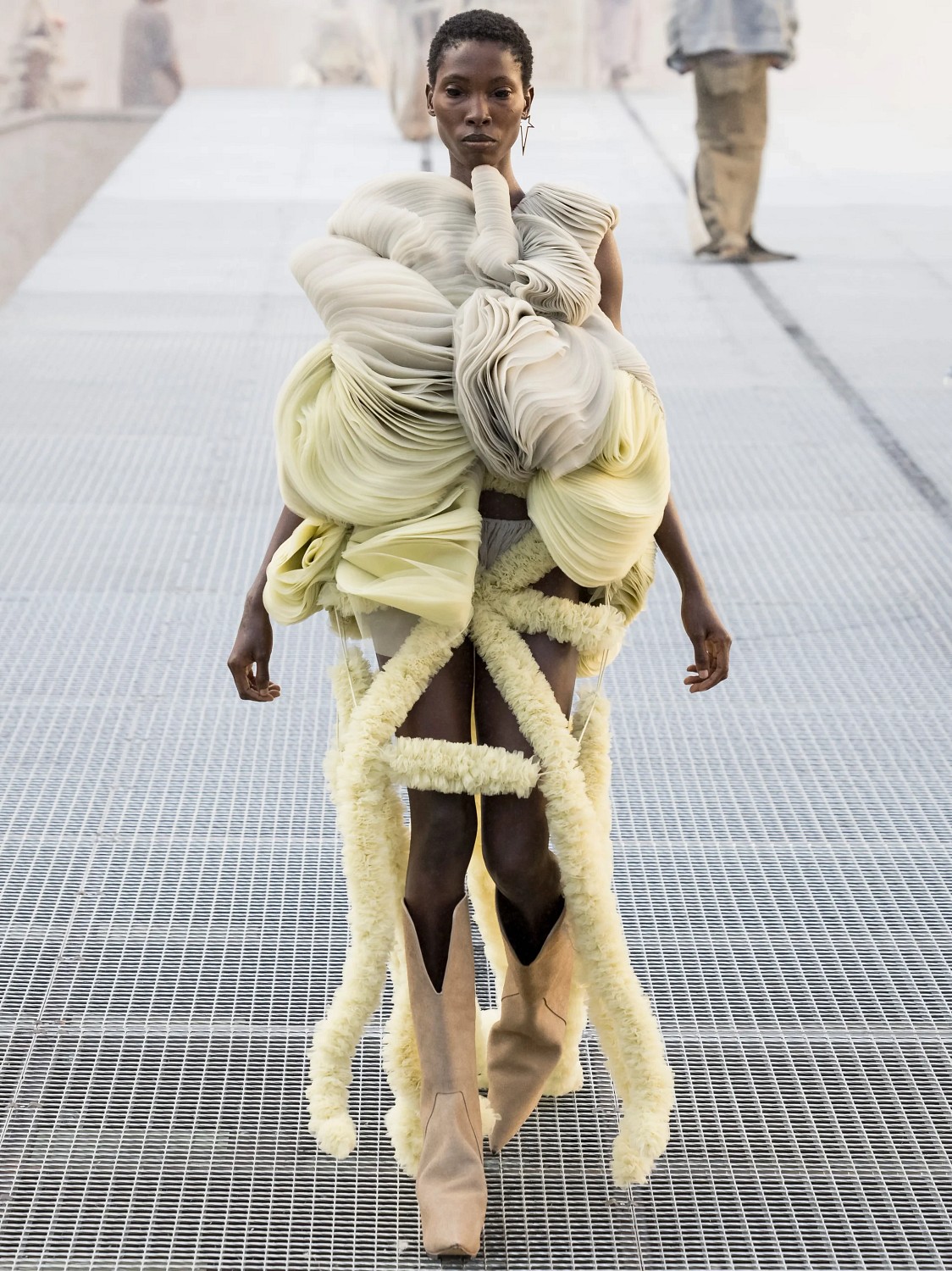
Another reported idea was the translation of basketball-jersey simplicity into chiffon slip dresses with beaded edges. This is a clear example of working from the logic of a category rather than reproducing its literal appearance. A broad, uncomplicated shape can move into another material and occasion while retaining traces of its source. [3]
The method has wide styling relevance. Familiar proportions can make an unusual surface less intimidating. Conversely, an unexpected material can prevent an ordinary outline from disappearing into routine. The balance depends on how much the two registers need each other. If the craft overwhelms the shape, the sporting reference becomes merely explanatory. If the shape is too literal, the material change may feel superficial. The most interesting result lets the viewer recognise both and see why their meeting matters. A Singapore interpretation
Our local edit would begin with one transformed staple. A distinctive collar can change a simple outfit. A sporting top can sit with a more expressive lower half. An unusual bag can give quieter clothes a connection to the collection’s material language. These suggestions preserve the dialogue between familiarity and craft without requiring the wearer to reproduce a full European runway combination.
Practical selection should remain specific. A house describing leather as light does not establish that every leather piece will suit tropical outdoor wear. Composition, lining and the garment’s contact with the body need to be assessed individually. The same applies to delicate beading and transparent fabrics. The collection is most useful as a prompt to look differently at ordinary categories, while the choice of an actual item must follow the owner’s comfort, care preferences and daily routines.
The cross-cultural relationship becomes most convincing when it is expressed in the object rather than explained only through references. A reader may not share the designers’ memories of American prep or know the exact Spanish artwork behind a shape. They can still judge whether the altered material, collar or proportion creates a compelling garment. This gives the collection more reach without flattening its sources. The specific history remains available to those who want it, while the clothing establishes an independent visual and physical proposition. For a Singapore magazine, that is a useful standard for covering international fashion. Context can deepen an interpretation, but it should not stand in for looking. The garment needs to offer something perceptible that allows a person from another environment to begin a relationship with it on their own terms.
Desirability with an ordinary entry point
The strongest aspect of this proposition is the ability to recognise a starting object and still feel that it has been meaningfully reconsidered. That can create a more enduring interest than novelty alone. A collar, a polo or a slip dress has a place in the viewer’s visual memory. Changing it introduces a question that can be answered through close attention rather than an entirely new vocabulary.
Loewe SS27 makes that process central to its wardrobe argument. McCollough and Hernandez bring their own American reference points into a house where craft can give those references a different physical form. For StraitsG readers, the collection offers a flexible way to think about fashion across cultures: the original context can remain visible without determining the final use. A familiar piece gains another identity, and the wearer decides how that identity participates in their own city life.
Gallery
5 images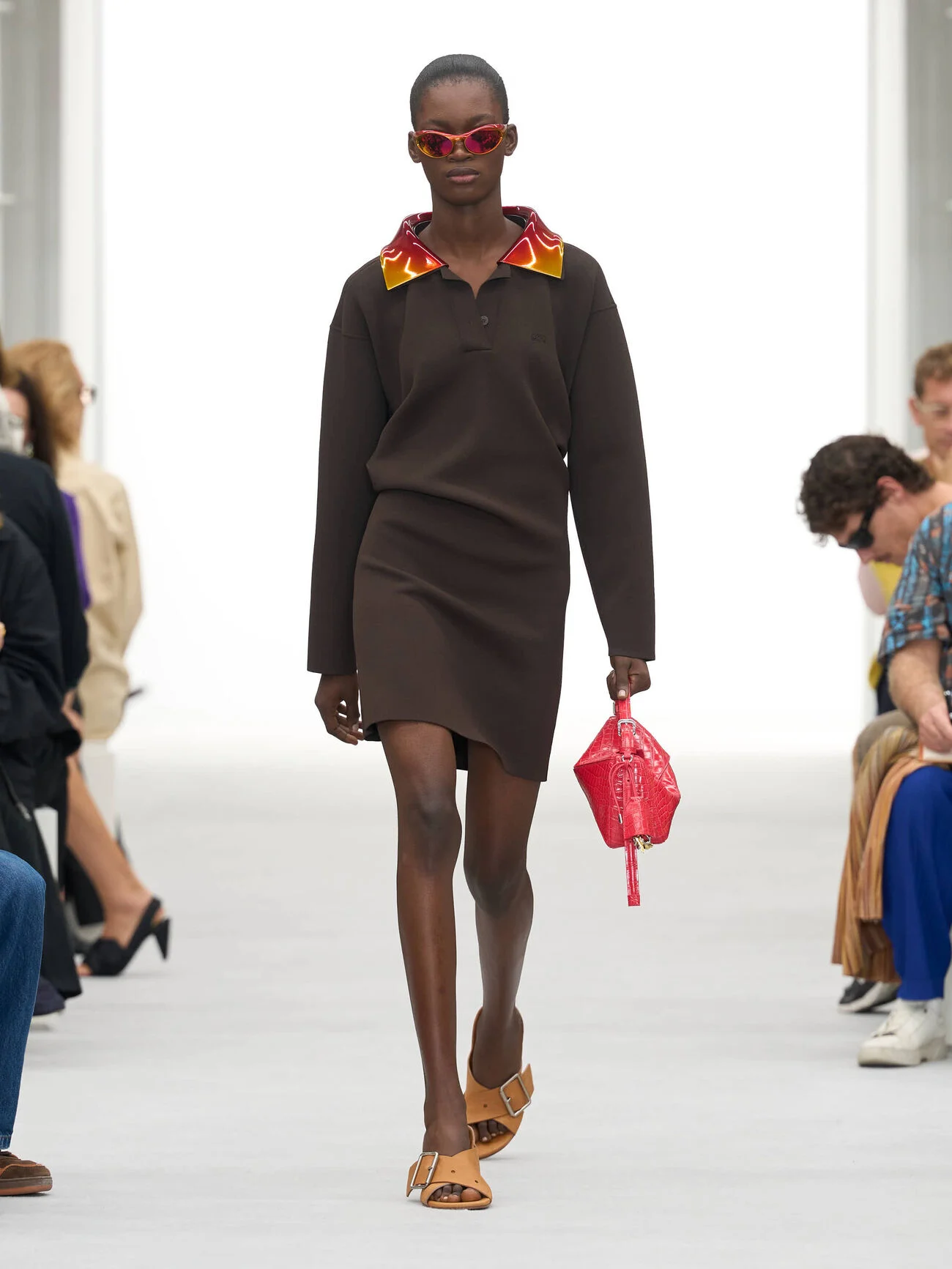
About the author
Anaelle Lise
Fashion editor and writer covering design, image-making and the creative networks connecting Southeast Asia.