Runway
Jil Sander SS27 lets the uniform reveal a human side
Simone Bellotti complicates precise dressing with vulnerability, irregularity and details that make restraint feel personal.
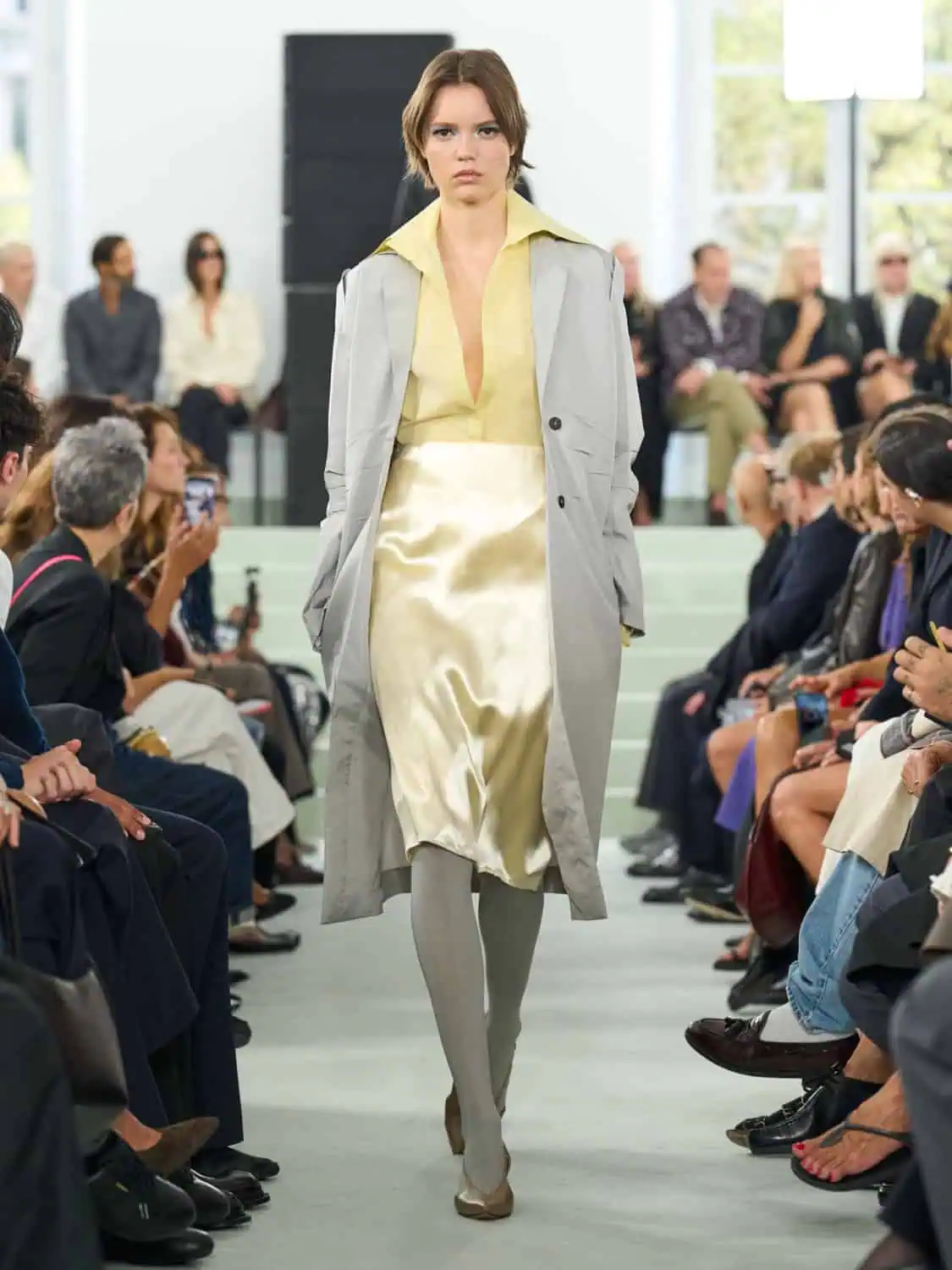
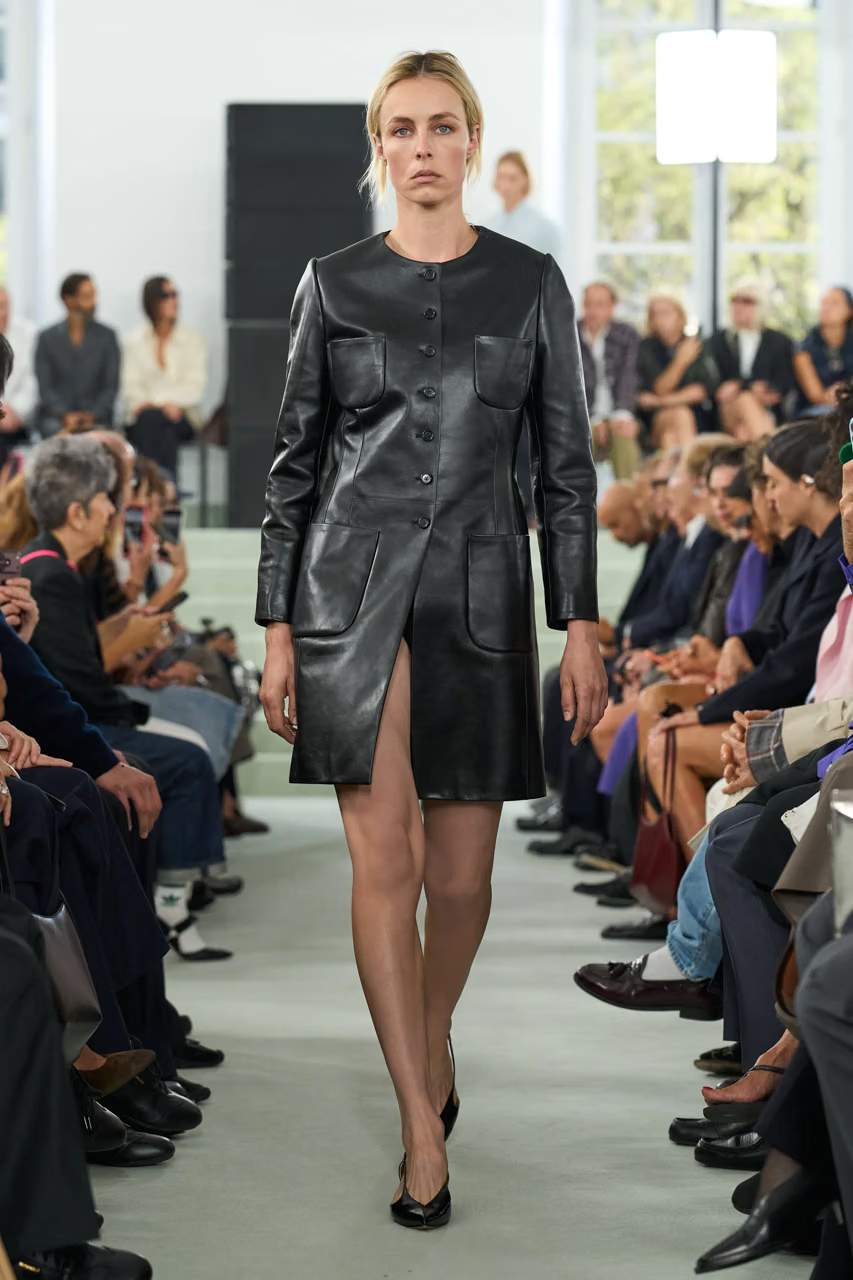
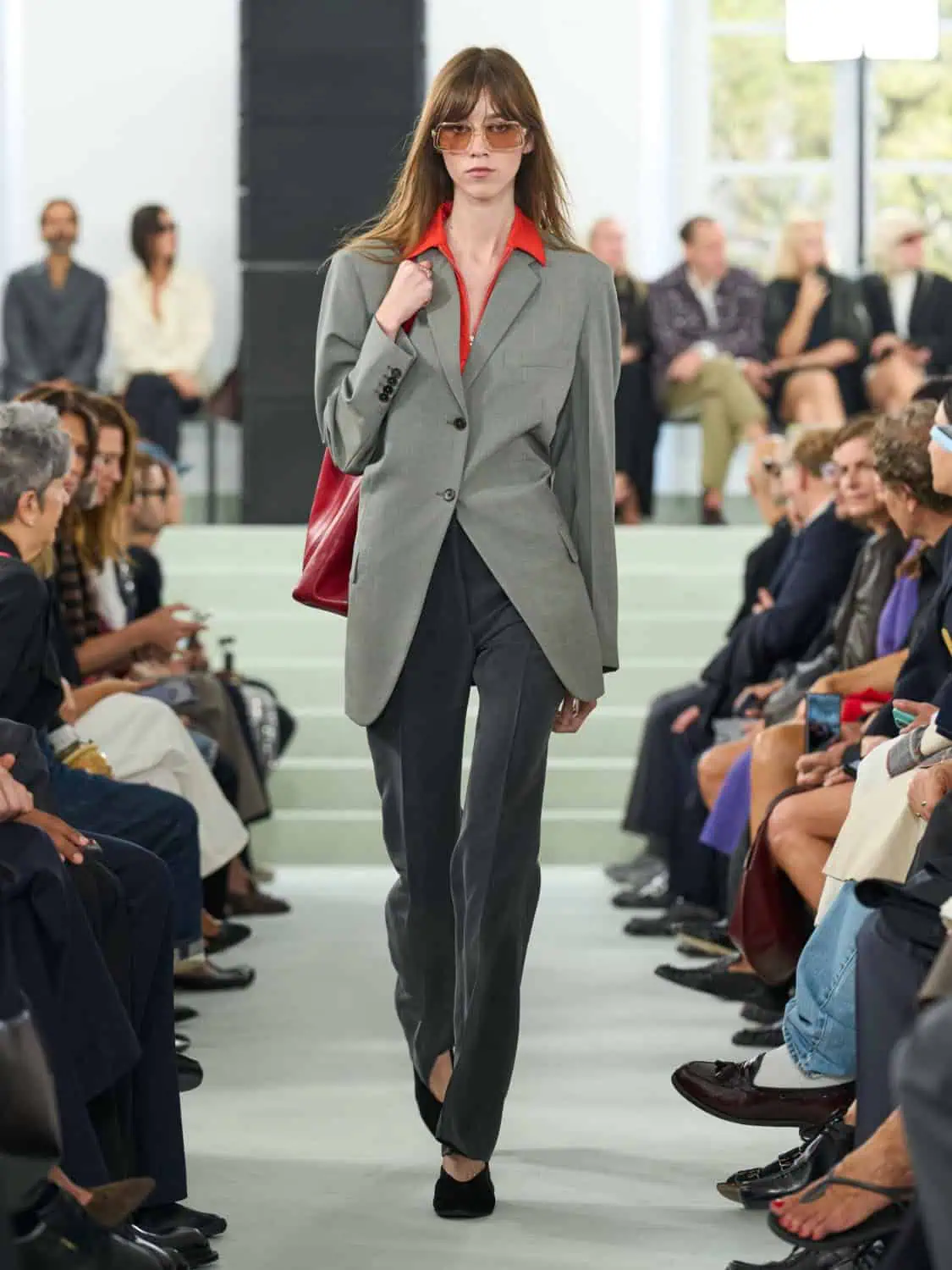
The uniform is a powerful starting point because it appears to settle the question of dressing. A recognisable shirt, jacket or controlled silhouette can remove uncertainty, giving the wearer a clear visual role. Simone Bellotti’s Spring/Summer 2027 collection for Jil Sander, presented during Milan Fashion Week in September 2026, examined what happens when that certainty becomes less complete. Contemporary reviews identify the uniform as a central proposition, with precise clothing interrupted by crumpling, skewed styling and more expressive moments.
For a Singapore audience, the subject has particular everyday relevance. Many wardrobes move between an expected professional register and a desire to look individual. The collection’s interest is in the small space between those demands. A controlled outfit can remain legible while allowing traces of personality, movement and imperfection to appear. Bellotti makes that space a design subject rather than an accidental result of wearing clothes through a long day.
Precision does not require anonymity
Jil Sander’s identity is often discussed through restraint. The term is useful only if it describes decisions rather than an absence of them. A reduced garment exposes its proportions, surface and construction to closer scrutiny. With fewer competing elements, the placement of a seam or the relationship between sleeve and body becomes more consequential.
Our interpretation is that Bellotti’s collection asks precision to accommodate a human presence. Clothing may begin from an ordered form, yet it does not have to remain visually untouched. An irregular detail can introduce character without destroying the structure around it. That is a different proposition from simply making a strict garment more decorative. The change occurs in how the viewer understands its certainty: the uniform remains recognisable, but its wearer no longer appears completely defined by it.
Irregularity becomes deliberate
The Impression’s account describes a collection that plays with front and back, convention and off-kilter detail, while placing more dramatic clothing beside pseudo-corporate pieces. Its discussion of vulnerability is useful because it connects the apparently small interventions to a larger idea. The garment can show disturbance without abandoning control. [1]
This is also where the critical question begins. A deliberate crease must do more than resemble a garment that has not been pressed. An asymmetry must create a meaningful relationship rather than simply announce that something is unusual. The usefulness of such devices depends on the whole outfit. They can make a strict look feel lived in, but they can also become mannerisms if repeated without purpose. The viewer needs to ask what the interruption reveals about the design.
The uniform as a social surface
Professional clothing often communicates before its wearer speaks. It can establish seriousness, signal belonging or reduce the risk of appearing out of place. Those functions may be useful, but they can also make an outfit feel impersonal. The design challenge is to keep the clarity of a uniform while allowing the person inside it to be perceptible.
Small differences can achieve this more convincingly than a large statement accessory. A changed proportion affects the whole silhouette. A different handling of a collar alters the face of a shirt. A surface that catches light unevenly can give a restrained colour more depth. These observations are our broader design reading, not a claim that every example appeared in this particular show. They explain why the collection’s interest in controlled irregularity has relevance beyond one season’s styling.
A digital image cannot settle the argument
Reduced clothing can be difficult to assess on a phone. Its details may disappear at thumbnail size, while the most unusual piece becomes disproportionately representative of the entire collection. That encourages a simplistic verdict: either nothing happened, or the brand suddenly became eccentric. Neither response necessarily reflects the relationship between its quieter and more expressive garments.
A better reading moves between scales. Start with the overall outline, then examine the places where the garment departs from expectation. Return to the complete look to see whether those departures improve it. This method is particularly useful for a house built around restraint, because the clothing’s identity can depend on details that are easy to overlook. The challenge for the design is to make them rewarding in real life, where they have to survive movement and repeated wear.
Bringing the idea into Singapore dressing
Our local edit would focus on one controlled deviation. A precise shirt can be worn with a slightly unexpected proportion below. A restrained outfit can accommodate a piece whose surface appears less pristine. The rest of the styling should establish enough order for that difference to register. If every element competes to look undone, the result loses the dialogue between uniformity and individuality.
The fitting room remains central. Reduced clothing leaves little distraction from an awkward shoulder, an uncomfortable waist or a sleeve that does not permit normal movement. Fabric behaviour matters as much as the initial image. A material that creases attractively in a runway photograph may behave differently after a humid commute or hours of sitting. These are practical considerations for choosing clothing, not evidence that the collection was designed specifically for Singapore’s conditions.
A uniform can also become personal through repetition. Wearing the same category of shirt or jacket regularly allows the owner to develop an exact understanding of the proportion that suits them. Small differences then become meaningful rather than arbitrary. The attraction of a quieter collection is that it can support this kind of attention. It does not demand a new identity with every outfit. The wearer can keep a stable foundation and make a limited change that feels intentional. This is especially useful when professional dressing leaves little room for a large visual statement. A controlled variation can communicate judgment without requiring an explanation. Bellotti’s interest in disturbing the uniform gives that approach a fashion context, while the final decision still belongs to the person who knows what their day requires and what level of visibility feels comfortable.
The value of a quieter decision
There is room in contemporary fashion for clothing that does not communicate its entire personality at once. A wearer may prefer an outfit that acquires interest through closer attention. That preference is not inherently more sophisticated than a more expressive style; it simply places the design work in a different location. Precision becomes valuable when it gives the person enough space to determine how visible they want to be.
Jil Sander SS27 is most relevant in that negotiation. Bellotti keeps the uniform available as a source of clarity, while allowing its order to become less absolute. For StraitsG readers, the collection offers a considered way to think about professional and personal dressing together. The useful question is how much difference an outfit needs to feel like its owner. Sometimes that difference can be concentrated in a single detail, provided the surrounding clothes give it room to matter.
Gallery
3 images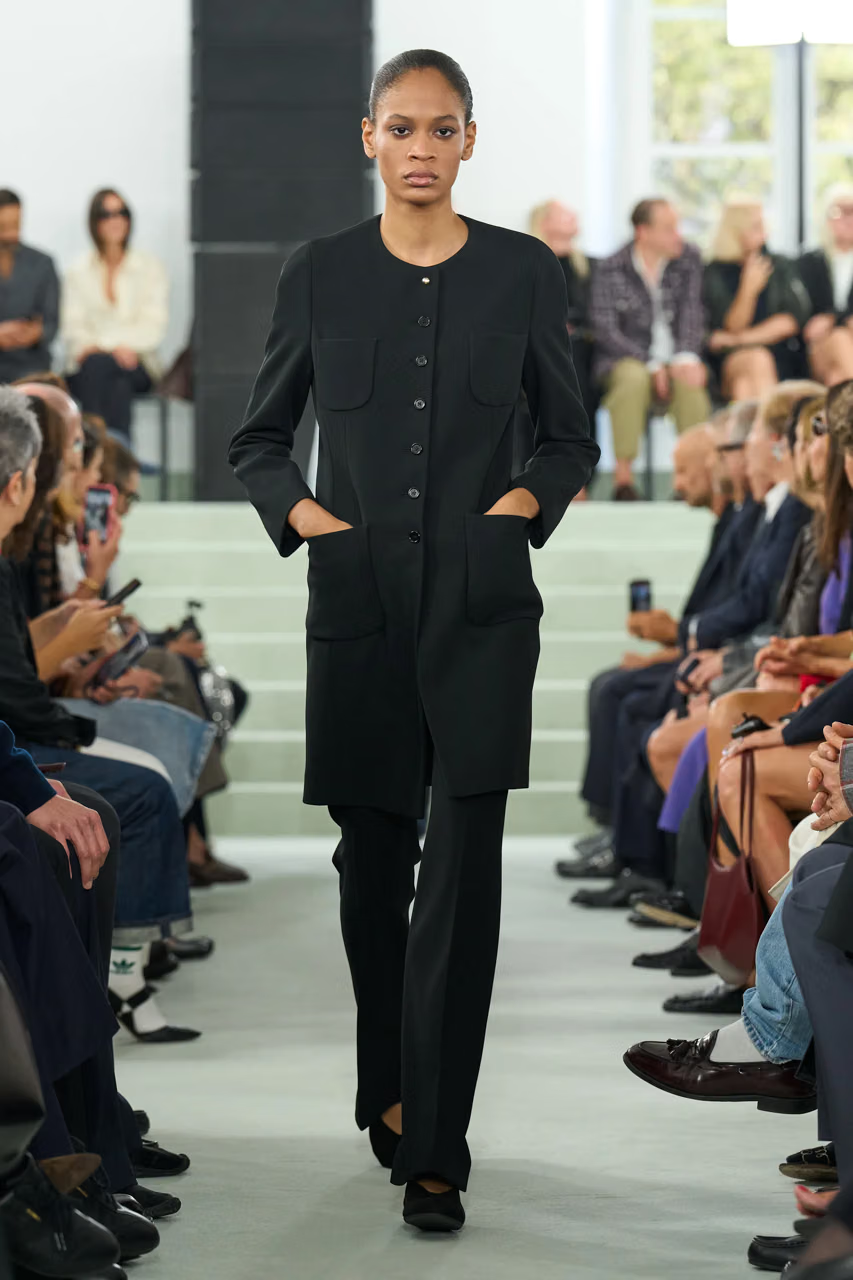
About the author
Anaelle Lise
Fashion editor and writer covering design, image-making and the creative networks connecting Southeast Asia.