Runway
Ferragamo SS27 reframes the authority of the skirt suit
Maximilian Davis draws on 1940s workwear, introducing sensual surfaces and fluid counterpoints to a disciplined silhouette.
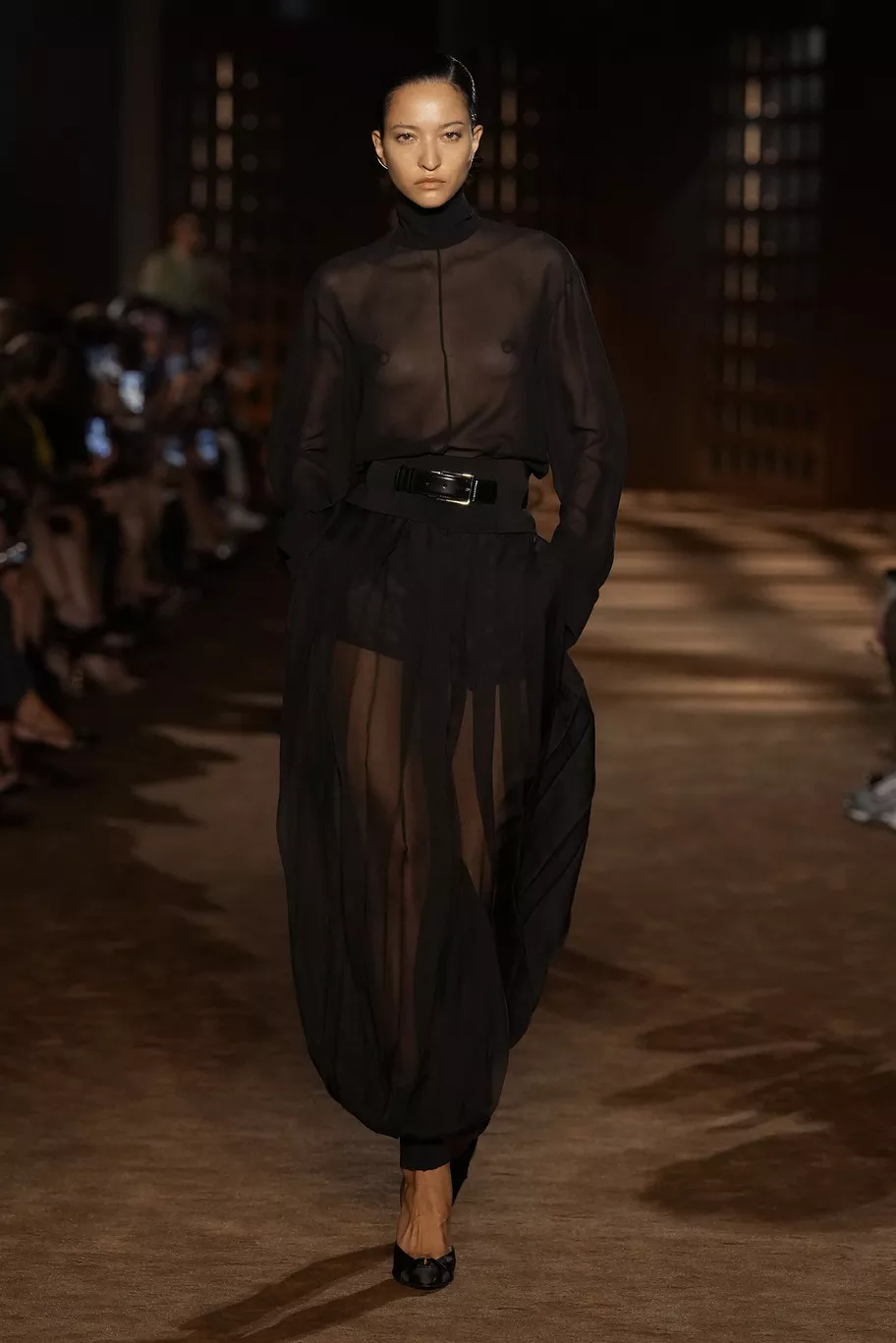
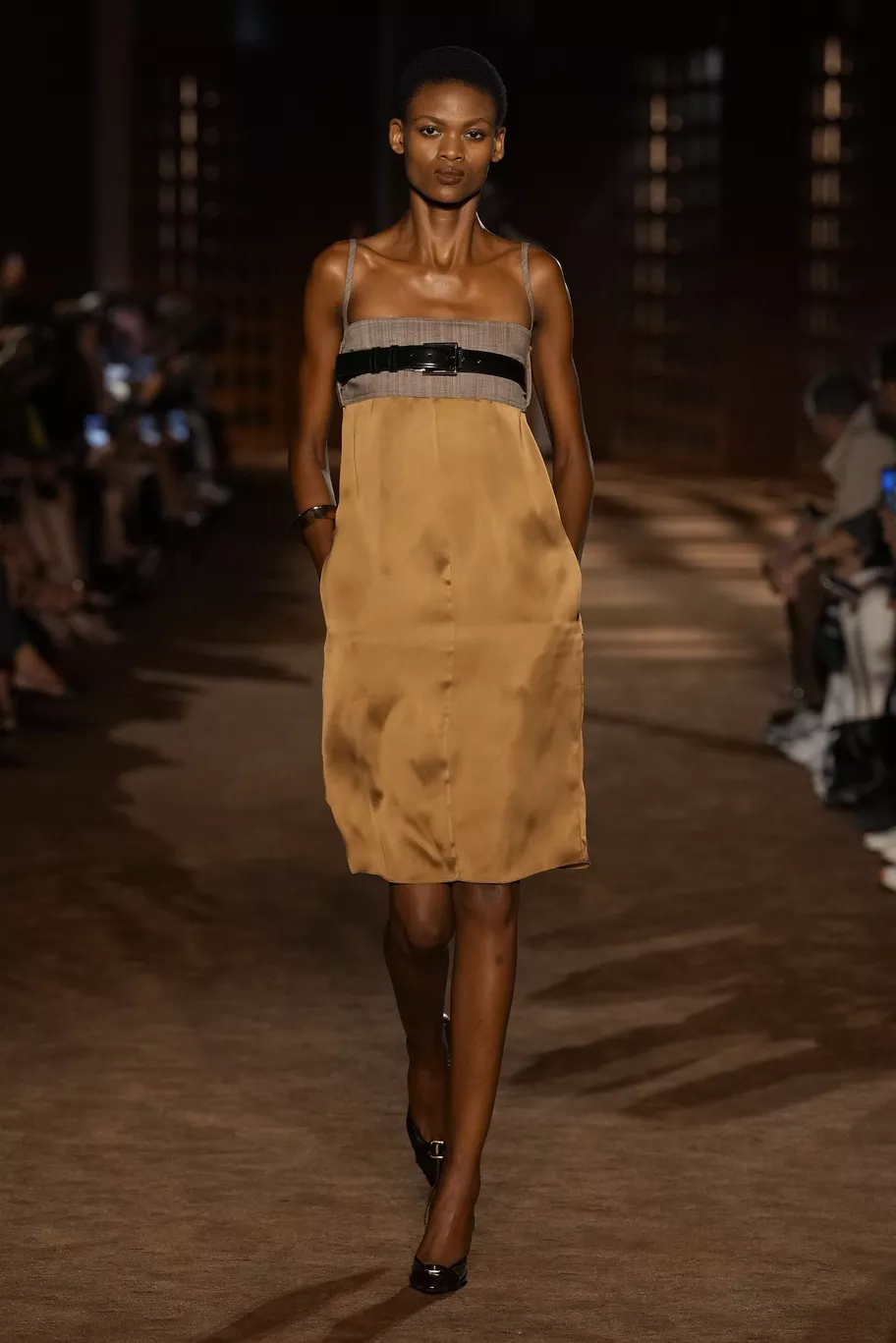
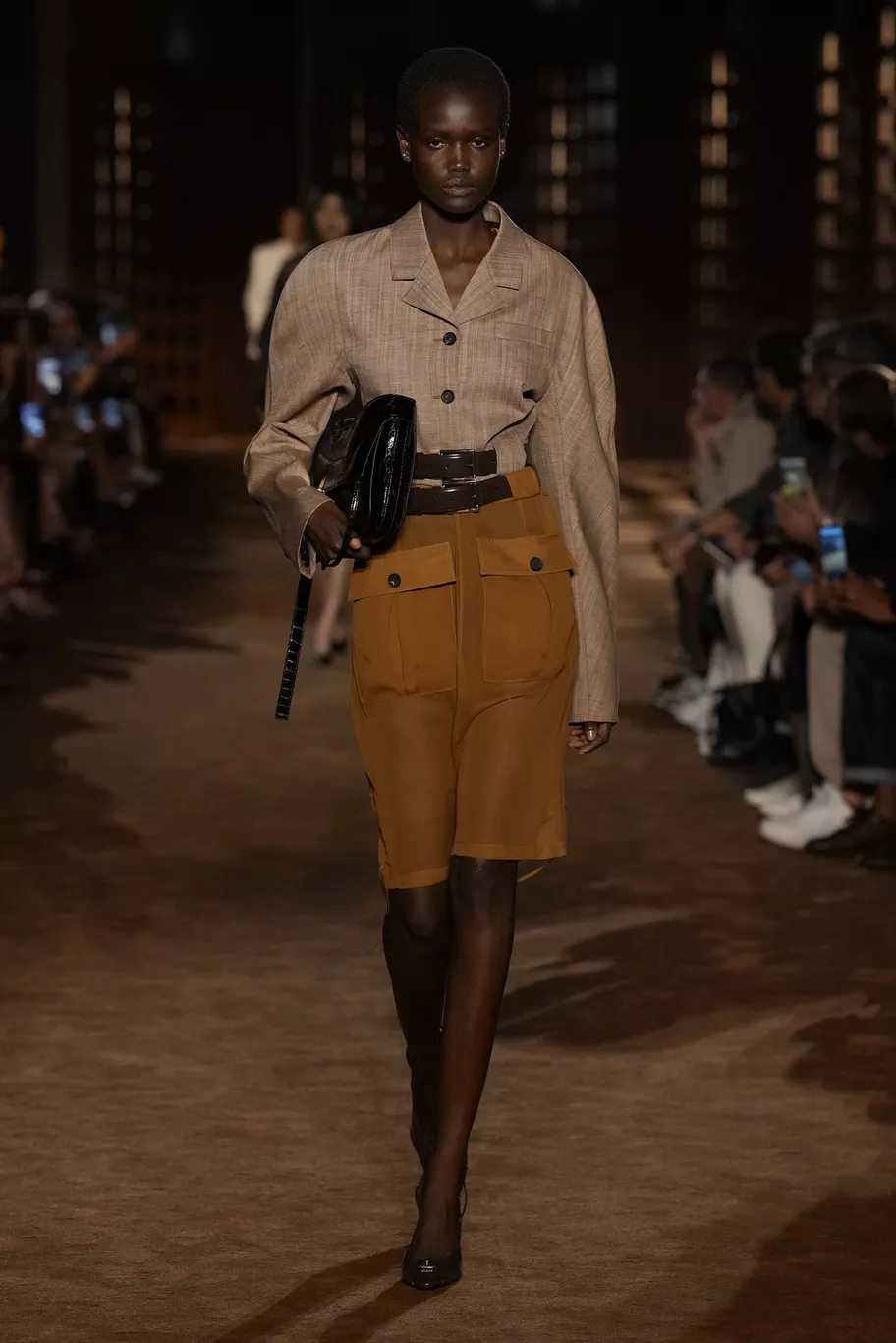
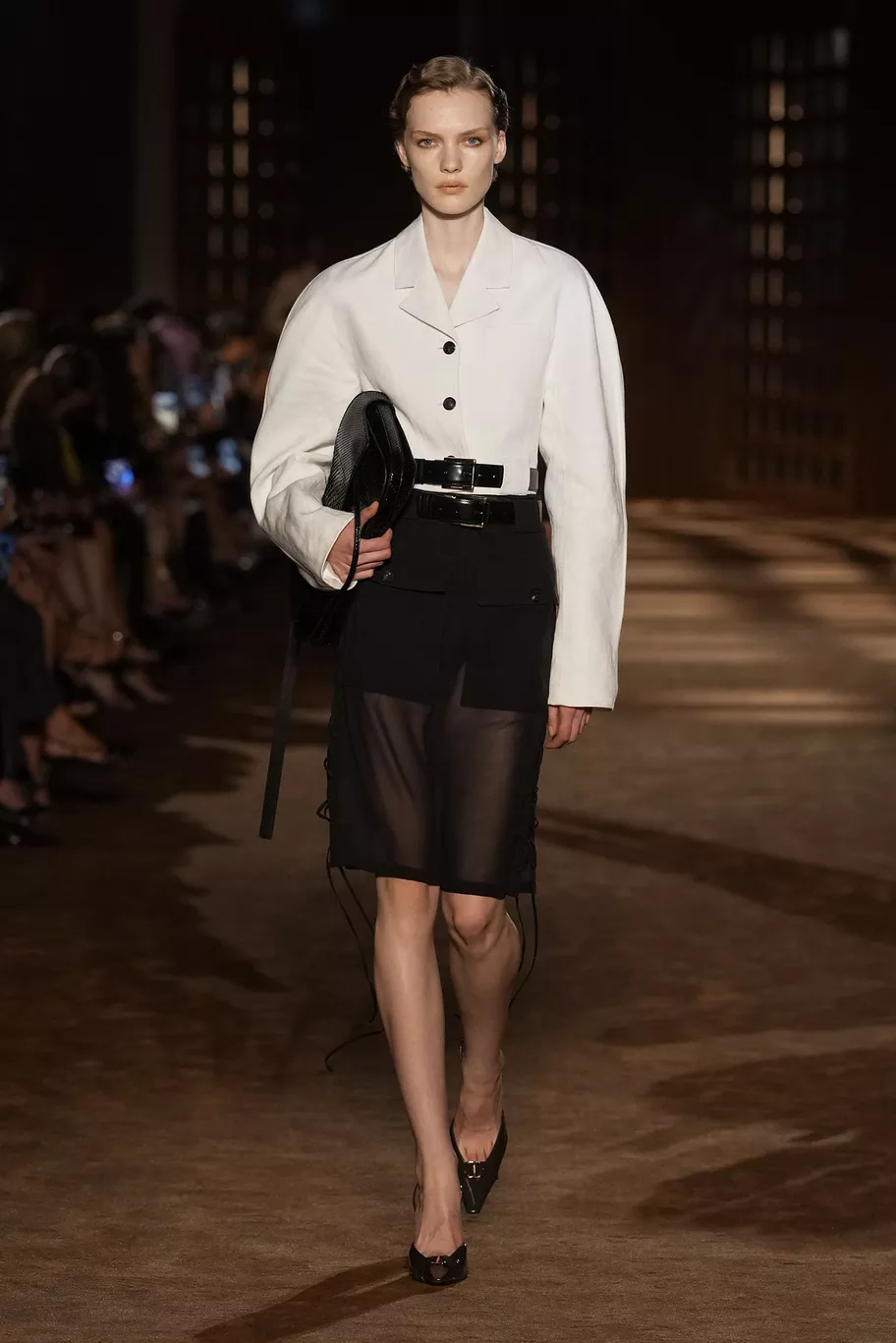
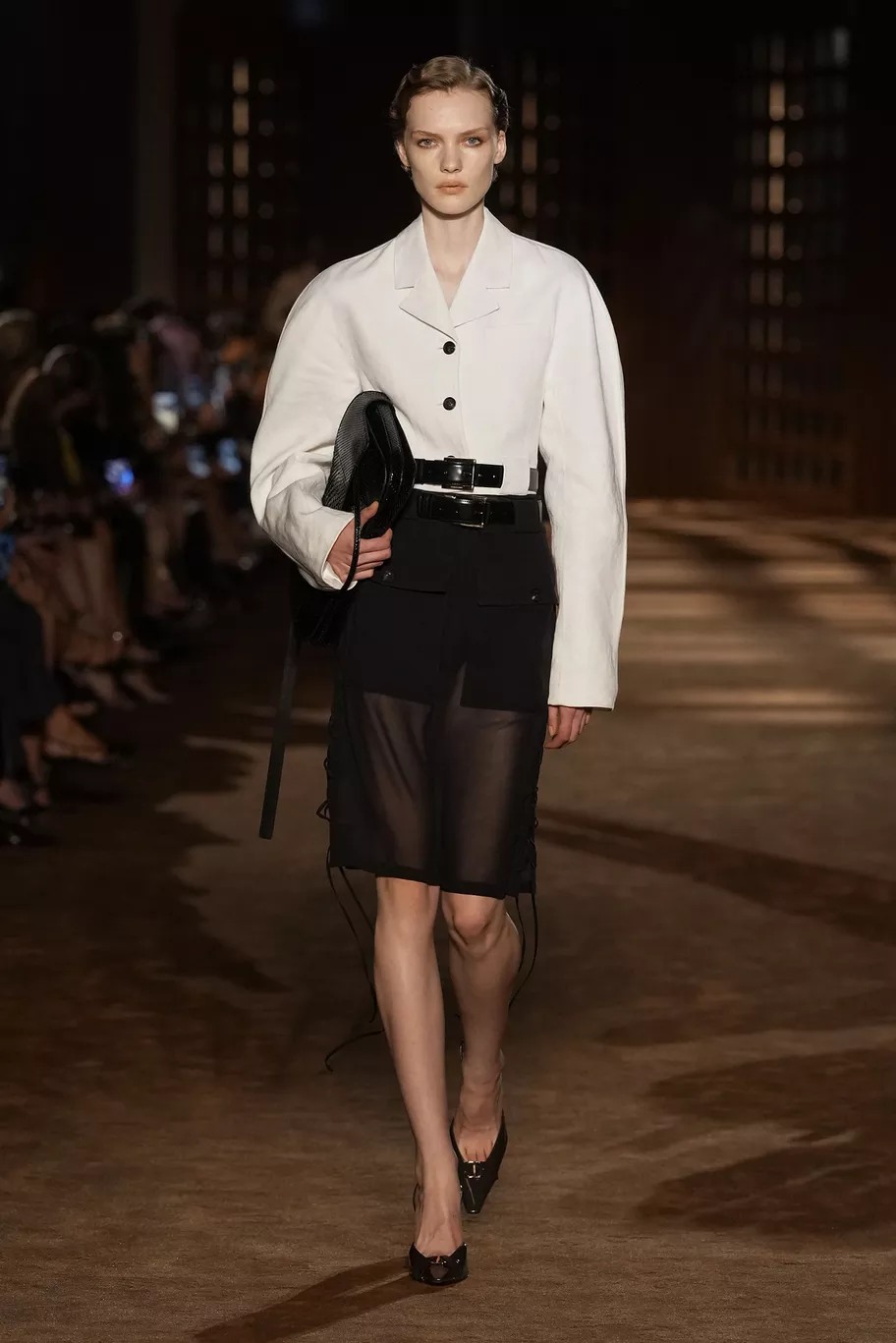
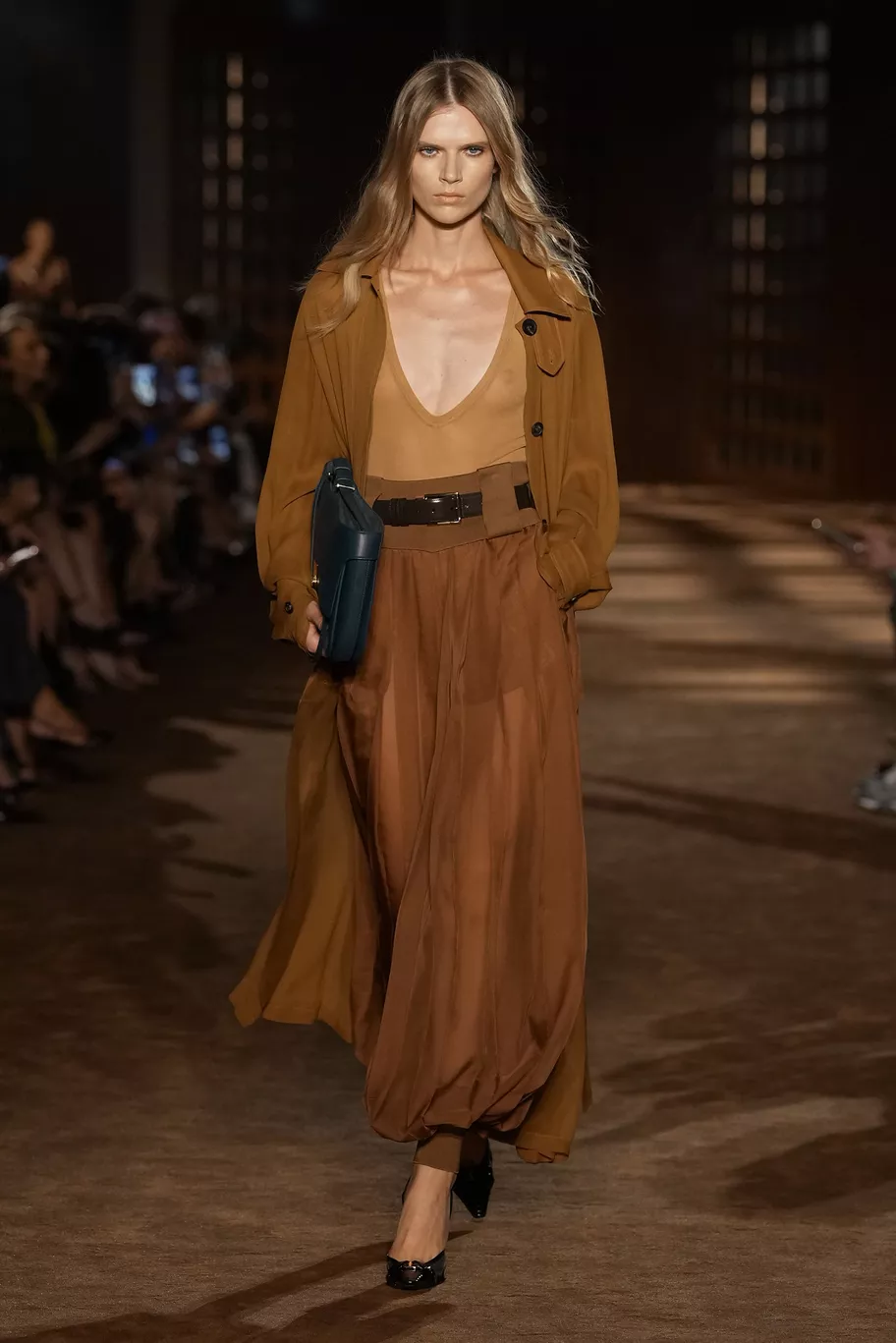
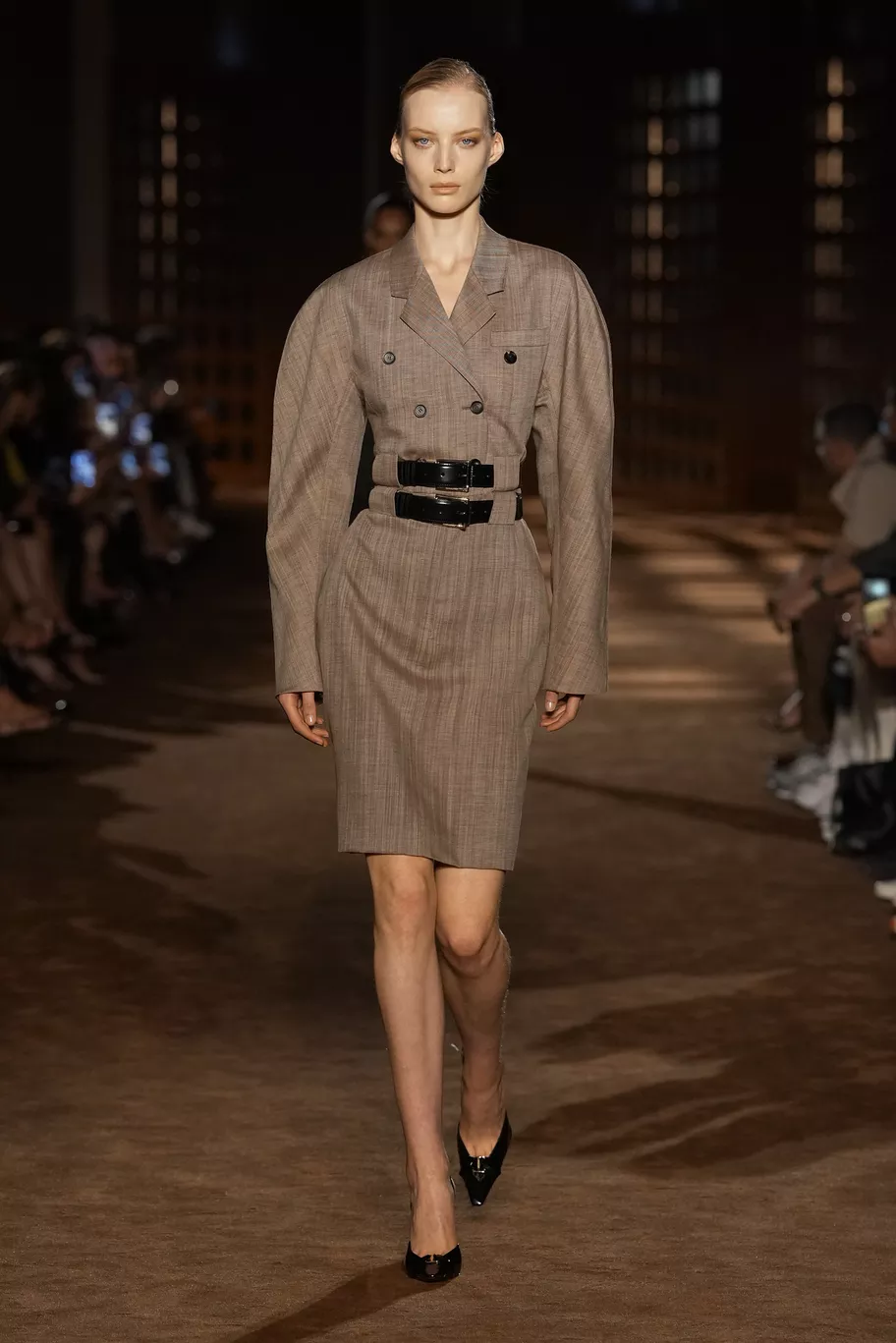
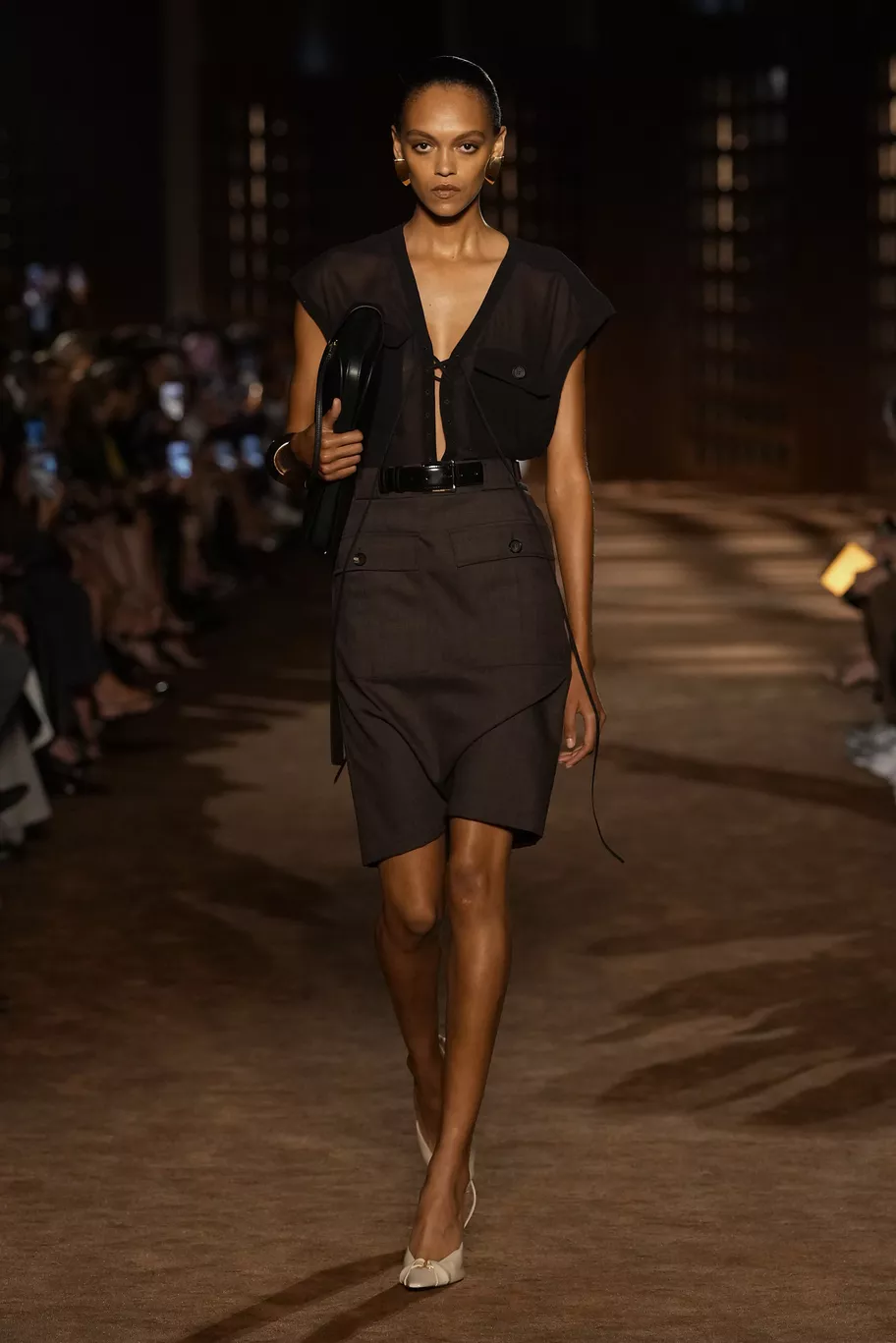
Ferragamo’s Spring/Summer 2027 collection located a contemporary design problem inside the clothing of the 1940s. Maximilian Davis examined the era’s workwear and uniforms, then brought their disciplined structure into contact with more sensual materials and fluid draping. Presented during Milan Fashion Week in September 2026, the collection made historical reference a starting point for changes of posture, surface and proportion. The house’s official account is precise about that focus, framing the design around women taking greater ownership of their lives and image. [1]
The result invites a useful discussion for StraitsG’s Singapore audience. Professional clothing often promises authority through familiar signs: a jacket, a defined waist, a controlled skirt. But those signs can become rigid when treated as rules. Ferragamo’s proposition asks how a structured wardrobe can retain presence while becoming more individual. The collection’s appeal lies in the interaction between discipline and sensation, where neither has to erase the other.
## History as a question of posture
Davis’s official notes connect the placement of a pocket and the structure of clothing to how the wearer stands and behaves. The collection includes high-waisted tailoring, close-fitting silhouettes, pronounced belts and utility details. These references make the relationship between design and posture explicit. A garment does more than occupy the body’s outline; it can encourage a particular way of holding oneself. [1]
That is a fruitful way to approach historical fashion. The interesting question is not simply which decade a garment resembles, but what social behaviour its shape once organised. A suit may communicate readiness for work. A fitted waist may make an outfit look composed. A pocket may suggest usefulness even before it is used. Bringing those signals into the present allows a designer to adjust the relationship between authority and comfort, rather than merely reproduce an old photograph.
## Sensuality enters through the surface
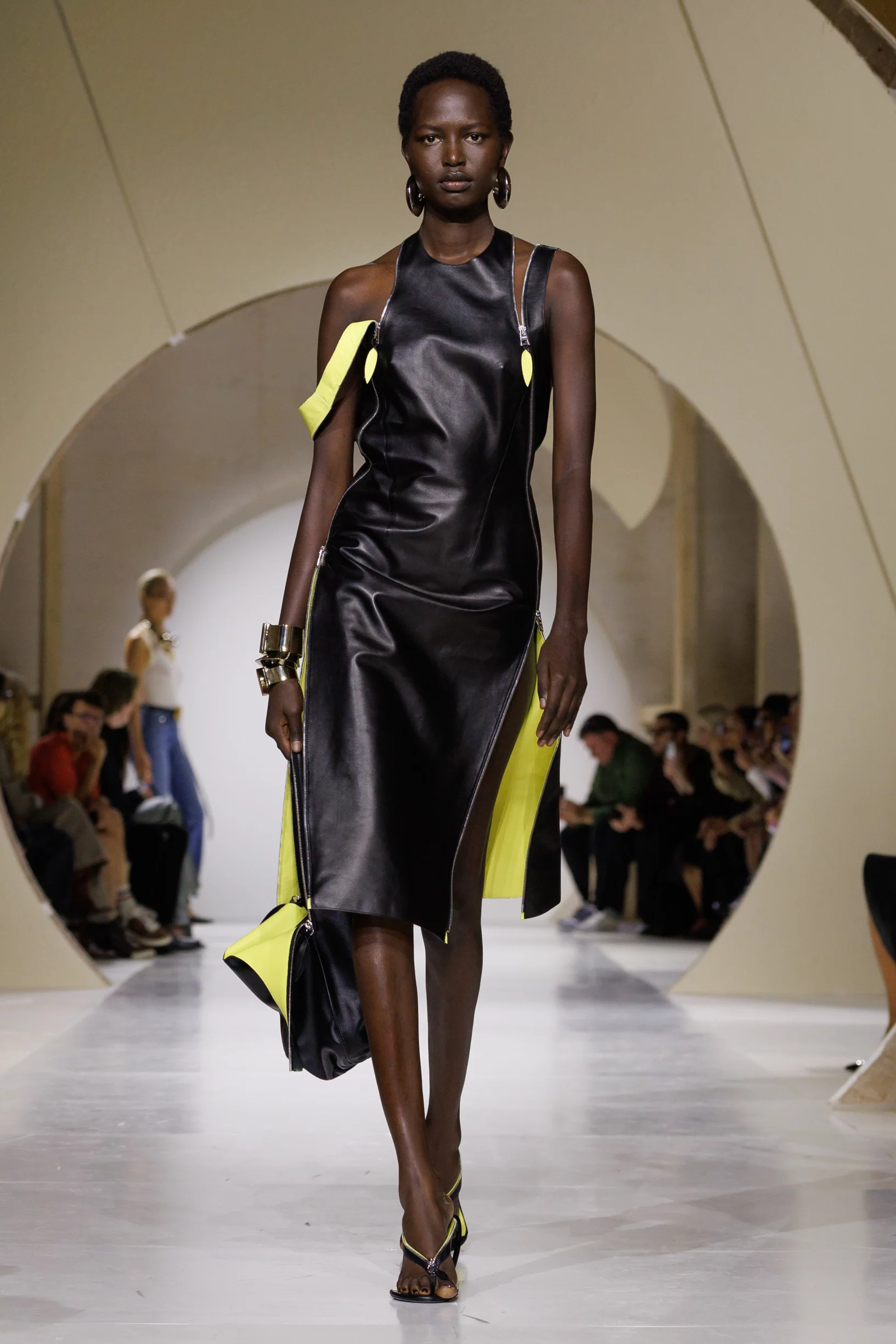
The official collection description records translucent rubber, leather shirting and glossy python ties alongside the more controlled tailoring. These materials introduce a different set of associations into the workwear vocabulary. The silhouette may appear proper while its surface makes that propriety less stable. Contemporary reporting likewise identifies the collection’s charged treatment of familiar wardrobe categories. [1][2]
Our interpretation is that the tension works because the two registers remain visible. If the historical reference disappears completely, the design loses the friction that makes it interesting. If the sensual element is too minor, the garment can become a straightforward period exercise. The strongest relationship occurs where a viewer understands both the controlled structure and the unexpected surface at once. That coexistence lets the outfit suggest self-possession without becoming emotionally remote.
## Draping provides a counterweight
Davis’s scarf-dressing vocabulary supplies the fluid side of the collection. The house describes looped silks, trains and draped evening pieces. These softer lines prevent the historical silhouette from determining the entire mood. They also introduce movement as an alternative kind of authority: a garment can command attention through the way it falls rather than the way it holds itself upright. [1]
This distinction matters in a wardrobe. Structure can make dressing feel decisive, while drape allows an outfit to respond more visibly to the person inside it. Combining them can produce a more flexible image of elegance. A sharply defined element may anchor a flowing one. A fluid top can interrupt the rigidity of a controlled lower half. The design lesson is relational. Neither category is inherently more modern; their interaction determines whether the result feels alive.
## A shoe archive put to work
Footwear connects the collection to Salvatore Ferragamo’s earlier experimentation. The house identifies the 1947 F wedge as a reference for new curved heels, alongside updated Vara details and satin mules with Art Deco associations. The archive provides a structural idea, making history tangible in the way a contemporary shoe is conceived. [1]
For a reader, this is a useful distinction between quotation and development. An archival shape can be copied as a nostalgic emblem, or it can be used to generate a new proportion. The second approach gives historical design an active role. Still, sculptural interest and practical suitability are separate judgments. A shoe’s striking outline does not establish how comfortably it supports a foot or how securely it behaves on a particular surface. The wearer needs both the design story and an honest fitting.
## Translating the collection for Singapore
Our local interpretation would focus on a considered silhouette rather than reproduce every runway material. A high-waisted skirt with a clean shirt can retain the collection’s sense of composure. A fluid blouse can soften a more controlled suit. One distinctive belt or shoe may carry the historical-modern tension without requiring an entire outfit of equally emphatic pieces.
There is also room to adapt the balance of coverage. A tailored vest or lighter jacket may communicate structure more comfortably in some situations than heavier outerwear. Such choices are styling suggestions, not claims about the runway garments’ climate performance. Lining, composition and ease at the waist remain practical checks. The useful aim is to preserve the contrast between a disciplined outline and a more personal element, while allowing the wearer’s daily environment to determine the actual combination.
A historically inflected suit can also be read through separate pieces. The jacket may carry the period reference more strongly than the skirt, or the reverse. Wearing one with a familiar contemporary companion changes how much history enters the outfit. This offers a practical route for someone drawn to Davis’s controlled proportions but less interested in a complete archival mood. A clean lower half can make a distinctive jacket more usable. A more relaxed shirt can change the social register of a structured skirt. These are ways of preserving the design’s intention while reducing the need for a total look. They also make the wardrobe more flexible over time. A strong garment has greater scope when it can enter several conversations, and the wearer can decide which of its associations should become most prominent on a particular occasion.
## Authority with a personal rhythm
The collection’s historical frame should not become an instruction to perform another era’s femininity. Its interest is in the freedom to rearrange those signs. A person can choose a sharper line without accepting every convention associated with it. They can introduce sensuality through texture, movement or a small detail rather than visible exposure. Professional and personal identities do not have to occupy separate wardrobes.
Ferragamo SS27 gives that possibility a clear visual form. Davis uses the rigour of workwear to make softer or more charged elements register strongly, while draping prevents the structure from becoming absolute. For StraitsG readers, the collection’s most useful contribution is a more flexible account of confidence: clothing can establish authority and still leave space for pleasure, movement and individual judgment. The historical reference becomes relevant precisely where the wearer can change what it means.
Sources (checked 5 October 2026)
[1] Ferragamo — Spring-Summer 2027 Show
https://www.ferragamo.com/shop/us/en/sf/stories-ss27-show
[2] ELLE — Ferragamo Spring 2027 Review: A Certain Charge
https://www.elle.com/runway/a73896070/ferragamo-spring-2027-review/
[3] Harper's Bazaar — Ferragamo Reimagines the 1940s Skirt Suit for Spring 2027
https://www.harpersbazaar.com/fashion/a73901938/ferragamo-spring-2027-review/
Gallery
8 images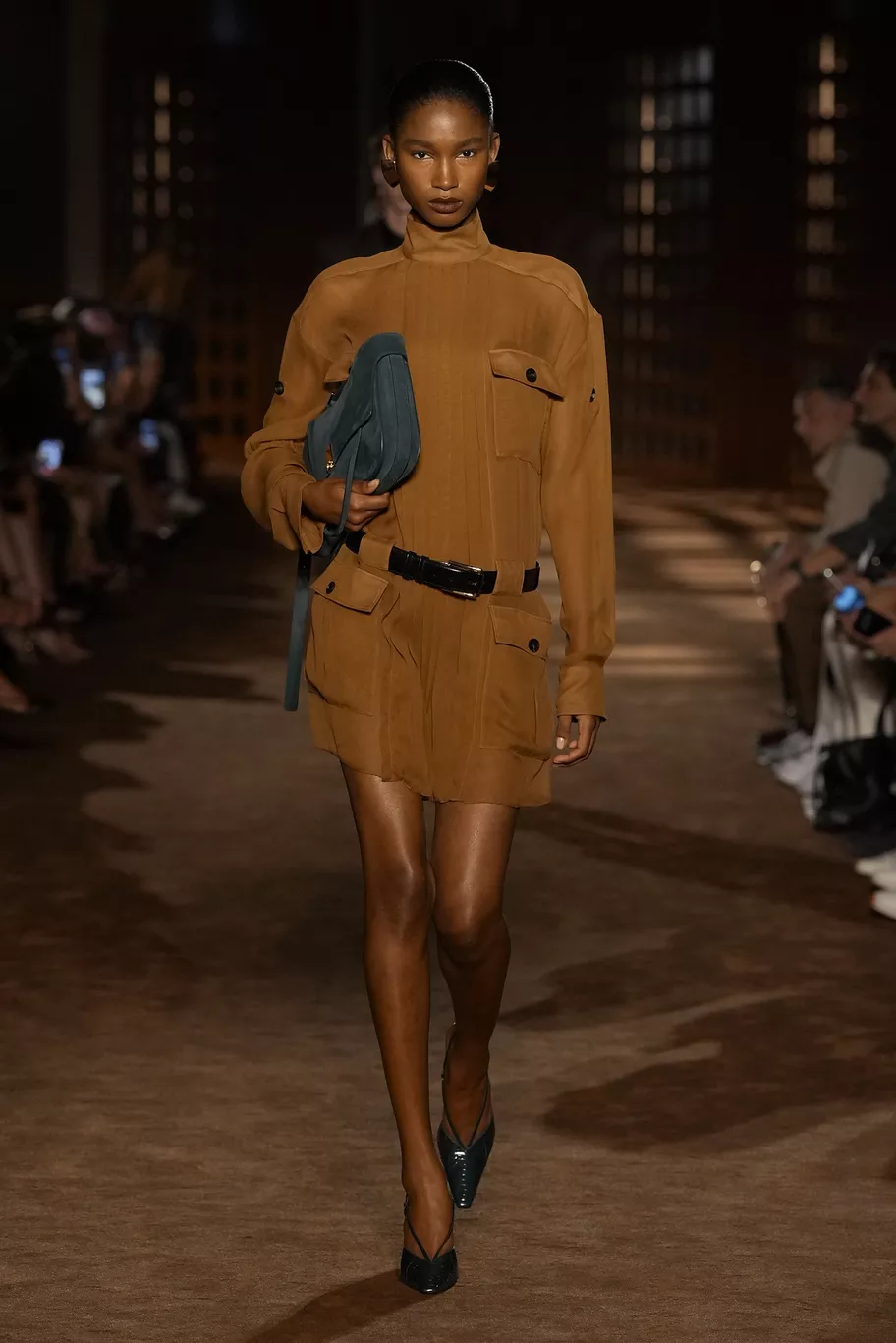
About the author
Anaelle Lise
Fashion editor and writer covering design, image-making and the creative networks connecting Southeast Asia.