Runway
Fendi SS27 brings intimacy into the shared wardrobe
Maria Grazia Chiuri combines lingerie, tailoring and Italian cultural memory in a collection that gives the wearer control over exposure.
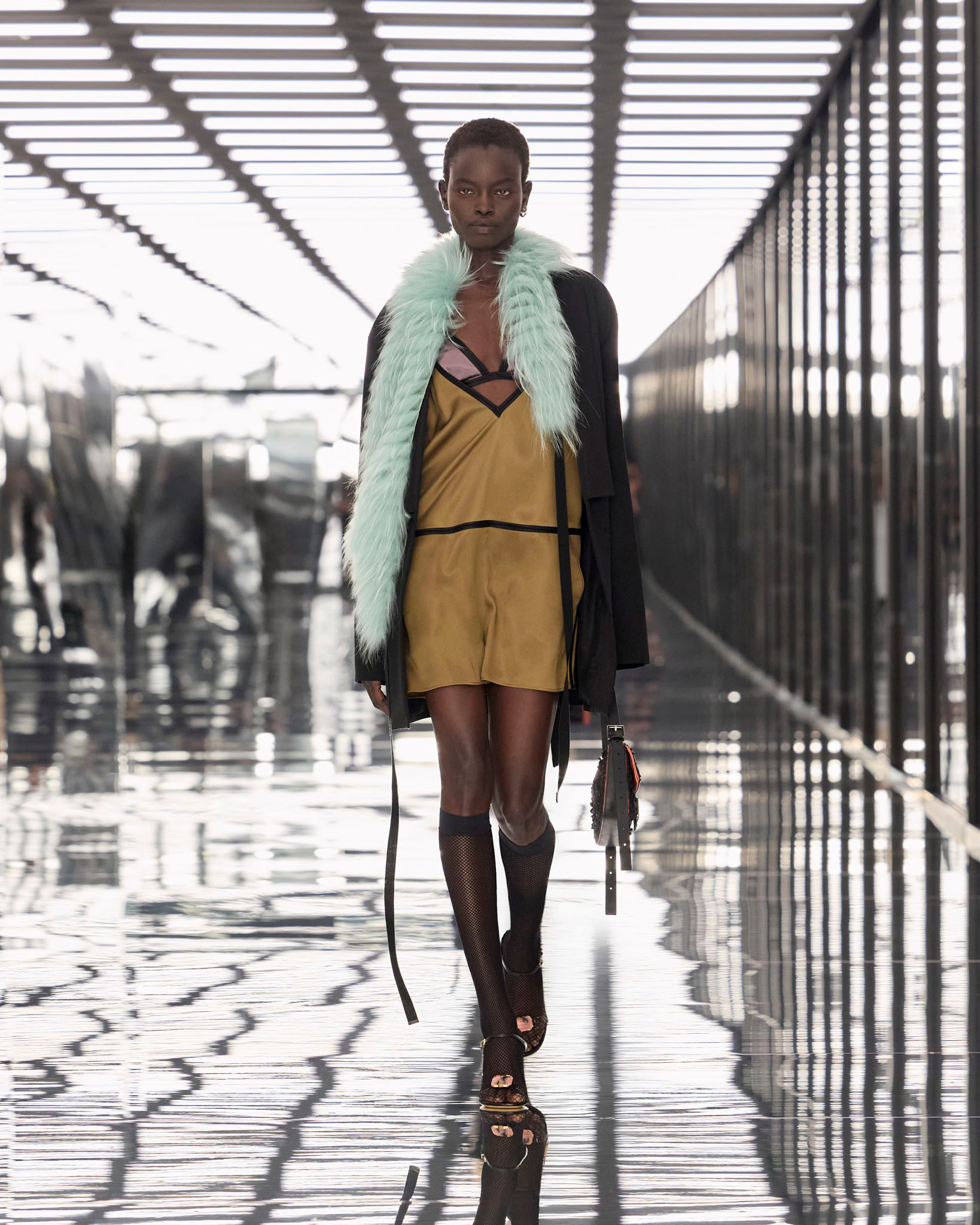
Fendi’s Spring/Summer 2027 collection made the relationship between the body and its covering the central subject. At Maria Grazia Chiuri’s 23 September presentation in Milan, undergarments became visible components of the outfit, interacting with tailoring, dresses and outer layers. A mirrored runway complicated the experience of looking, multiplying images while making the actual clothes harder to read. The combination is revealing: a collection interested in intimacy appeared inside a setting that turned observation into part of the spectacle.
For a Singapore audience, the appeal is in the choices that lie between concealment and exposure. Lingerie dressing can be presented as a command to reveal more, but its more useful possibilities involve layering and contrast. An intimate-looking fabric can sit against a controlled jacket. A small glimpse of lace can interrupt a formal surface. Fendi’s proposal invites a closer discussion of how sensuality is constructed and who determines its terms.
The first layer becomes visible
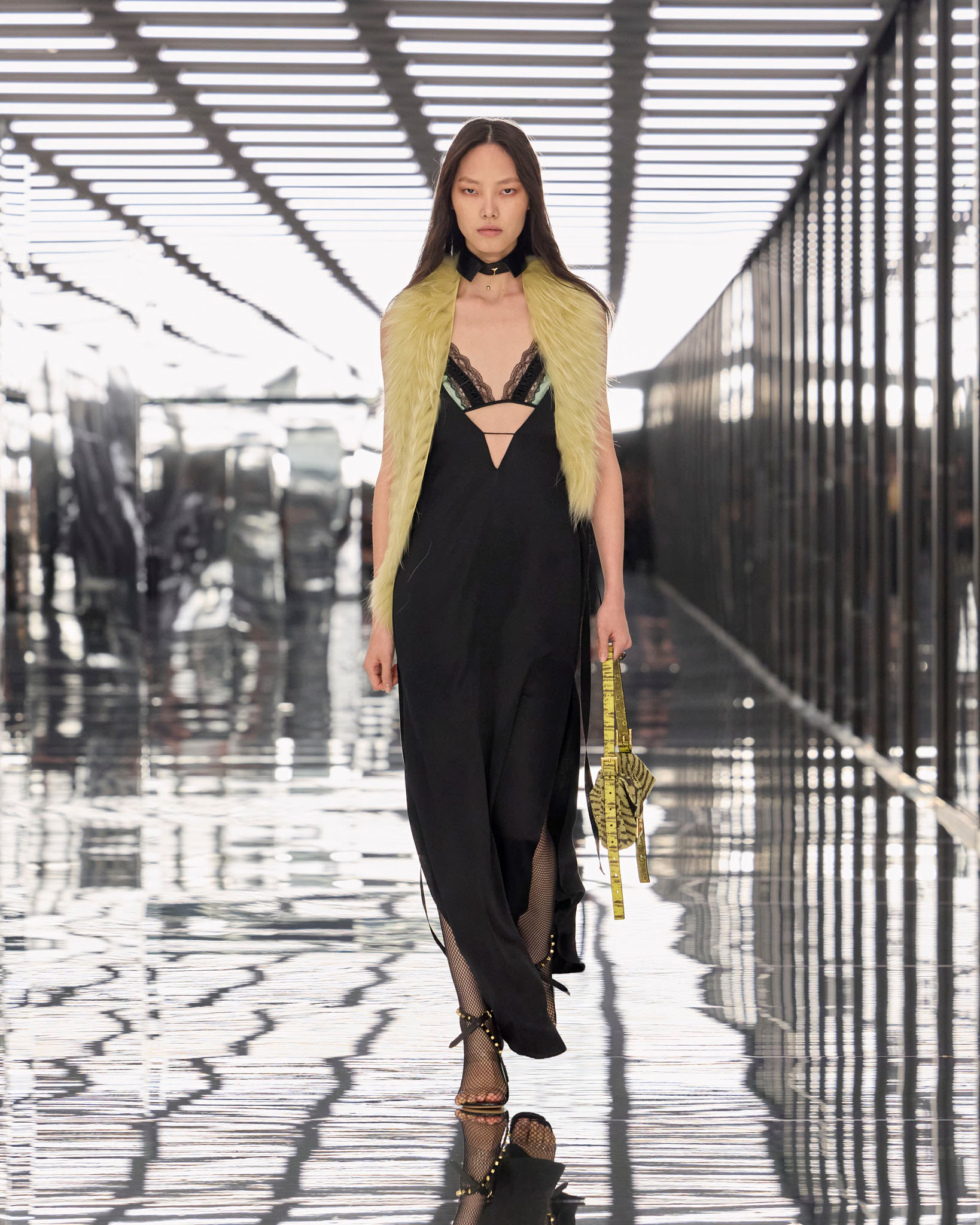
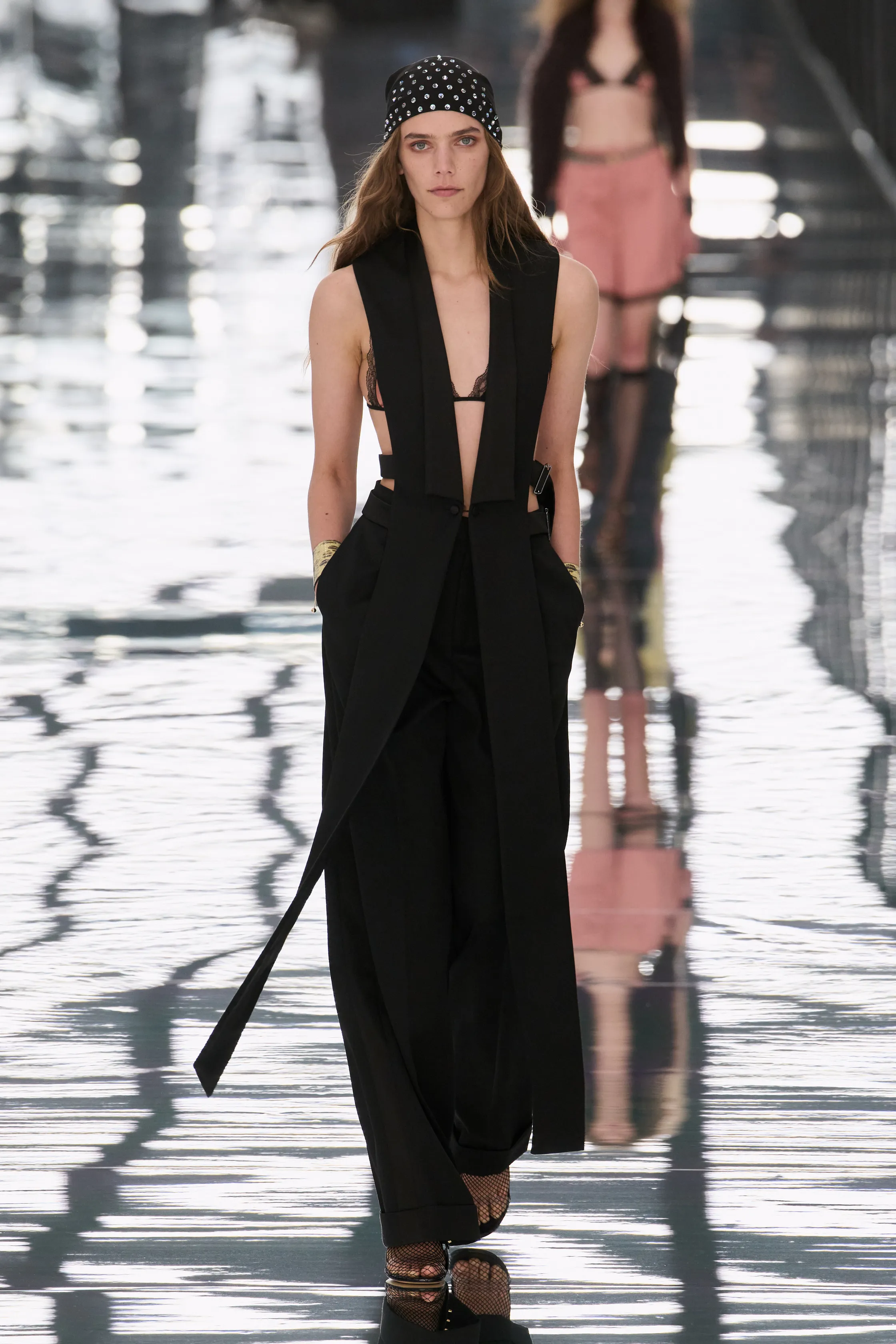
Runway reporting identifies lace-trimmed slips, detached leather shirt collars and delicate bralettes beneath deconstructed vests and open shirts. Colour included soft pastels alongside black, with leopard adding another register. Those details establish a wardrobe in which the underlayer is sometimes the focal point and sometimes a supporting element. It is the variation, rather than exposure alone, that makes the idea worth following.
The relationship between intimate and public clothing is never entirely fixed. A slip can read as an undergarment in one setting and an evening dress in another. The surrounding pieces tell the viewer how to understand it. A precise collar introduces formality. A coat frames the body differently. The design opportunity is to make these shifts available without making the wearer feel that there is only one legitimate way to look sensual.
Italian memory gives the clothes context
Chiuri’s reference point included Raffaella Carrà, the Italian performer whose public image connected entertainment with freedom and sexuality. AnOther’s account situates the collection within that cultural history and Fendi’s own history of women leading the house. This helps explain why the clothes cannot be reduced to a generic return of the bra top. Their intimacy participates in a broader conversation about visibility and self-determination.
For readers outside Italy, the reference is most useful when treated as context rather than a requirement. A viewer does not need to recognise every cultural signal to understand the difference between clothing that displays a body and clothing that gives its owner choices. The former can feel predetermined. The latter allows adjustment, layering and changes of mood. That is the more compelling route into Fendi’s argument, especially when translating a European runway into another everyday environment.
The mirror has limits
The reflected set deserves scrutiny alongside the clothing. Multiple images can turn a runway into a meditation on how people see themselves and one another. They can also interfere with the basic task of examining a collection. Reports from the show describe that difficulty. When craftsmanship is part of the house’s proposition, a presentation that obscures the garment creates a tension between concept and communication.
That tension is relevant to a digital reader. Spectacular staging can become the most widely shared image of a collection, even when it supplies little evidence about the product. The useful response is to separate the emotional effect of the show from the details that survive in clearer runway photographs. A mirrored environment may be memorable. The collection still has to communicate through line, construction, surface and the way separate pieces work together after the setting disappears.
Craft close to the body
Chiuri’s emphasis on craft, reported in her comments around the show, directs attention towards making rather than silhouette alone. Fendi’s collection brought a sense of lightness to that discussion. These are statements about the designer’s approach, not proof that every garment will feel equally light or practical on every wearer. They establish what to investigate when looking more closely.
There is particular interest in craft that occurs near the body. A delicate edge, a small transition between materials or the handling of a collar can influence how a garment feels as much as how it photographs. The visual language of lingerie encourages that close attention. It also exposes weaknesses quickly: an unresolved junction or an awkward fit becomes more consequential when the garment’s apparent simplicity leaves little room to hide it. Intimacy raises the standard of execution.
A local styling interpretation
For Singapore dressing, we would start with the relationship between an underlayer and a public-facing piece. A lace-edged top beneath an open shirt offers a controlled entry into the idea. A slip-inspired dress can take on a more deliberate daytime character with a crisp, lightweight layer. The wearer can decide how much contrast is appropriate for the occasion rather than assuming that the runway’s balance must be retained.
Colour offers another route. A pale intimate layer may soften dark tailoring, while a darker underlayer can give a light outfit a defined centre. These are editorial suggestions, not claims about consumer demand. Fabric composition, opacity and lining remain essential to practical selection. A look described as light can still have a warm or restrictive construction. The point is to preserve Fendi’s negotiation between layers while choosing individual garments that work in the climate and in the owner’s life.
There is also a difference between clothing that feels intimate and clothing that is physically revealing. A close, tactile surface can create intimacy while covering the body. A more exposed outfit can remain emotionally distant if its shape feels rigid or impersonal. Keeping those effects separate expands the ways a person can respond to the collection. The wearer may be interested in a delicate edge, the contrast of a collar or the movement of a soft layer, while having no desire to adopt the runway’s degree of exposure. That is a complete response to the design, rather than an incomplete version of the look. Fendi’s interplay between layers makes room for this distinction, allowing sensuality to be located in touch, association and proportion as well as in what the viewer is permitted to see.
Sensuality beyond a single image
The strongest interpretation of the collection gives the wearer permission to change the relationship between pieces. A collar might sharpen a soft dress. A coat can make an exposed layer feel less vulnerable. A completely covered version may still retain the tension of lingerie dressing through texture and association. Sensuality becomes something that can be adjusted instead of a fixed percentage of visible skin.
Fendi SS27 is most interesting at that point of choice. Its Italian reference adds emotional depth, and its mirrored staging exposes how much fashion depends on the act of looking. Yet the lasting value lies closer to the body: in the dialogue between intimate fabrics, public clothes and individual preference. For StraitsG readers, that gives the collection a useful place in a wardrobe discussion that can accommodate confidence, modesty, playfulness and change without forcing them into one idealised image.
Gallery
3 images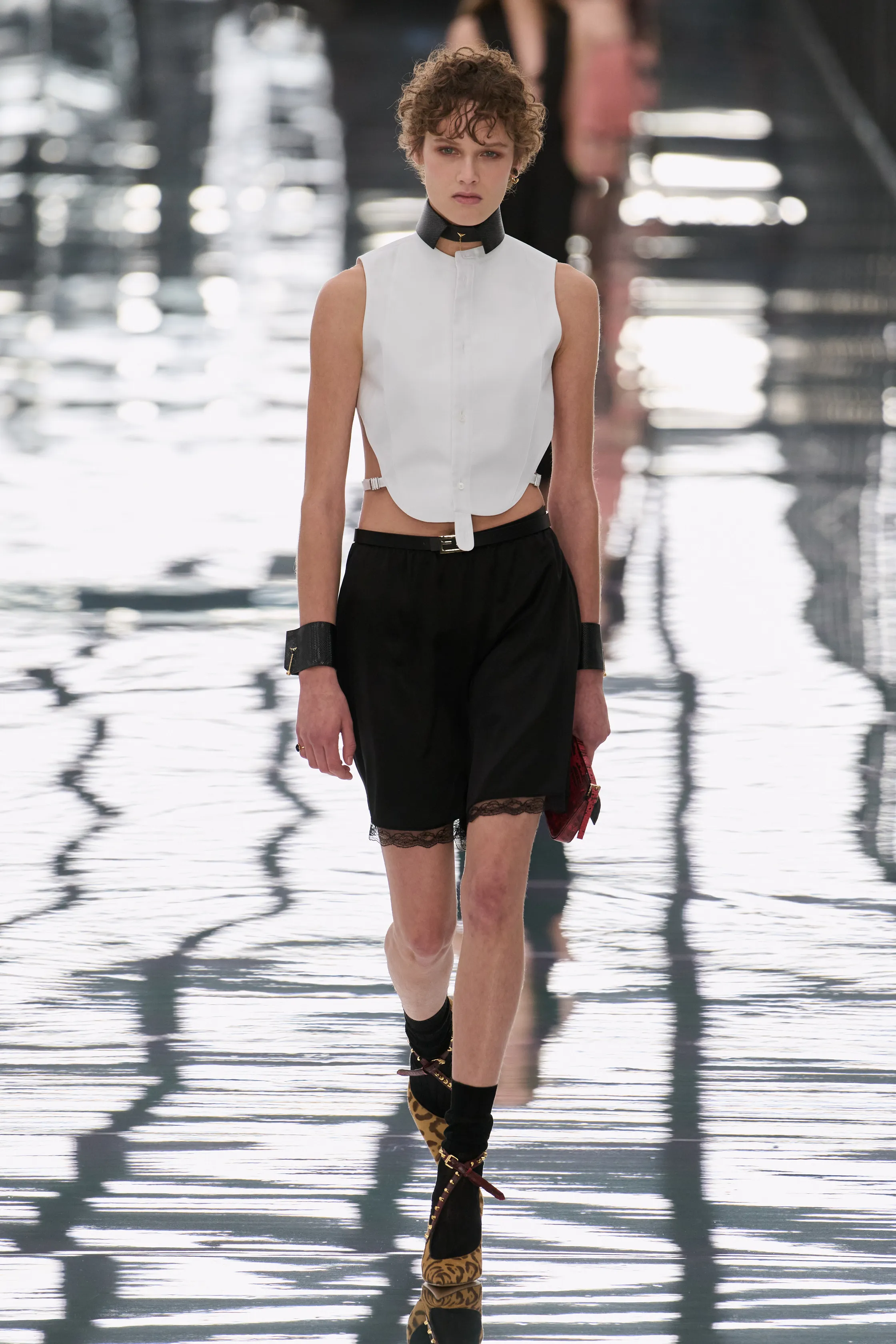
About the author
Anaelle LISE
Fashion editor and writer covering design, image-making and the creative networks connecting Southeast Asia.