Fashion / Shopping · Style · Trends · News
Singapore’s Circular Fashion Future: The Road to 2030
The country’s fashion sector is moving from sustainability statements toward textile circularity, material innovation and measurable industry change.
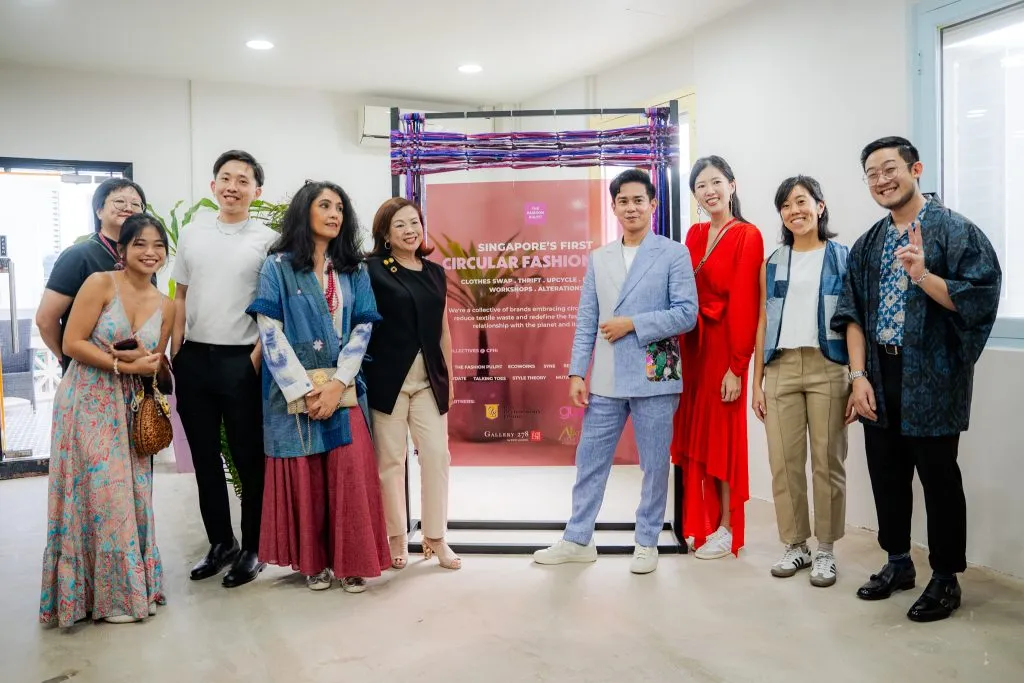
Singapore’s circular-fashion conversation has become more concrete. The Singapore Fashion Council has identified a target of a 50 per cent emissions reduction for the fashion sector by 2030 and has highlighted circular business models, sustainable materials and industry-wide collaboration as key areas of action.
The numbers behind the challenge are equally significant. Singapore imports more than S$1 billion worth of textiles annually, while up to 41,000 tonnes of textile waste are generated each year, according to the Singapore Fashion Council.
In 2025, the council introduced the Textile Circularity Consortium to bring together players across the textile value chain and explore systems that extend textile lifecycles and turn waste into value. A sectoral sustainability roadmap was also being developed for release in 2026.
The important shift is from “green fashion” as a consumer aesthetic to circularity as infrastructure. Recycling, repair, reuse, material traceability and better production decisions all require systems that work behind the finished garment.
For Singapore, that could become a competitive advantage. A compact, highly connected city is well suited to testing circular models that could later scale across Southeast Asia.
The road to 2030 will not be solved by one collection. It will be built through infrastructure, incentives and better design decisions repeated across the industry.
About the author
Jing Yi Tan
Fashion editor and writer covering design, image-making and the creative networks connecting Southeast Asia.