Fashion
Chloé SS27 gives romance a more assertive outline
Chemena Kamali’s Obsession collection turns eyelet, floral craft and substantial outerwear into a dialogue between softness and self-possession.
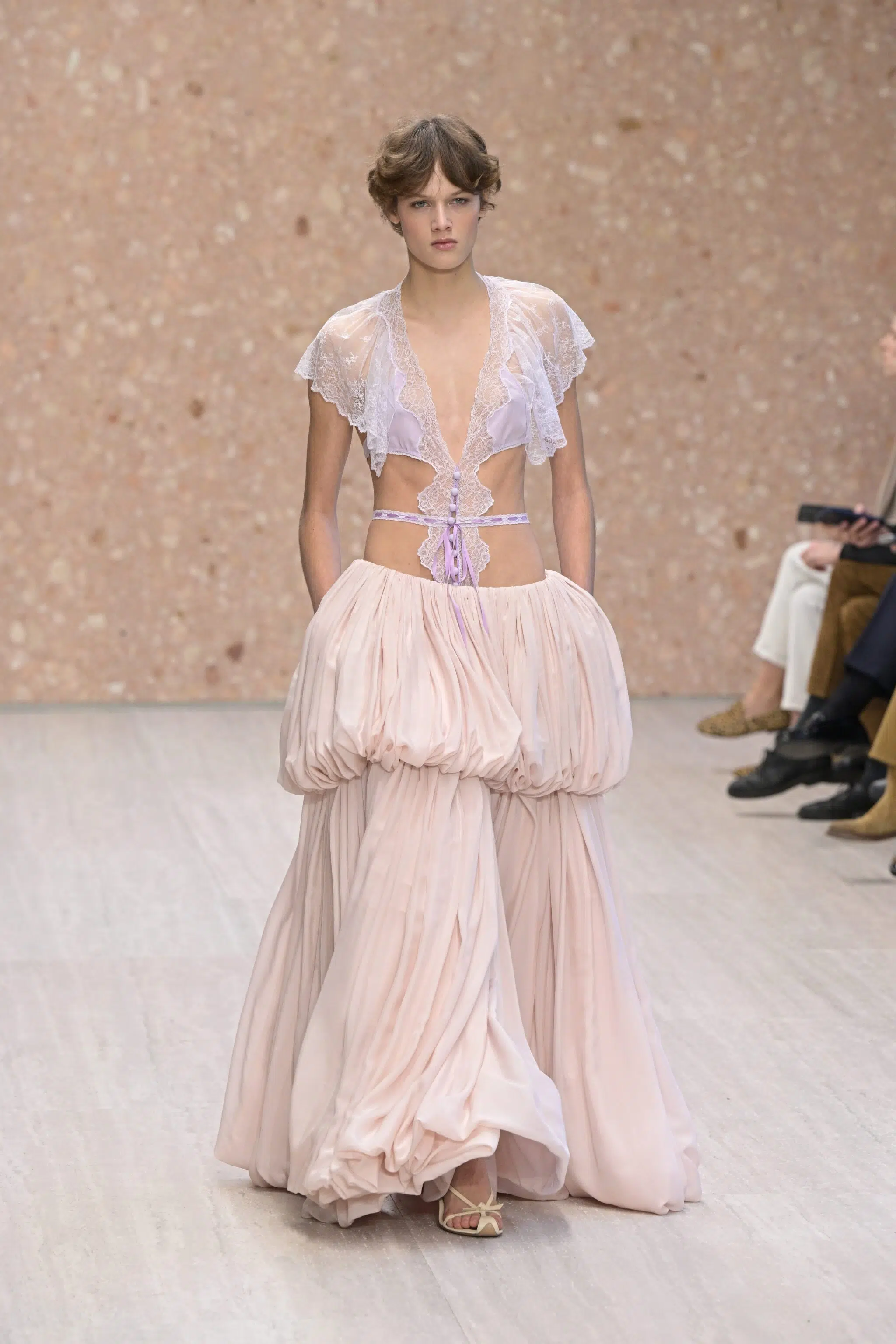
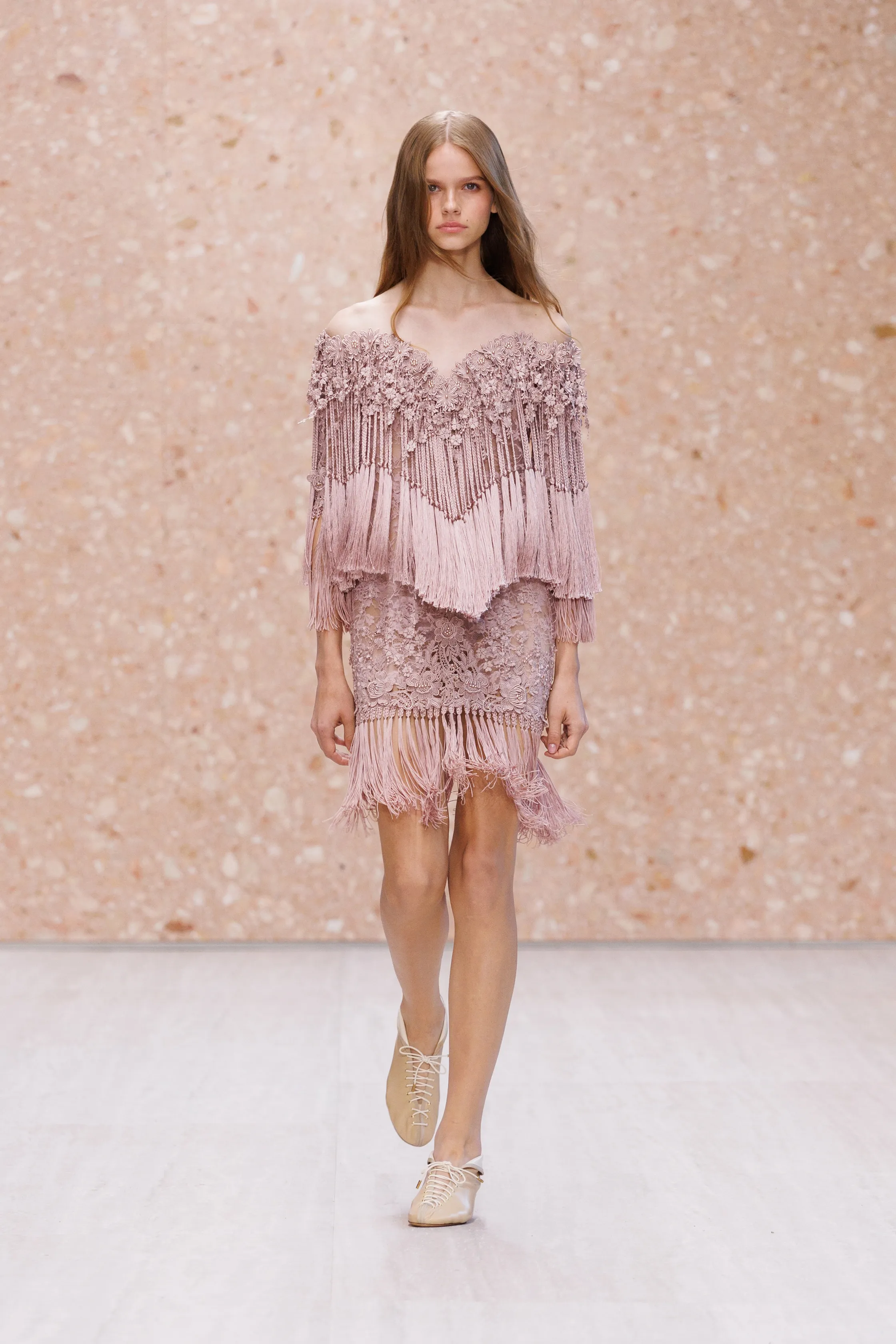
Chloé’s Summer 2027 collection began from Chemena Kamali’s stated personal attachment to the house. Called Obsession, the collection revisited the fabrics, shapes and emotional associations that draw her to Chloé, rather than organising them around an unrelated seasonal theme. At the 1 October 2026 Paris show, broderie anglaise and dimensional floral work encountered tailoring and substantial raincoat silhouettes. The proposition was romantic, but its more interesting moments gave that romance another kind of outline.
For StraitsG’s Singapore audience, this offers a useful distinction. Softness in clothing does not need to communicate passivity. A delicate surface can coexist with a determined silhouette. An airy garment can acquire authority through its relationship with another piece. Chloé’s collection invites the reader to examine those relationships, moving beyond the broad label of bohemian dressing towards the specific design decisions that make an outfit feel personal and composed.
Obsession becomes an editing method
Kamali’s official account describes an intuitive return to Chloé archetypes, including early dresses associated with broderie anglaise and the possibilities of three-dimensional floral embroidery. The house also identifies archival threadwork as a reference. These are concrete points of departure, giving a personal approach an identifiable design foundation. [1]
An obsession can be productive when it leads to closer examination. Repeating a loved fabric may reveal another way to handle it, a different scale of pattern or a less expected relationship with the body. It becomes limiting if affection prevents judgment. The critical question is whether the archive is being used to generate possibilities or simply to reassure. Chloé’s range of delicate and more assertive elements gives the reader a way to assess that distinction within the collection itself.
Eyelet is more than an association
Broderie anglaise carries a familiar image of summer and romantic dressing, but its interest is also structural. The relationship between embroidery and openings changes the surface’s density. Light can pass through it while the stitched pattern maintains a sense of order. That combination gives an apparently soft fabric a strong internal logic.
Our interpretation is that this helps explain why eyelet can support different moods. It can appear innocent, formal or sensual depending on scale, shape and what is visible beneath it. A fabric does not possess a single personality independent of the garment. The wearer’s styling completes its meaning. This is especially useful for readers who like Chloé’s romantic register but prefer a less nostalgic image. The material can be retained while its surrounding context changes.
Outerwear interrupts delicacy
Runway accounts identify large fisherman-inspired raincoat shapes and tailored pieces beside the lace. Associated Press reporting likewise describes the contrast between lingerie elements and substantial outerwear. These sources establish a collection that does not rely entirely on a continuous soft silhouette. The heavier visual frame gives the delicate work something to resist.
The relationship matters more than the literal need for a European raincoat. A romantic piece can look more decisive when it is paired with a controlled or protective shape. The contrast does not have to be reproduced through weight. It can come from a straighter line, a sharper collar or a more substantial-looking accessory. The garment’s emotional register becomes less predetermined because its companion introduces another way to read it.
Tailoring keeps the wardrobe open
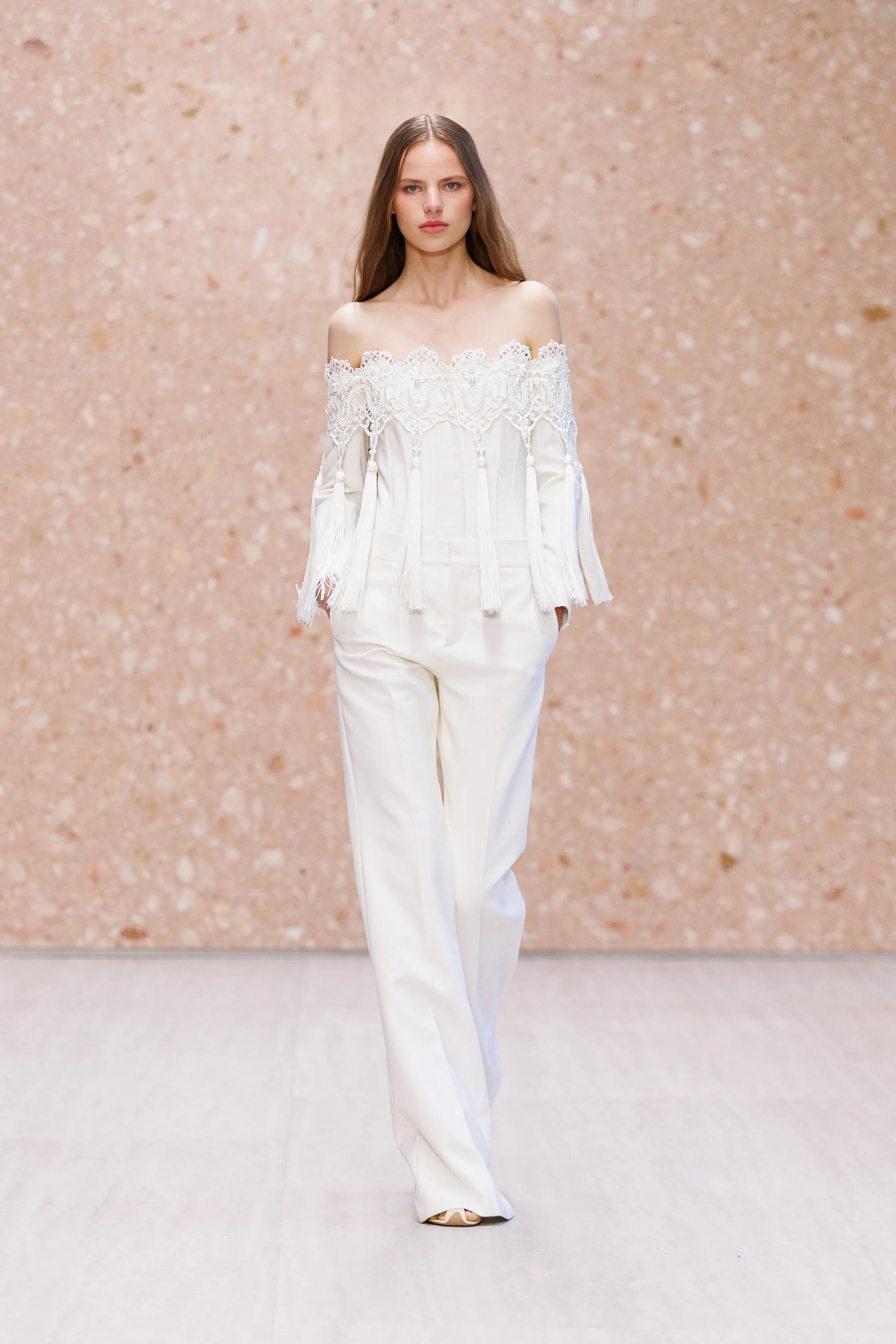
Tailoring is particularly useful here because it expands the possible contexts for the collection. A completely delicate wardrobe may appear suited only to a narrow set of occasions. A tailored element allows it to encounter work, city life and more formal expectations without requiring the romantic pieces to lose their character.
That is an editorial interpretation rather than a prediction about sales or consumer behaviour. It suggests a way for an individual to make the collection’s vocabulary more useful. A precise jacket can organise a flowing lower half. A clean trouser can provide a calmer setting for an expressive blouse. The point is to retain difference inside the outfit. If every element becomes equally soft, the contrast disappears; if every element becomes strict, the romance becomes a token detail rather than an active part of the composition.
A Singapore wardrobe interpretation
Our local edit would begin with one romantic surface and a simpler, more controlled companion. An eyelet top can work with an uncomplicated skirt or trouser. A floral or lace dress may need only a considered shoe and bag, rather than another layer of equally detailed accessories. The wearer can choose how much volume and exposure feel appropriate to the occasion.
Practical assessment should look beyond the suggestion of summer in a fabric’s name or appearance. Eyelet may include a lining; embroidery can add weight; a light-looking layer may have a dense base material. Singapore dressing requires individual checks of composition, fit and movement. These considerations do not weaken the collection’s emotional appeal. They help determine which version of that appeal can become part of a normal day rather than remain an image saved for inspiration.
A romantic fabric can also carry different degrees of formality within the same wardrobe. The surrounding outline may make it suitable for a more composed setting, while simpler companions bring it closer to everyday use. That flexibility depends on the specific piece, especially its transparency, length and volume. It should not be assumed from the general appeal of lace or eyelet. A person can identify which feature they respond to most strongly and build around it. If the attraction is the surface, the shape can remain calm. If the attraction is volume, the accessories may need less emphasis. This selective response keeps the garment from becoming a fixed costume of romance. It gives the wearer several ways to preserve the emotional quality they like while making the overall image more closely reflect their own taste and routine.
Romance without a fixed character
A romantic collection can easily be discussed as if it describes one ideal woman. That approach narrows the design’s possibilities. The more useful reading allows the same fabric or shape to serve different people, each with their own preferences about polish, sensuality and practicality. An archetype can offer a starting image, but it should not dictate how a wearer must behave.
Chloé SS27 is most persuasive when its delicate work remains open to that reinterpretation. Kamali’s attachment to the house supplies continuity, while the encounters with tailoring and outerwear introduce another degree of force. For StraitsG readers, Obsession offers a way to think about softness as an active choice. Romance can become part of a confident city wardrobe when its surfaces are given clear relationships, practical consideration and enough space for the owner’s character to shape the final result.
Gallery
4 images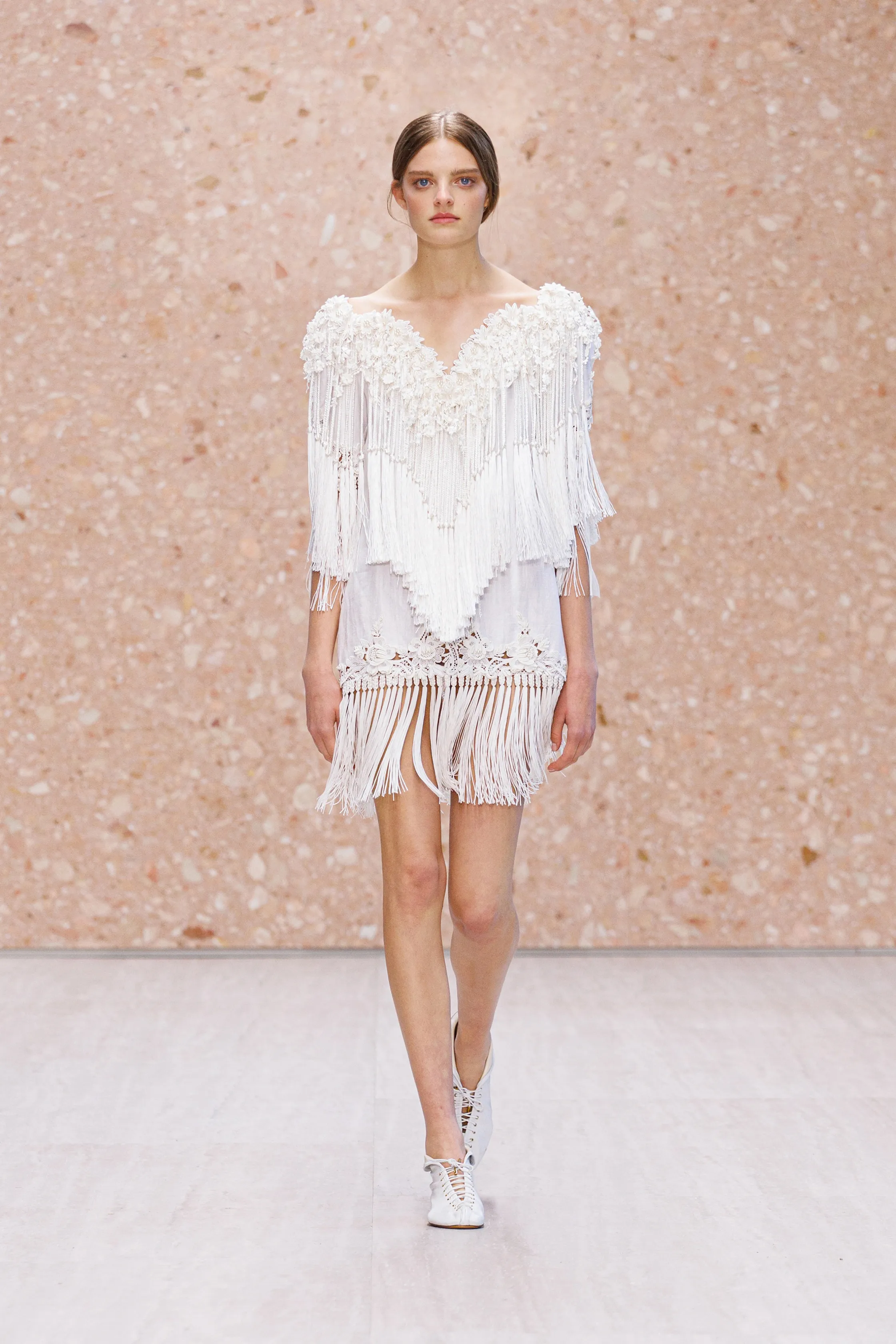
About the author
Nicole Cohen
Fashion editor and writer covering design, image-making and the creative networks connecting Southeast Asia.