Fashion / News · Trends · Shopping · Style
Prada SS27 makes the skirt a space for personal expression
Miuccia Prada and Raf Simons turn one familiar garment into Milan’s most focused proposition for getting dressed.
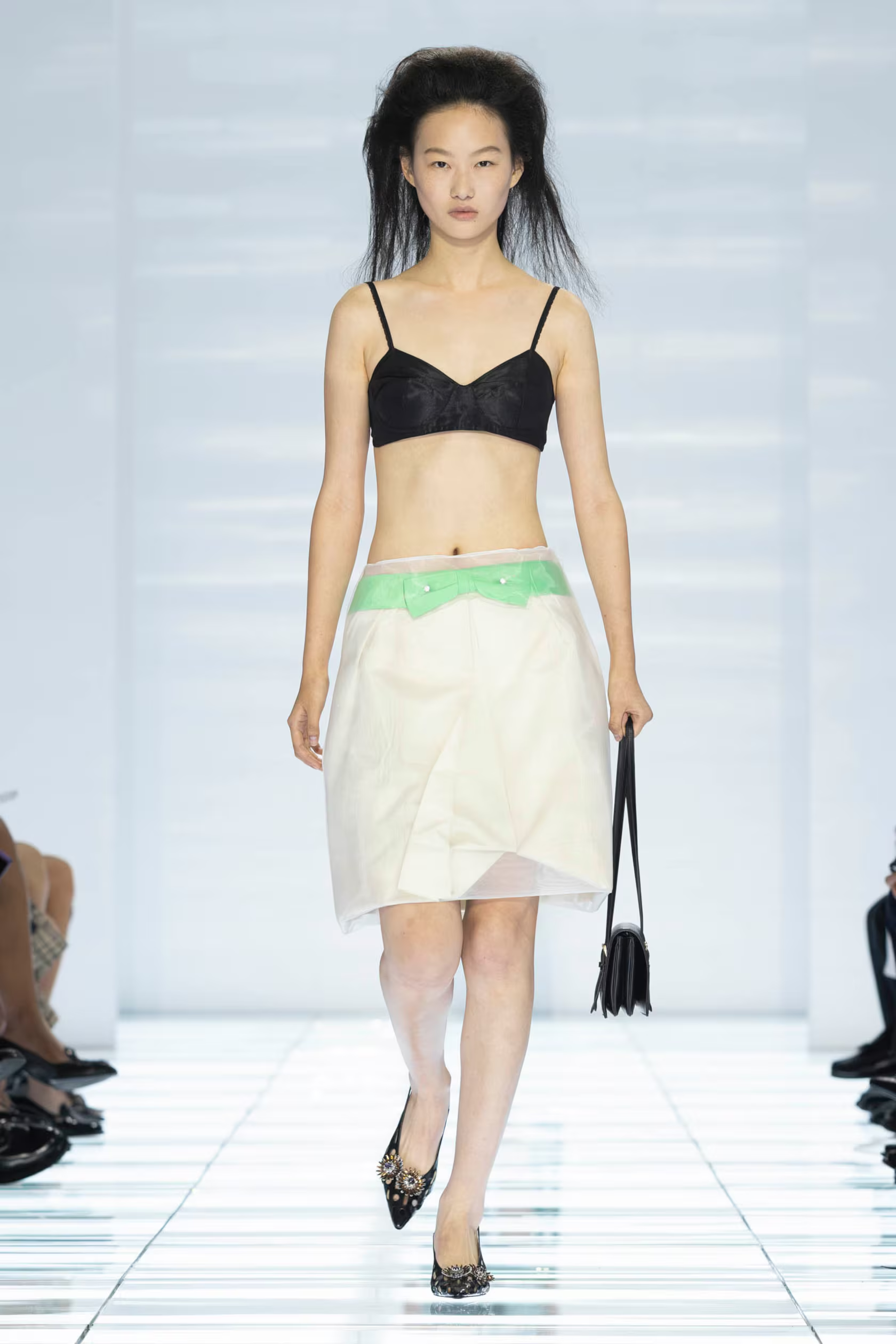
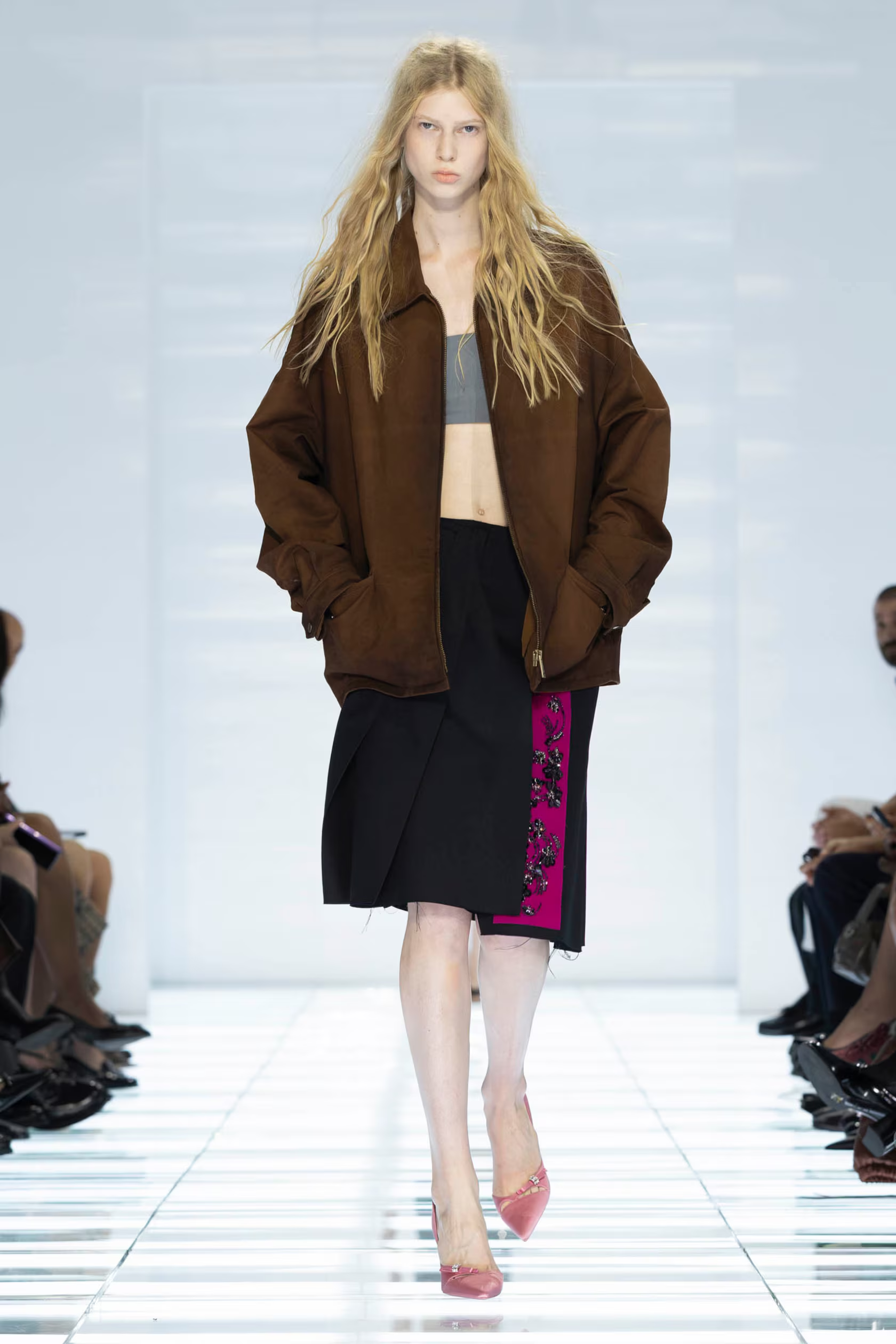
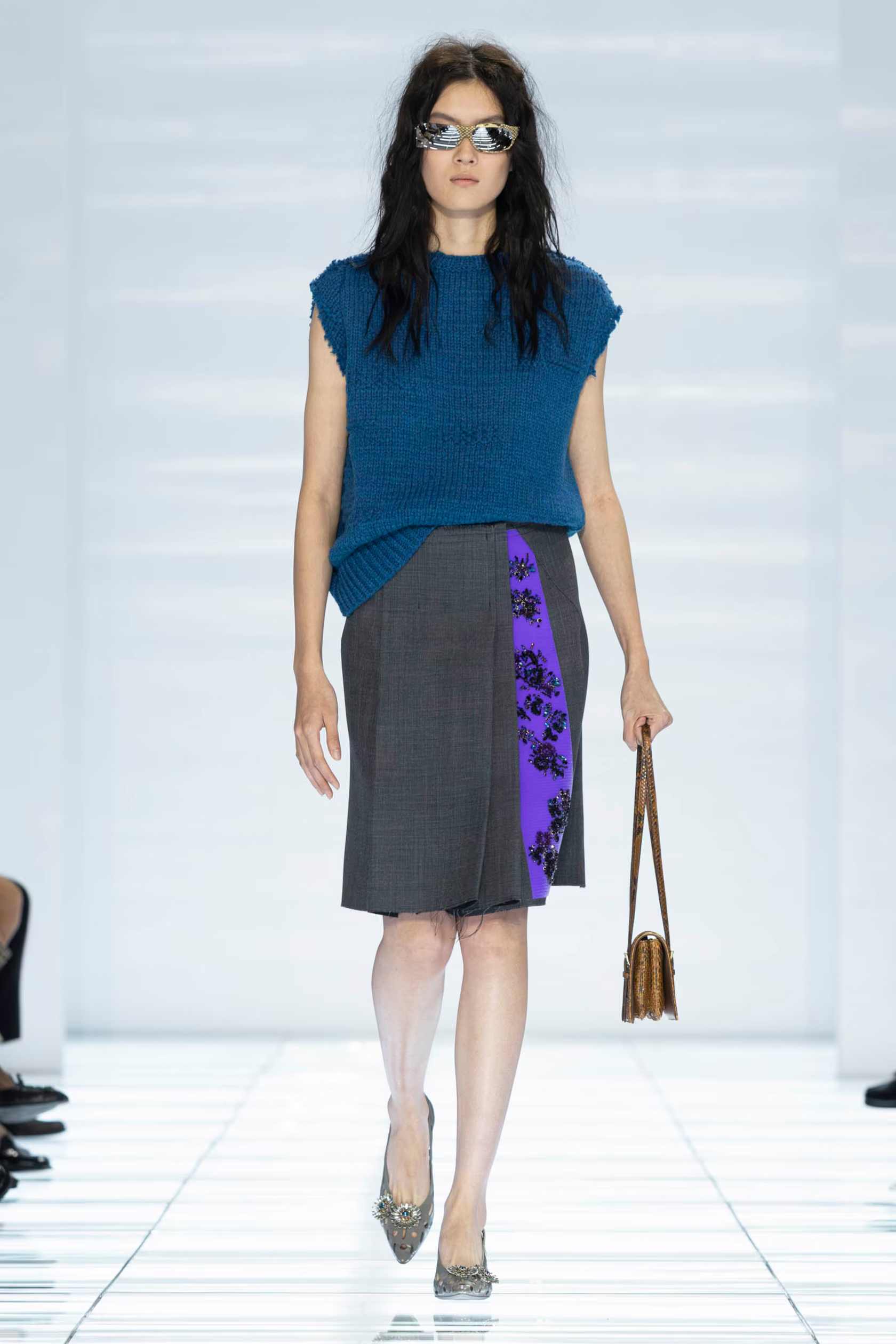
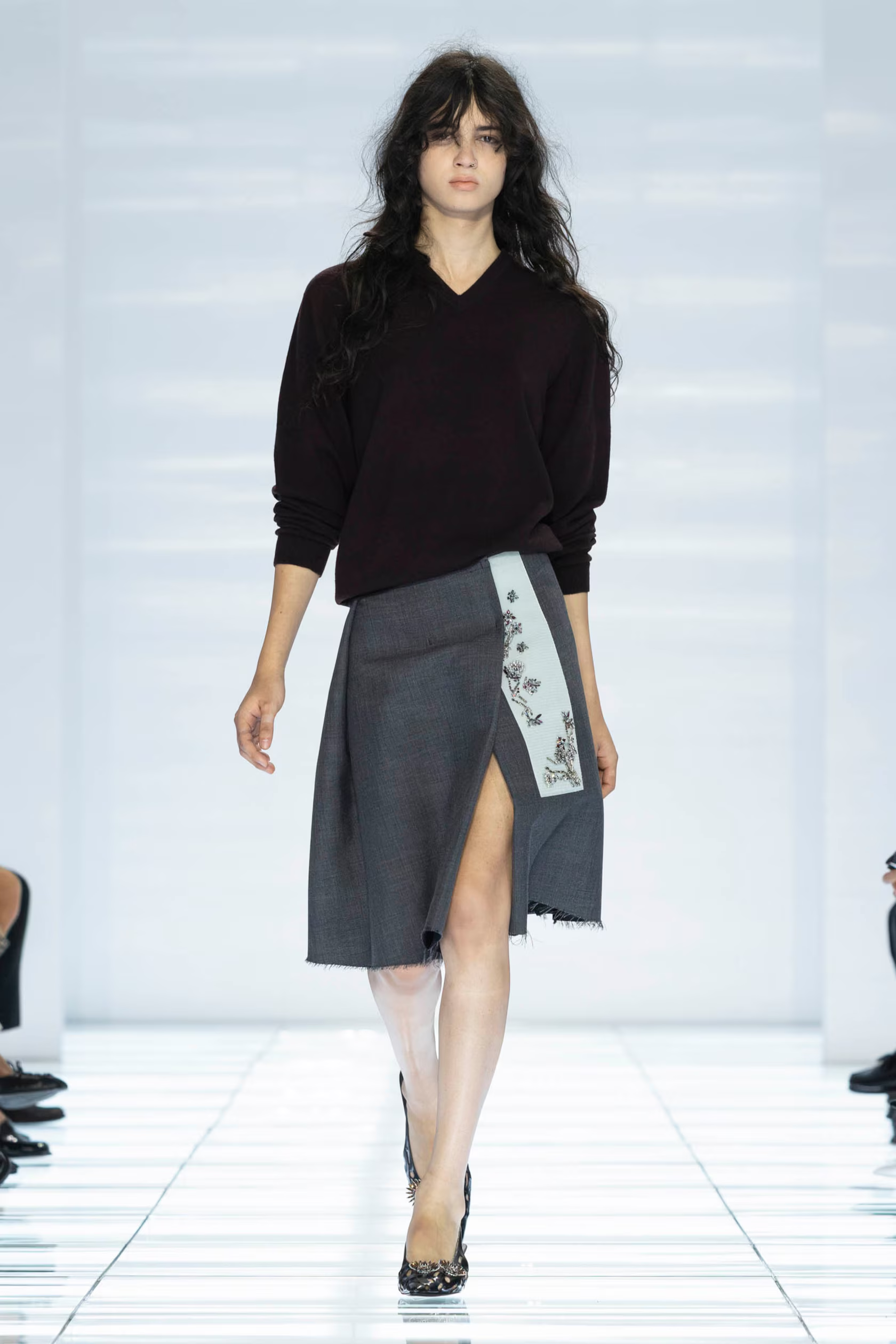
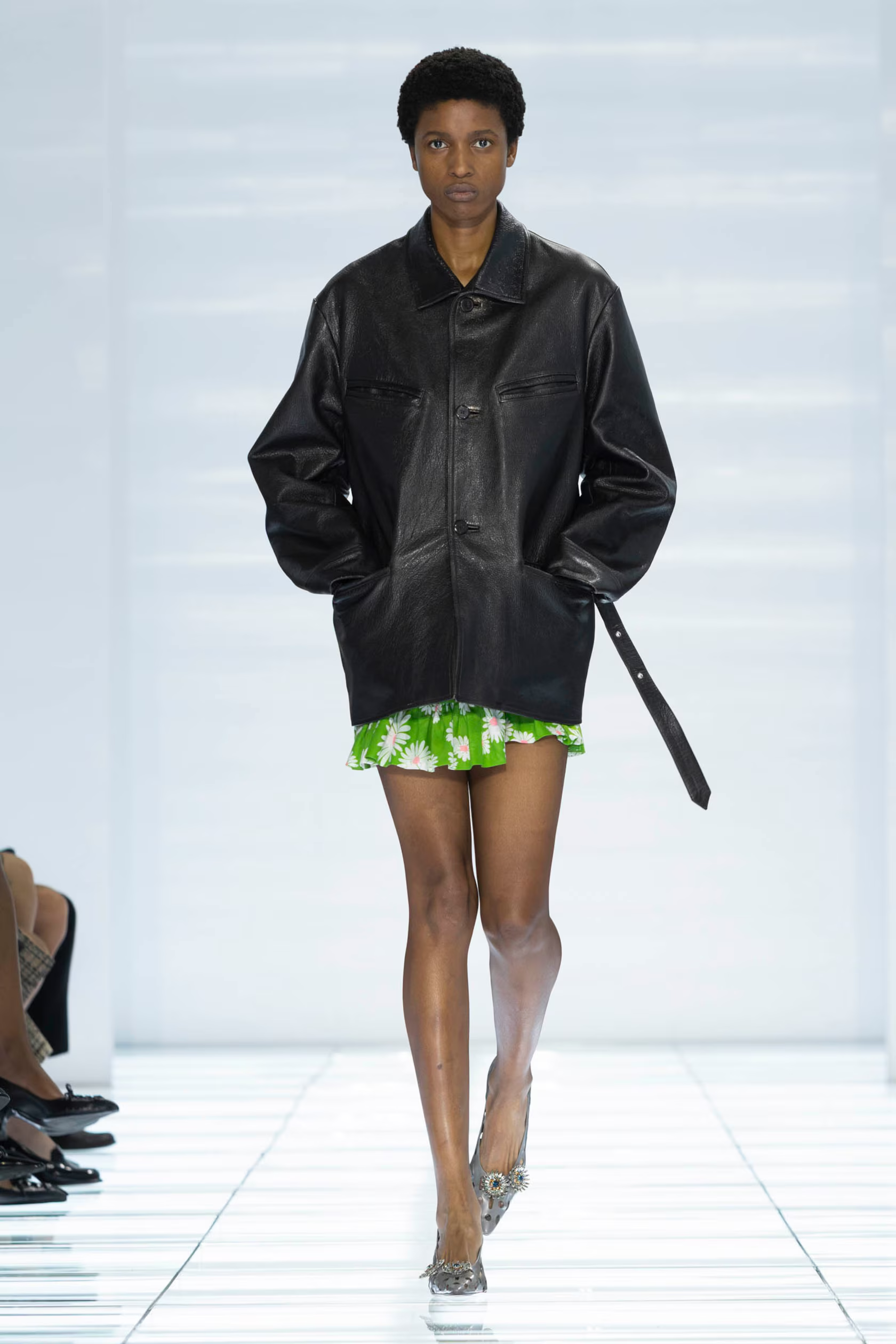
A skirt can be a uniform, an occasion piece or an almost invisible part of a daily routine. Prada’s Spring/Summer 2027 collection gave it the concentrated attention usually reserved for something completely new. Presented during Milan Fashion Week’s 22–28 September 2026 edition, the collection by Miuccia Prada and Raf Simons examined how much possibility could emerge from a deliberately narrow starting point. The house’s own account identifies the skirt as the object of investigation. That clarity is the strength of the proposal: a recognisable garment supplies the framework, while the wearer retains room to complicate it. [1]
For a Singapore audience, that approach has an immediate attraction. The question is less whether a runway skirt can be copied exactly than whether it can change how an existing wardrobe works. An expressive lower half can transform a familiar shirt, a restrained knit or an uncomplicated top. Prada offers a way of thinking about the outfit from the waist down, where silhouette, texture and movement become the main decisions.
## The discipline of one idea
Collections sometimes establish their ambition by moving through many themes. Here, the interest lies in concentration. When a garment remains recognisable across different treatments, small changes become easier to perceive. A closure alters its character. A surface changes its apparent weight. A layer interrupts the clean outline. The audience is invited to look more closely because the starting shape keeps returning.
There is a useful distinction between repetition and uniformity. Repetition lets an idea accumulate meaning. Uniformity removes difference. Prada’s premise allows the same category of clothing to host contradictory moods without losing its identity. A skirt can suggest decorum in one combination and deliberate disobedience in another. This is why the collection has more lasting interest than a simple proclamation about the season’s preferred hemline. It asks what clothing can do once a wearer begins to handle it.
## Fastenings come into view
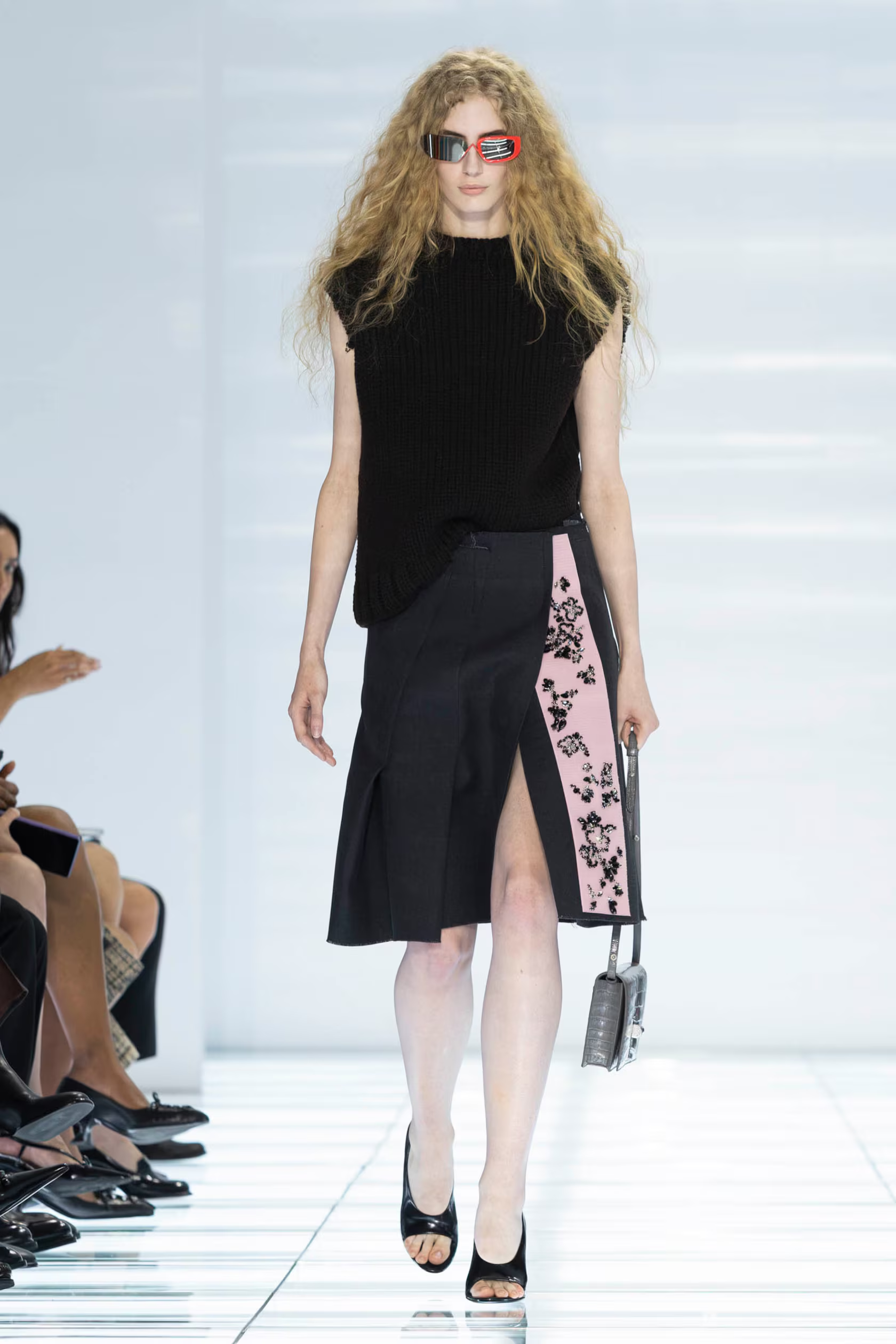
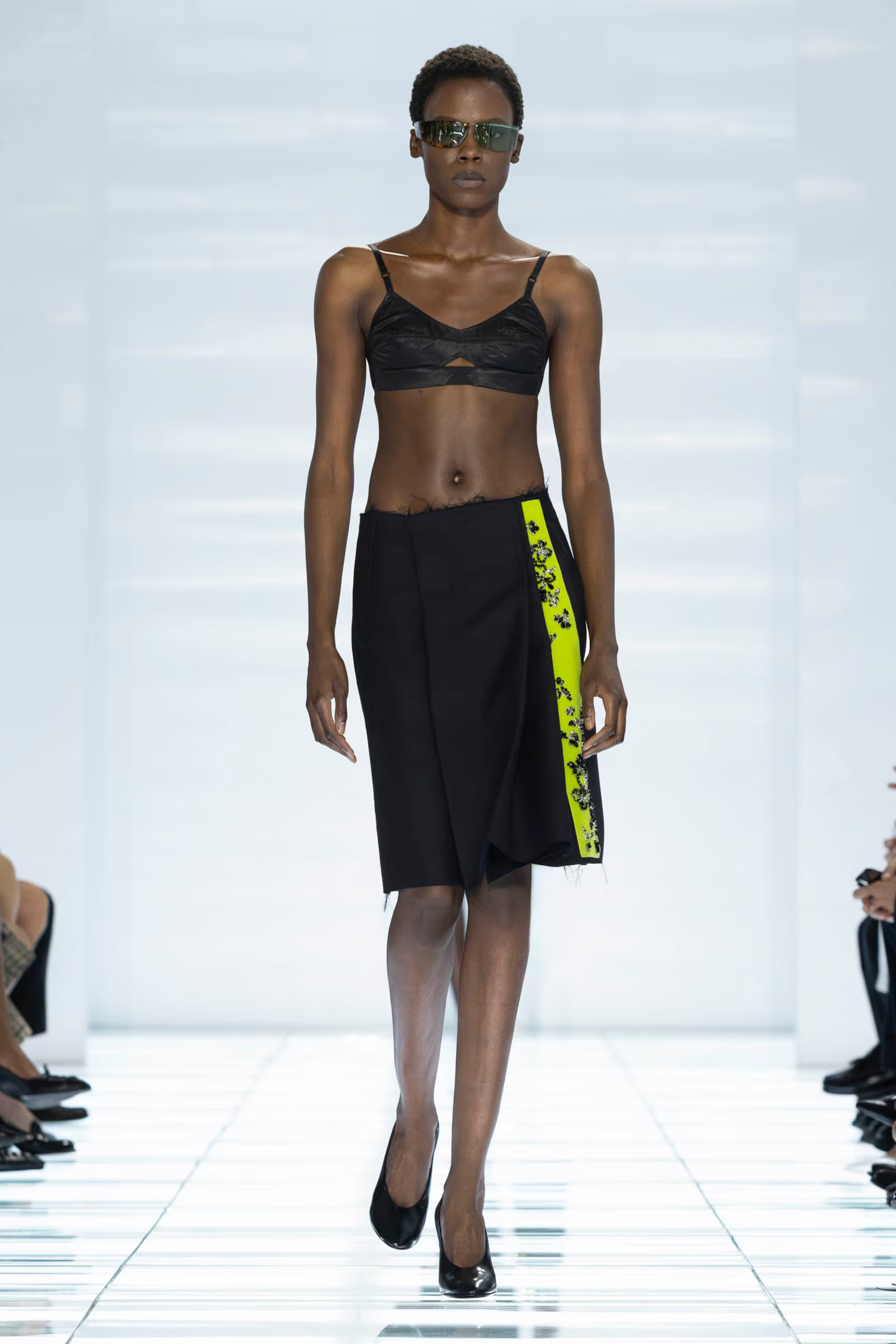
Prada describes contrasting Velcro used beneath crystal embroidery, adjustable closures and enlarged metal snaps treated as jewellery. Crinoline also moves into visibility as an outer element. These are specific construction choices, with a clear consequence: the mechanisms that shape a garment become part of its appearance. Utility and decoration occupy the same surface rather than being assigned separate roles. [1]
That makes fastening a styling decision. Usually, a closure is something the eye passes over once it has done its job. A visible, adjustable fastening can make the act of wearing more active. It introduces the possibility that an outfit need not look identical every time. The intriguing part is the connection between practical handling and visual pleasure. Beauty can occur where a hand touches, folds or secures the garment, rather than being confined to an embellishment that must remain undisturbed.
## Materials unsettle expectation
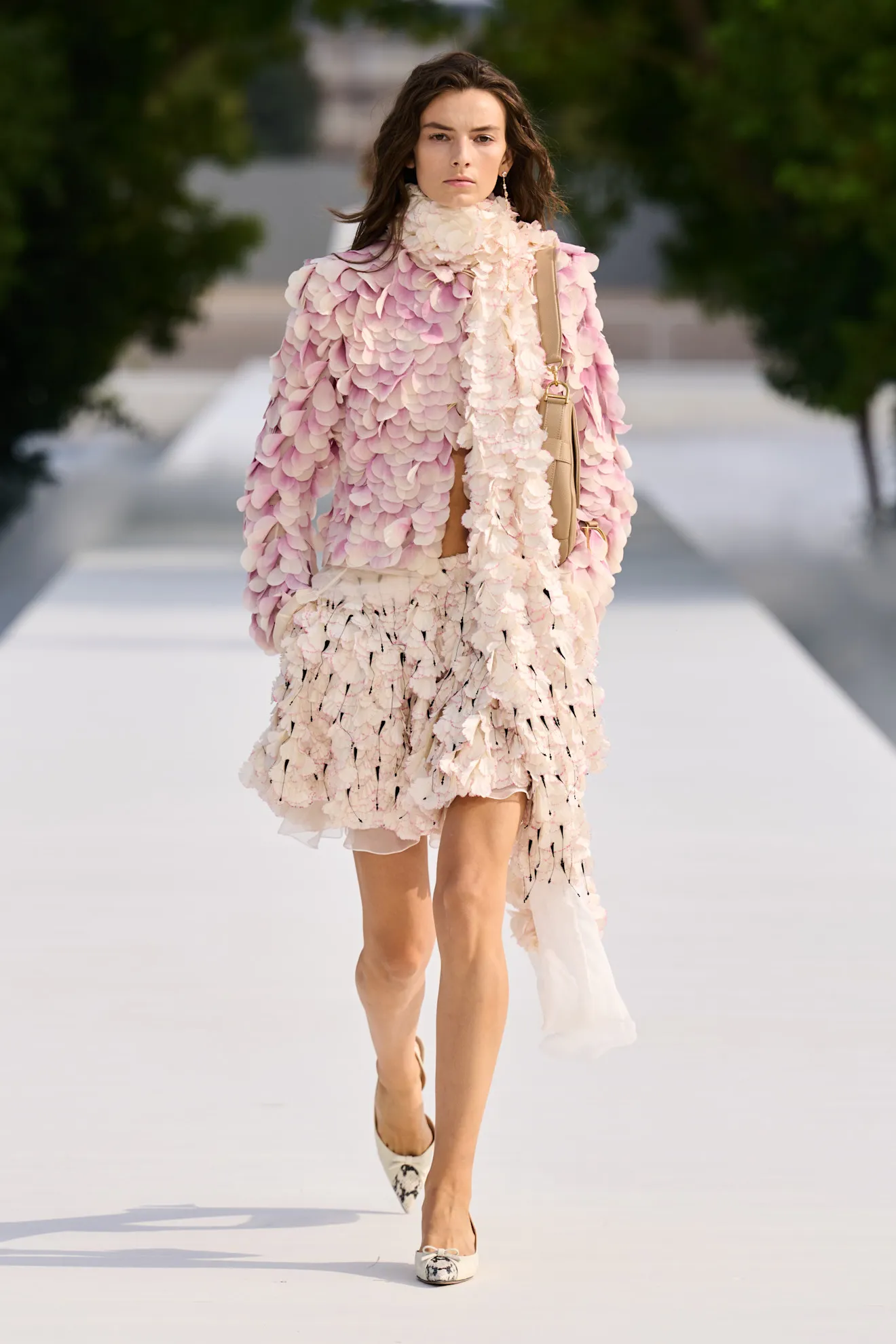
The house also records industrial materials translated into pleats, cotton treated to resemble leather or suede, and crystal structures that evoke lace. Independent reporting documents floral prints, sheer layers, embroidery and the return of a curved heel associated with Prada’s archive. Together, these details make familiarity unreliable in an interesting way. A surface may initially suggest one material and then reveal another. A conventional shape becomes a platform for an unexpected fabrication. [1][2]
Such effects reward looking beyond a thumbnail image. A small screen can make a collection appear to be about colour or exposure when its more consequential work is happening in construction. For the reader, the useful question is what changes between the first glance and closer inspection. Does the piece have a different relationship to light? Does the surface suggest stiffness while the garment moves softly? These distinctions explain why apparently simple clothes can hold a complicated design argument.
## The upper half becomes a choice
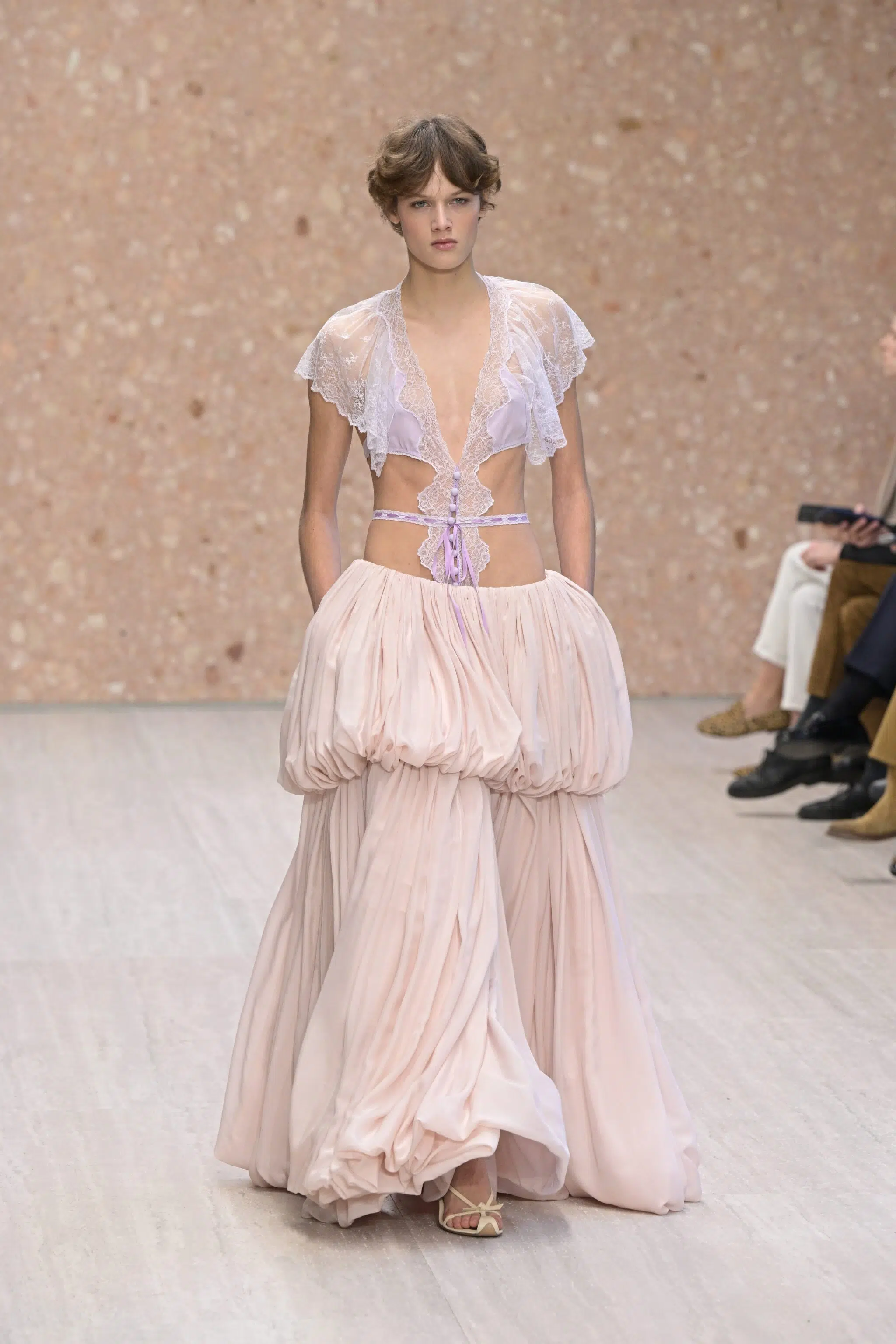
Runway coverage notes skirts paired with simple bralettes, alongside other tops and outer layers. The styling directs attention without requiring every wearer to adopt the same amount of exposure. A bare upper half gives the skirt greater visual authority. A shirt introduces a different social register. A jacket can make the same lower half look more formal. The collection’s central idea survives those changes. [2]
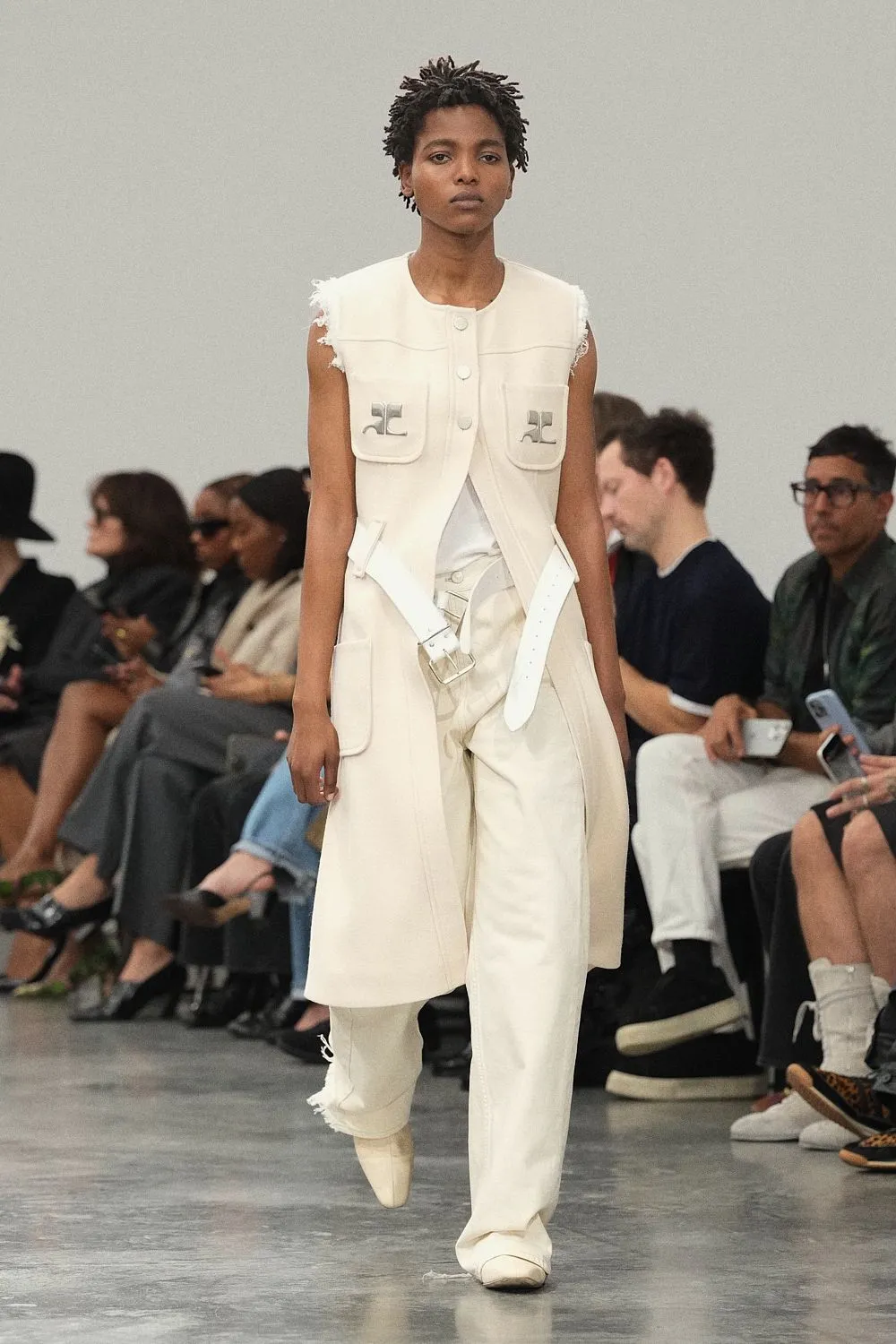
This is an especially useful way to read a runway for daily dressing. Instead of treating a complete look as an indivisible instruction, identify which component carries the argument. Here, that is the skirt. Everything around it can negotiate with the wearer’s preferences, workplace and occasion. A conventional white shirt may make an unusual skirt easier to use. A close-fitting top may emphasise its volume. Neither choice needs to claim that the runway was designed specifically for that situation.
## Bringing the proposition to Singapore
Our styling interpretation starts with contrast and restraint. Try one skirt with a pronounced surface or silhouette, then let the upper half remain visually calm. Before adding jewellery, consider whether the fastening or embellishment already supplies the focal point. A sculptural shoe can reinforce the look, but a simpler shoe may allow the garment’s own movement to register more clearly. This is an adaptation of the collection’s logic rather than a prediction about what Singapore shoppers will buy.
Practical selection still depends on the individual piece. Transparency, lining, fabric composition and freedom of movement matter more than a seasonal label. A lightweight-looking surface is not automatically comfortable outdoors. A pleasing photograph cannot establish whether a waistband sits comfortably when seated. The smartest response to a strongly conceived runway is to carry its useful idea into the fitting room, then test the clothing against actual routines.
A useful exercise is to judge the skirt without its runway companions. Would its outline still be compelling beside a top already in the wardrobe? Does its strongest detail remain visible when a shirt is untucked? Is the appeal concentrated in a photograph of the complete look, or does the object have enough character to support several combinations? These questions distinguish inspiration from dependence on styling. They also keep the wearer involved in the design conversation. A skirt that needs only one exact set of companions may still be a beautiful occasion piece, but it offers a different kind of value from one that encourages repeated interpretation. Prada’s focused proposition makes those alternatives unusually easy to discuss, because the central garment remains identifiable even when its surrounding context changes. The reader can begin from that stable point and decide how much experimentation feels personal.
## A wardrobe that leaves room for its owner
Prada’s concentration on one category also offers an antidote to the pressure of constant novelty. A viewer can return to a skirt already owned and change the relationship around it: a different proportion above, a less expected shoe below, or a more deliberate treatment of an existing closure. That does not make an older garment equivalent to the collection. It shows that a convincing design proposition can influence dressing without requiring a complete replacement of the wardrobe.
The lasting image of SS27 is therefore an invitation to pay attention. A familiar object can contain more possibilities than its name suggests. Prada makes the skirt visually assertive while leaving the outfit open to negotiation. For readers moving between work, dinner and the different demands of city life, that openness is valuable. The collection’s appeal rests on how precisely it establishes its subject and how many personal decisions that subject can accommodate.
Sources (checked 5 October 2026)
[1] Prada — SS 2027 Womenswear
https://www.prada.com/ww/en/pradasphere/fashion-shows/2027/ss-womenswear.html
[2] Who What Wear — Prada Makes Skirts the Star at S/S 27 Milan Fashion Week Show
https://www.whowhatwear.com/fashion/runway/prada-milan-fashion-week-spring-summer-2027
Gallery
7 images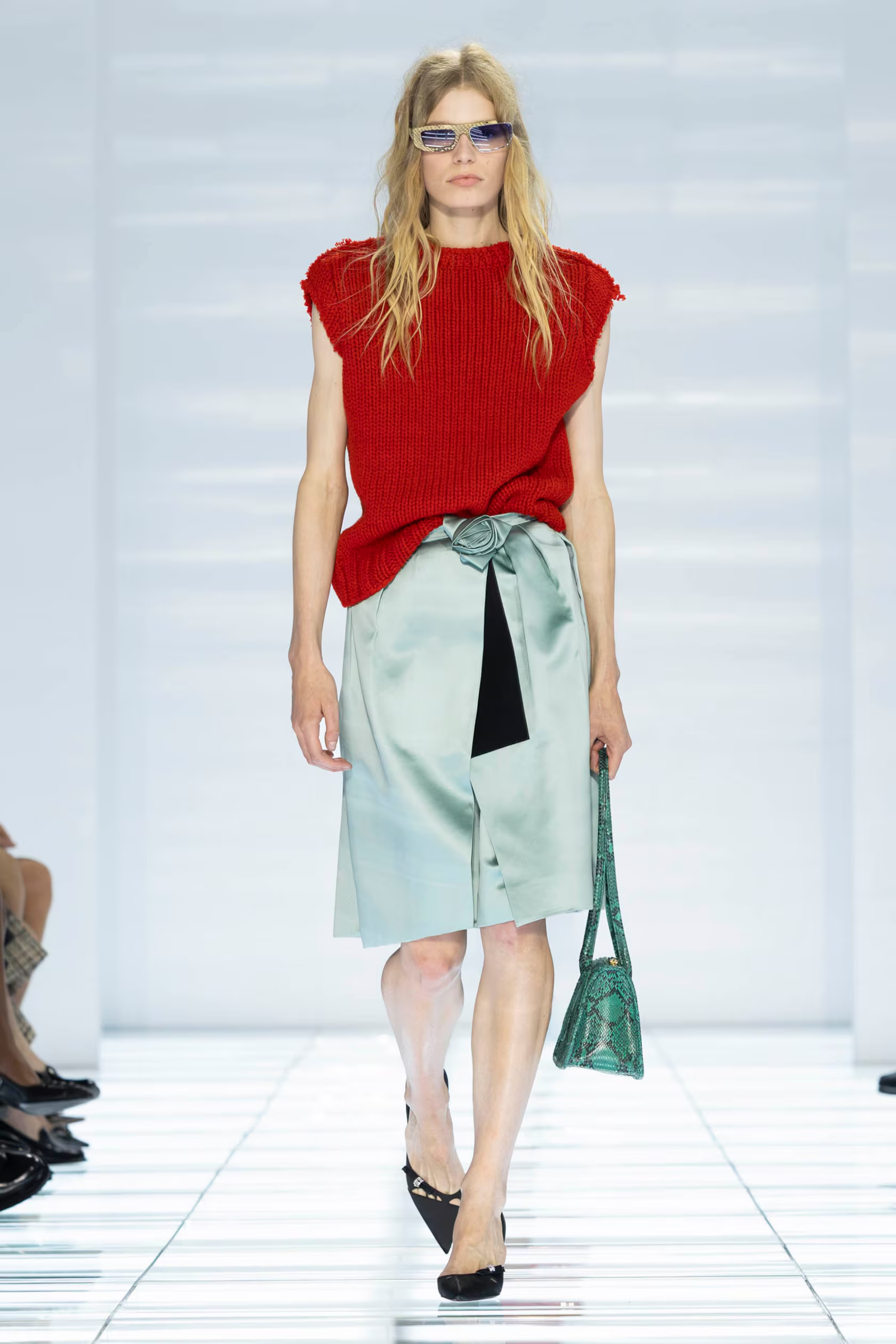
About the author
Nicole Cohen
Fashion editor and writer covering design, image-making and the creative networks connecting Southeast Asia.