Fashion / News · Trends · Shopping · Style
Moschino SS27 takes its new direction into the crowd
Loris Messina and Simone Rizzo stage their debut on a car-park roof, testing the house’s humour against the clothing of everyday life.
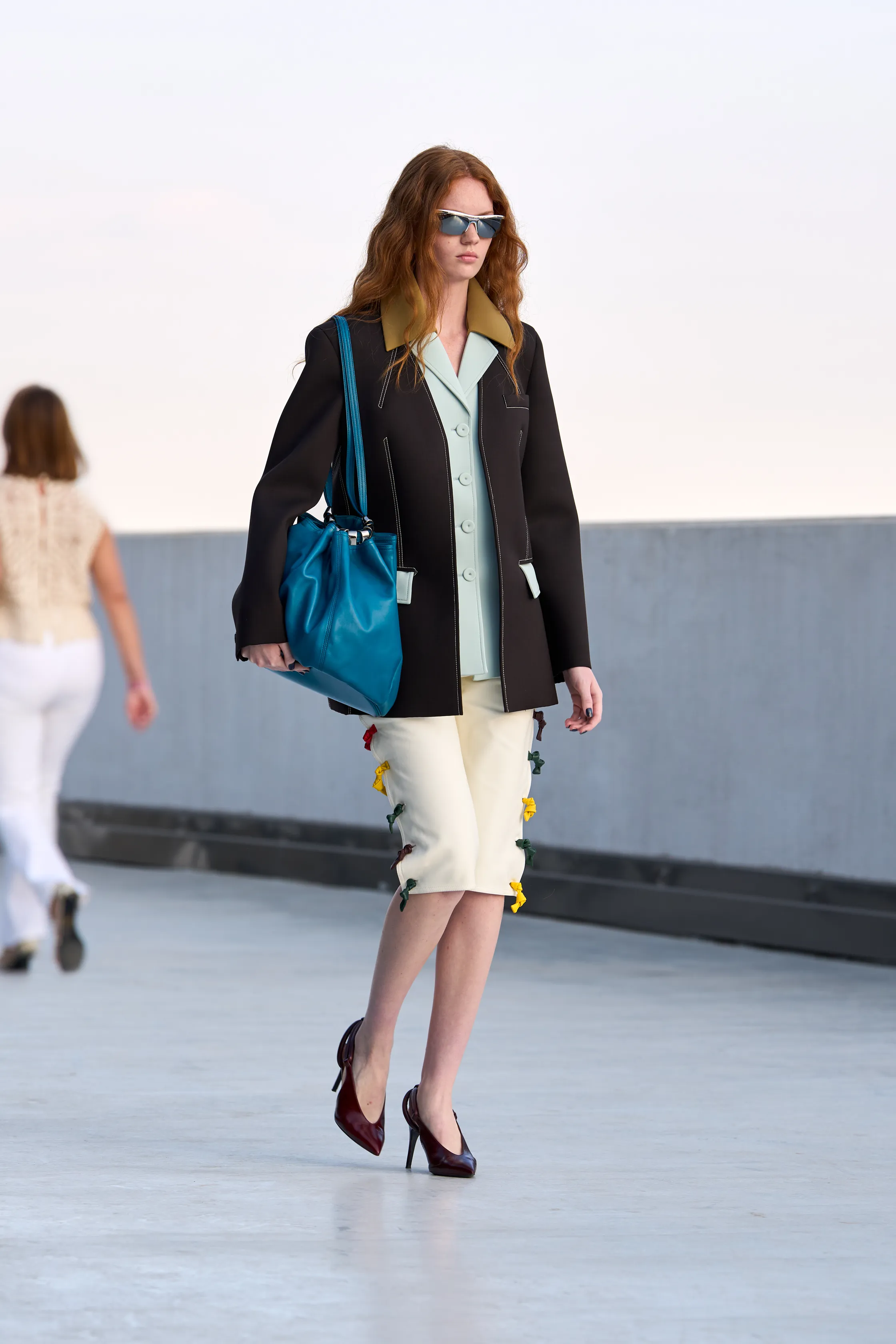
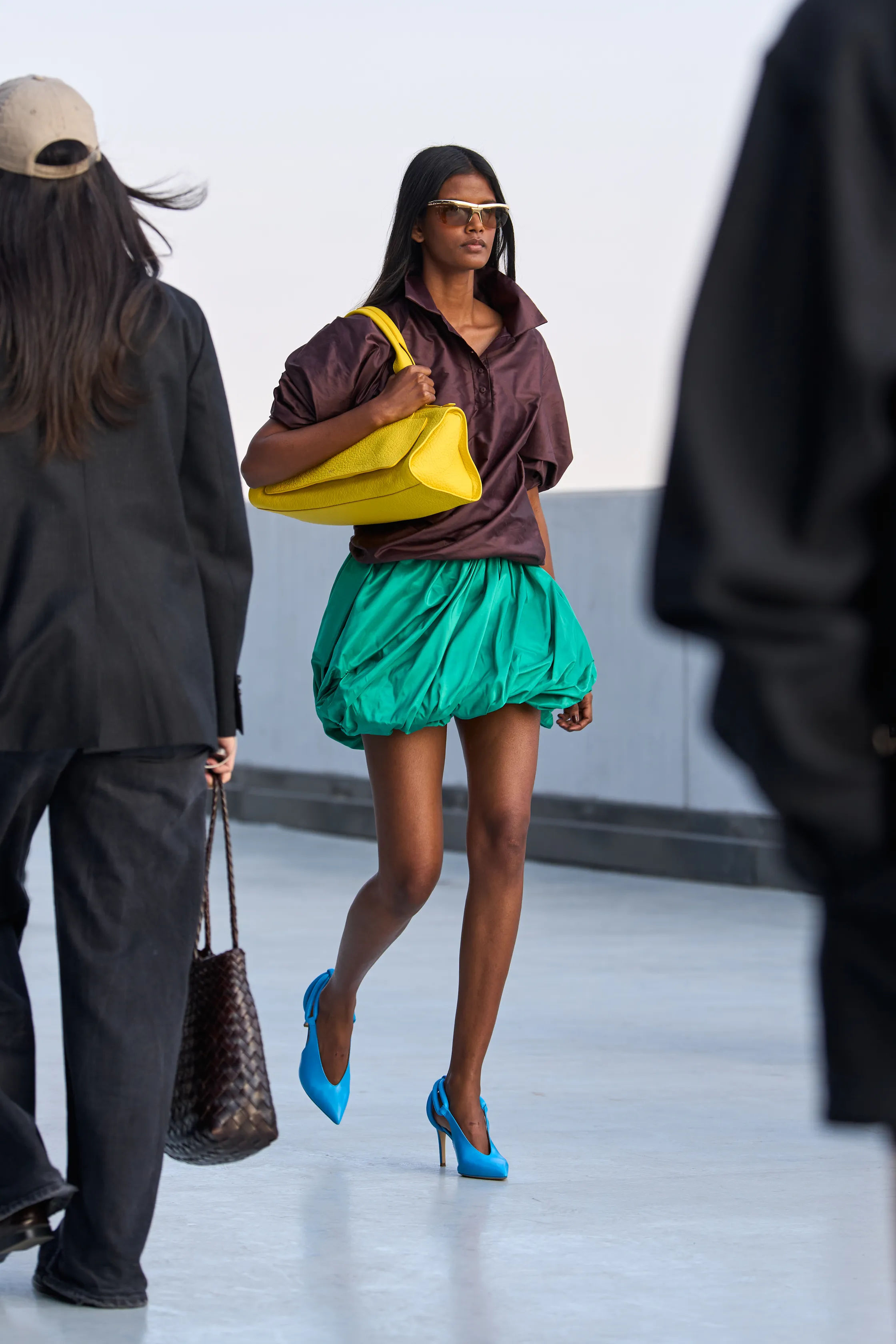
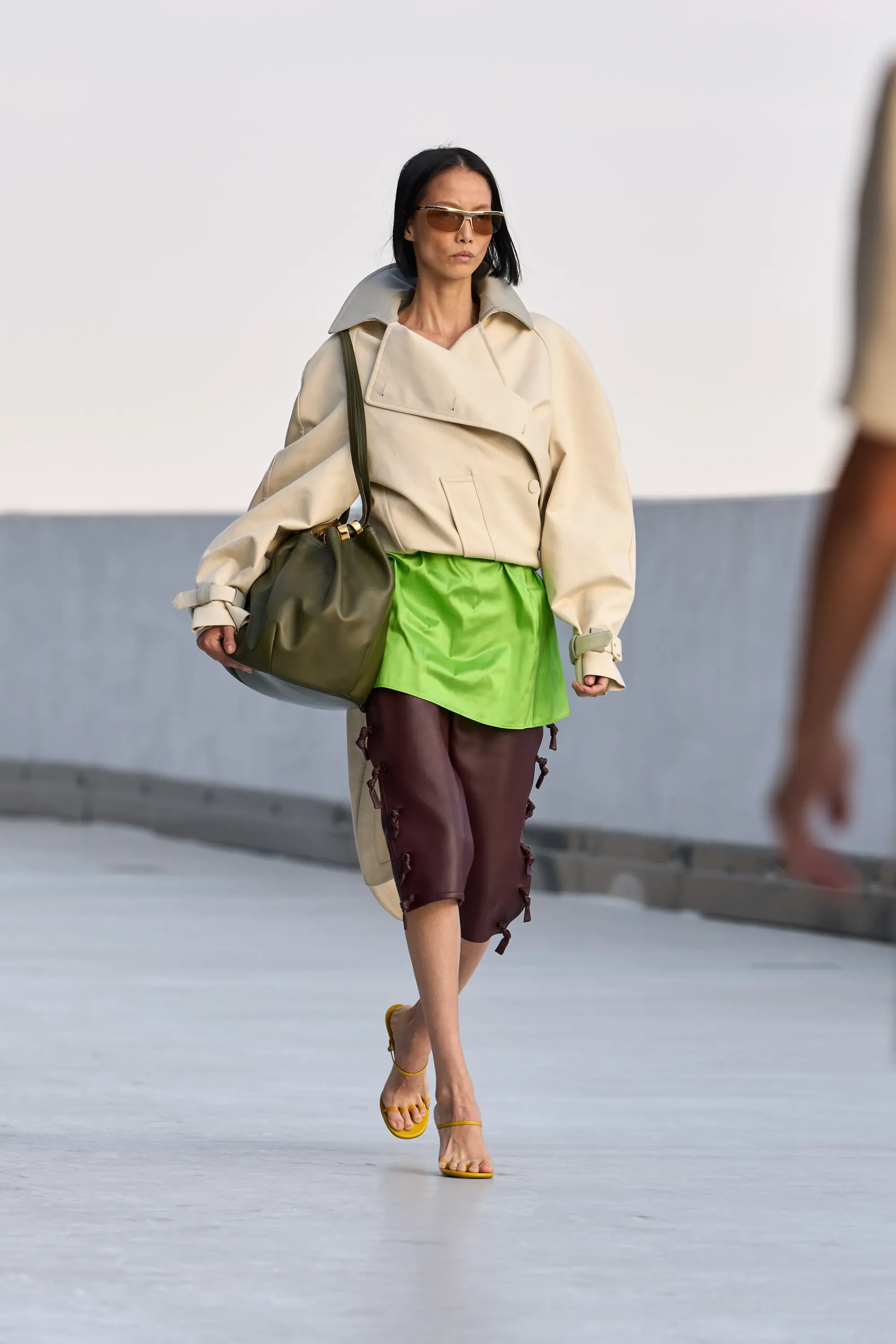
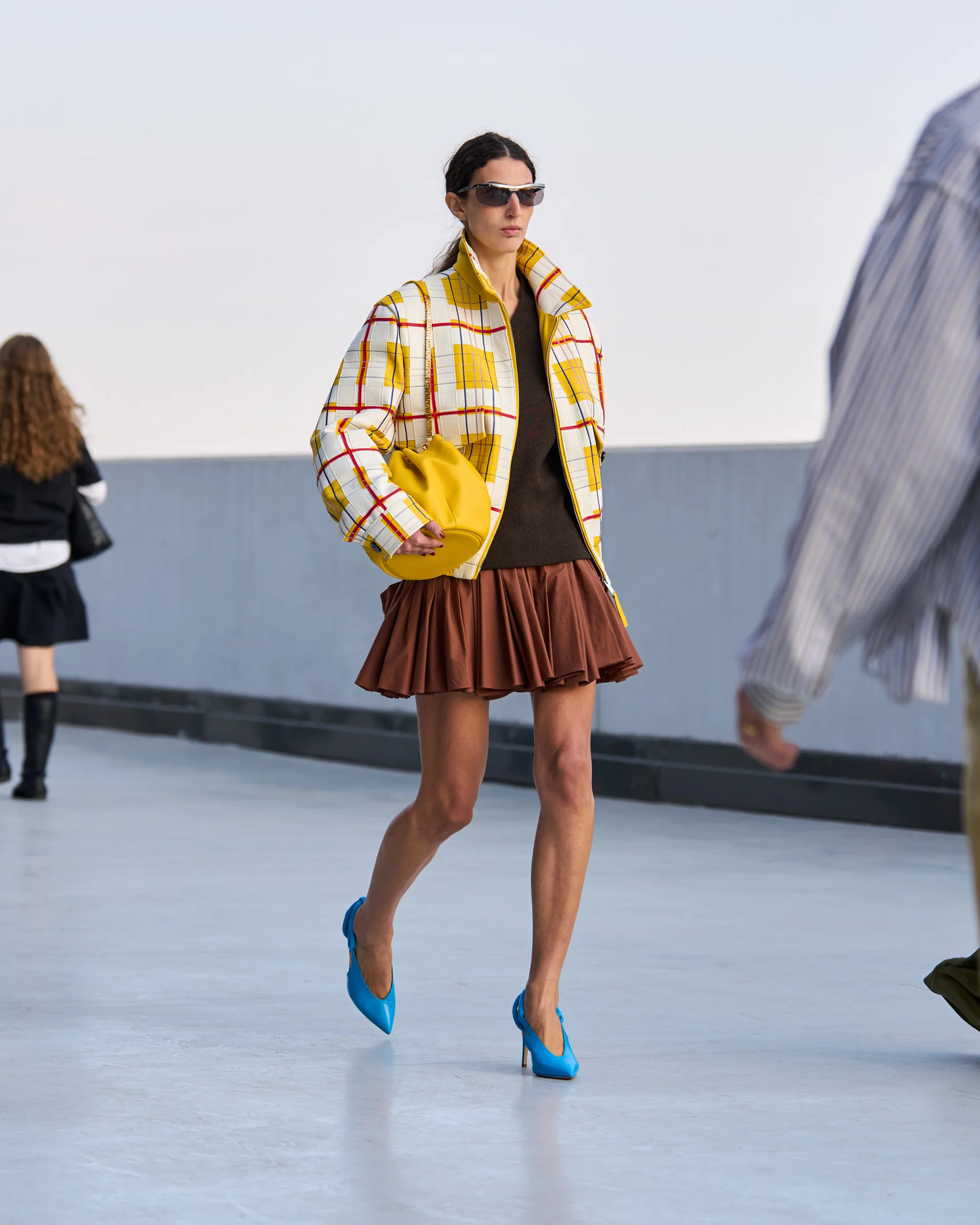
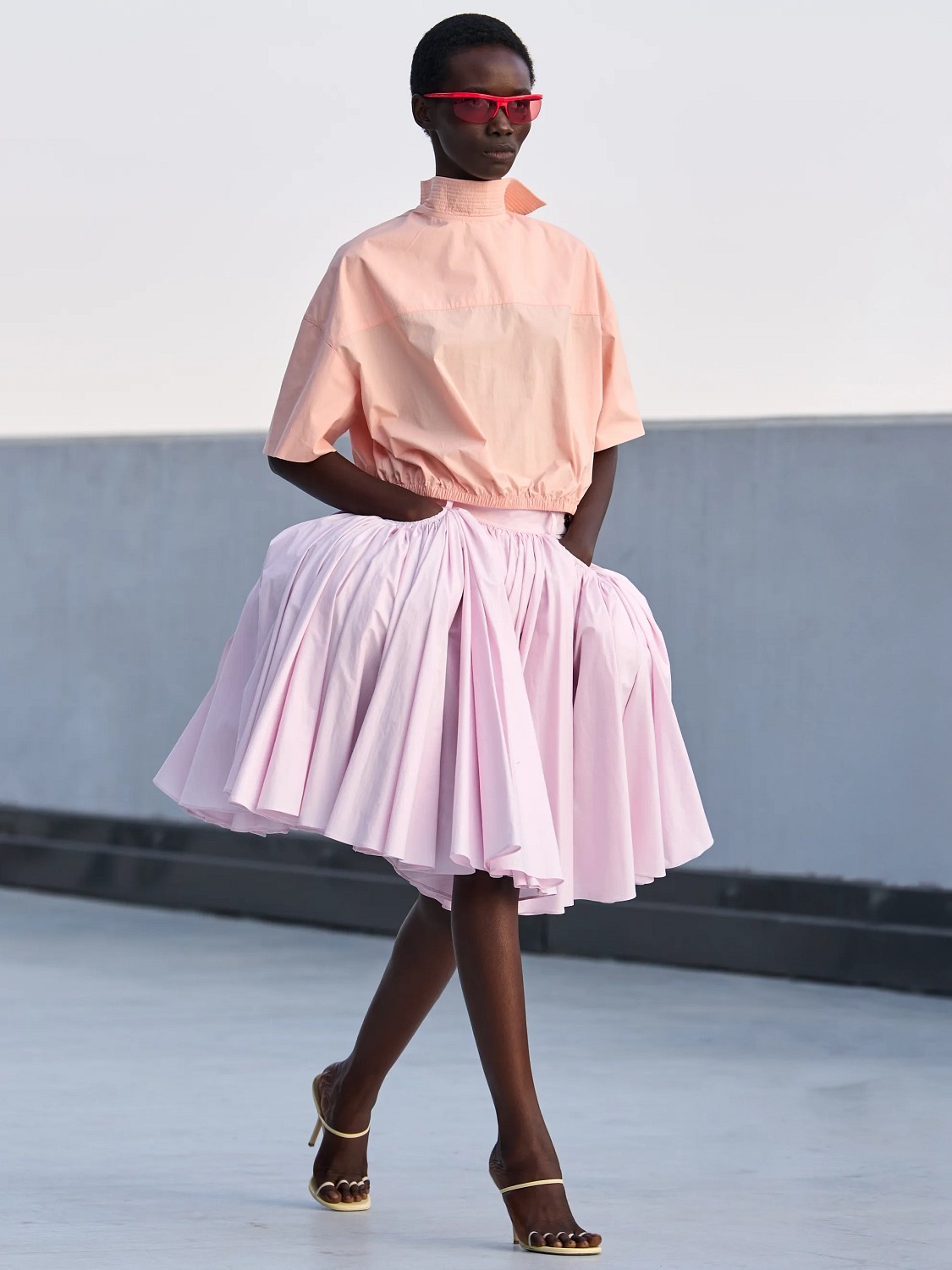
Moschino’s Spring/Summer 2027 debut under Loris Messina and Simone Rizzo placed the fashion show inside a moving crowd. On the roof of a Milan parking garage on 25 September 2026, hundreds of extras walked in the opposite direction to the models. The designers, known for their work at Sunnei, used an everyday-looking flow of people to frame their first collection for the house. The setting made a direct proposition: the clothes should be considered alongside the world in which they might actually be worn.
That is a meaningful starting point for StraitsG’s Singapore audience. A runway look is usually isolated from the visual noise of city life. Here, that noise became part of the presentation. An unusual outfit had to coexist with other bodies, different clothes and ordinary movement. The show encouraged a reader to ask how a design behaves when it leaves the clean space of the catwalk and becomes one image among many.
The crowd changes the frame
Conventional runway choreography gives the model a privileged visual position. The space is cleared, the pace controlled and the audience directed towards one look at a time. Moschino’s moving crowd complicated that hierarchy. It made the act of noticing less automatic and the distinction between designed spectacle and everyday appearance more porous.
Our interpretation is that this produces a useful critical test. A striking garment should not rely entirely on isolation to communicate its character. It can gain something when placed against ordinary clothing: a clearer proportion, a sharper joke or a stronger sense of plausibility. The crowd also changes the meaning of eccentricity. What seems extreme on a pristine runway may feel unexpectedly at home in a city where many different ways of dressing already coexist.
A house built to question the system
Moschino’s history gives the new designers a particular kind of permission. The house’s humour can address the conventions of fashion itself, including the way prestige and desirability are manufactured. Messina and Rizzo’s task is to keep that questioning spirit active without becoming custodians of a fixed set of famous jokes. Contemporary coverage identifies their intent to avoid simple imitation of Franco Moschino.
That is a difficult inheritance because humour ages differently from a silhouette. A recognisable cut can remain useful after decades, while a joke may become a nostalgic signal once everyone knows its punchline. A new creative direction needs to identify what the original humour was doing, then find a present-day way to perform that function. Questioning exaggerated bodies or the separation between fashion and daily life can continue the method without repeating the same visual gag.
Exaggeration as commentary
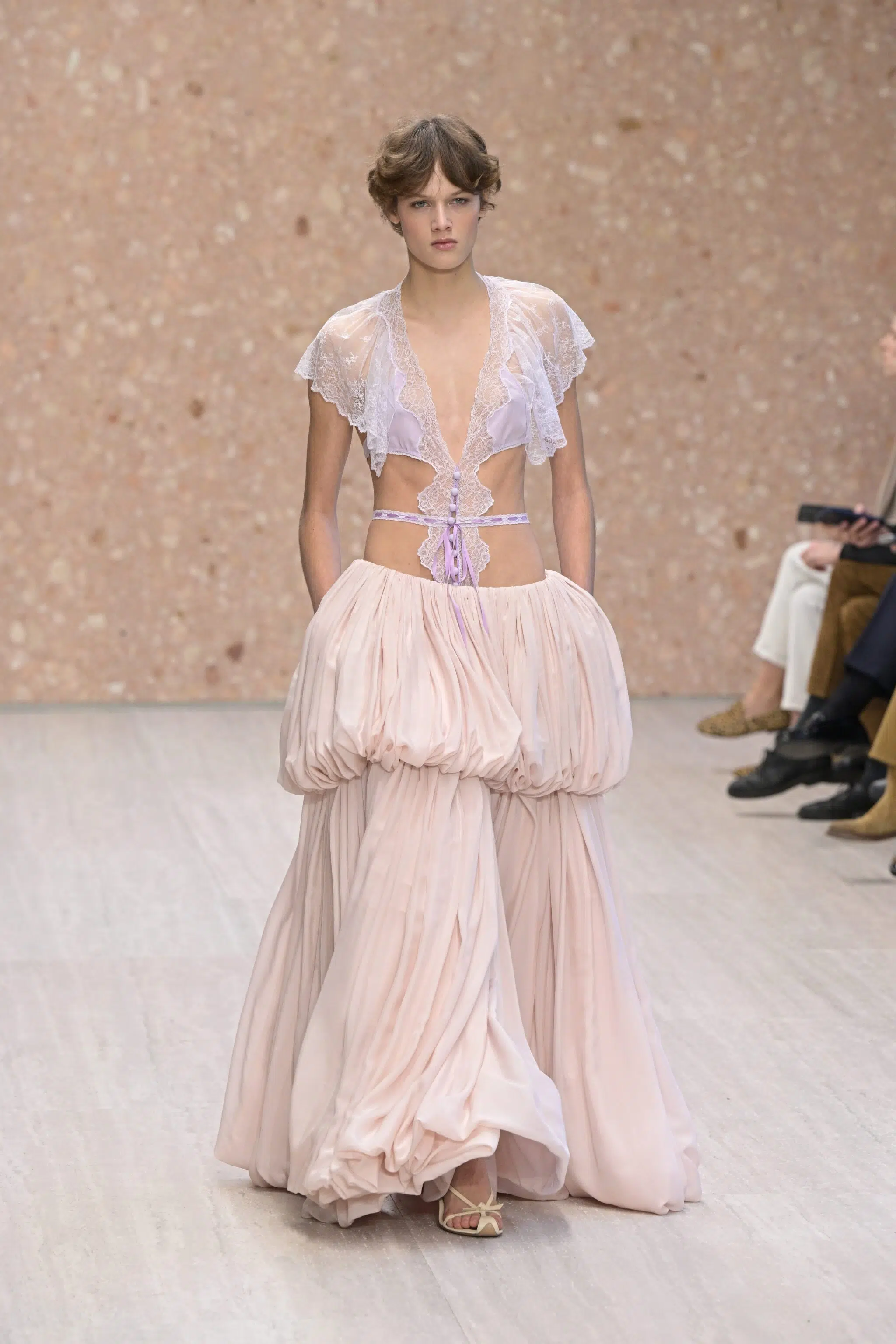
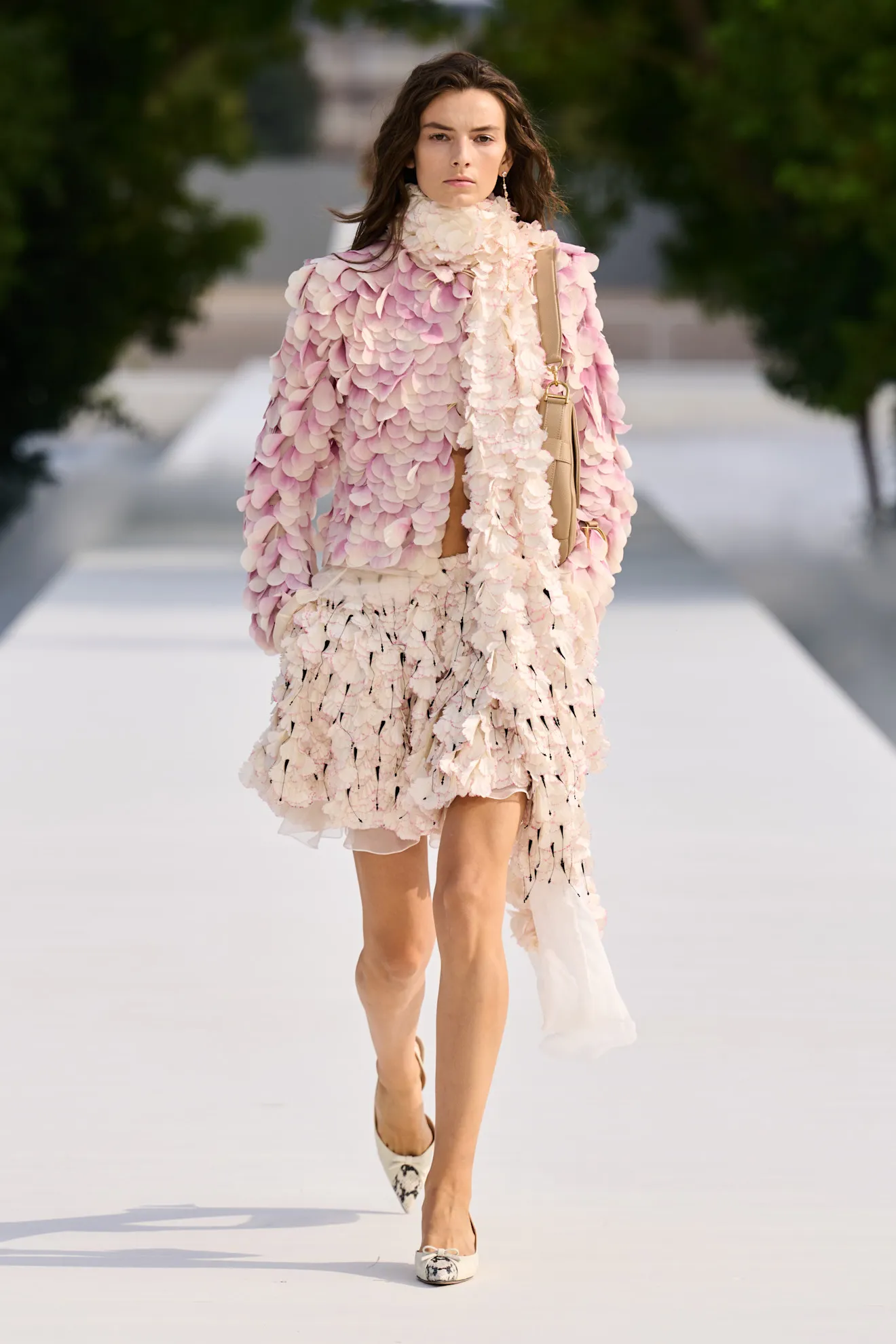
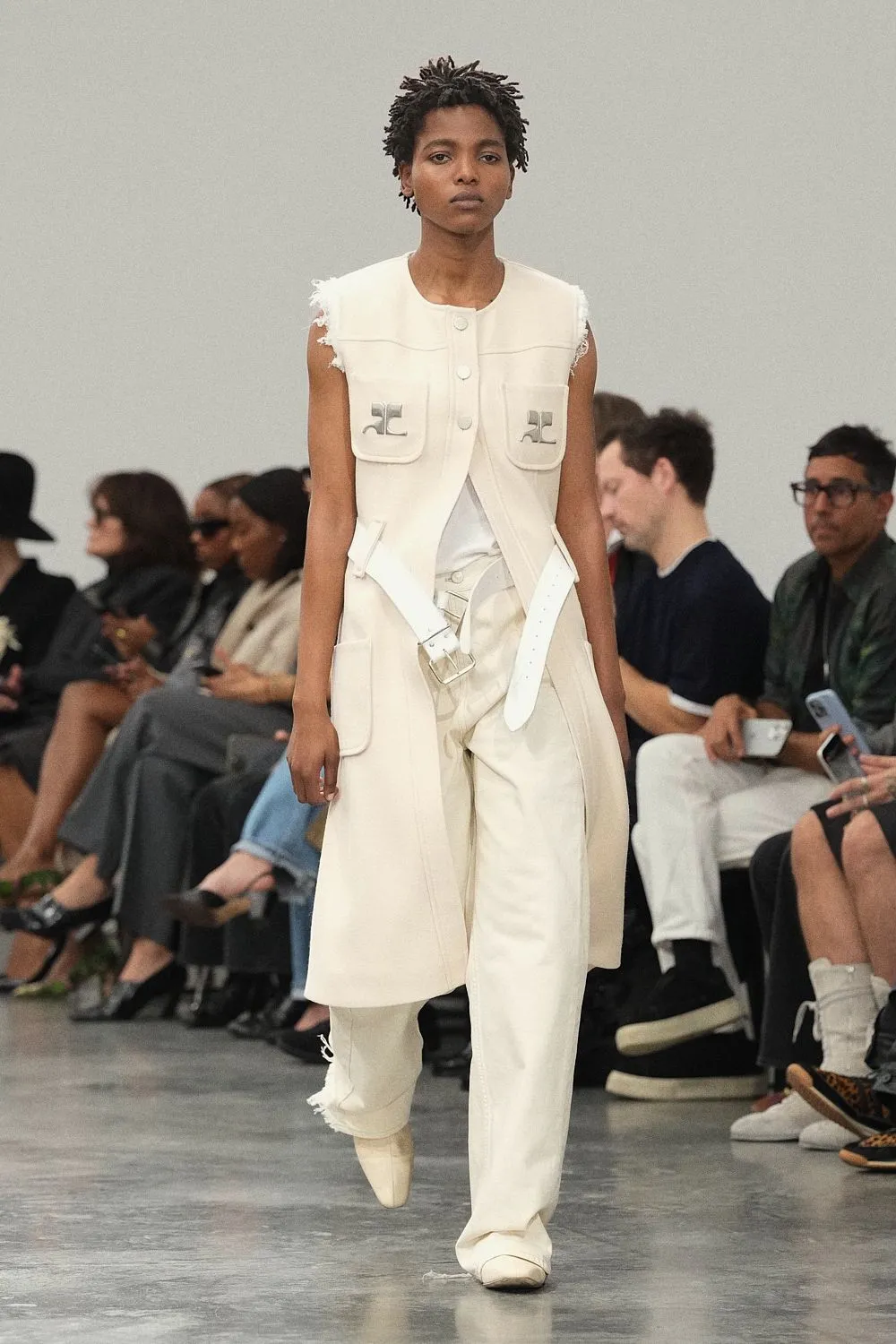
The debut included a dress with an exaggerated rear and a padded muscle T-shirt, alongside colourful, more everyday-looking clothing. These pieces put idealised body proportions into view as constructed images. Their humour depends on recognition: the audience understands the exaggeration because it echoes a familiar culture of bodily transformation and display. [1]
A joke in clothing still has to function as clothing, however. The critical distinction is between an object that creates an immediate image and one that retains interest after that first reaction. A witty proportion may offer a new way to inhabit a familiar garment. It may also become a single-use statement in the owner’s imagination. The collection is worth examining across both kinds of pieces, with the quieter clothes tested for character rather than dismissed because they do not deliver an instant punchline.
Real life can be a demanding audience
The everyday frame should not be confused with proof of universal accessibility. A collection can draw on real people while remaining expensive, selective or impractical for many situations. The presence of a crowd does not answer questions about price, availability or sizing. Those require separate information.
What the staging can do is improve the visual conversation. It places designs beside clothes that have already been chosen by people for other reasons. That comparison can expose overstatement or reveal unexpected ease. For a digital reader, it is also a reminder that fashion images are shaped by presentation conditions. A garment’s apparent authority may change once the background becomes less compliant. Moschino’s debut makes that change part of the event rather than leaving it to happen after the show.
A Singapore edit with a sense of humour
Our local interpretation would choose one playful element and allow it to interact with straightforward clothes. A witty top can work with a controlled lower half. A strong colour can be more effective when its shape is uncomplicated. An exaggerated detail may be enough without introducing another competing joke through every accessory. The wearer should determine whether the effect feels natural in their own day.
Humour in dressing also depends on comfort and confidence. An outfit that requires constant adjustment can make its joke feel imposed rather than enjoyable. Singapore’s climate and the practical demands of commuting make material and construction important checks. The runway’s crowd offers inspiration for thinking about clothes in motion, but the owner still needs to test the actual garment when walking, sitting and carrying everyday belongings. A lively image becomes more useful when it survives those ordinary actions.
A humorous garment also has more than one audience. The person wearing it may enjoy a private sense of play that is different from the reaction it produces in strangers. A joke that feels liberating to one wearer may feel uncomfortable to another. That variability is part of clothing’s social life and should remain available within a brand known for wit. The most useful object does not require everyone to respond identically. It can carry a clear design decision while allowing the owner to determine how publicly its humour is performed. Moschino’s crowd setting makes those competing readings more visible. The garment enters a shared field, but the wearer retains a particular relationship with it. This is where the collection’s interest in real people becomes meaningful: individuality includes the freedom to choose the scale and tone of one’s own joke.
The debut leaves a question open
A first collection can establish a method more convincingly than it establishes a complete wardrobe. Messina and Rizzo’s method is clear enough to discuss: use real-world visual friction, challenge the separation between fashion and people, and let humour respond to current conventions. The next test is how that approach develops across clothes with different levels of theatricality.
Moschino SS27 has immediate relevance for a Singapore digital magazine because its central setting is a shared urban field of vision. It asks what an unusual garment contributes to that field and how the person wearing it can remain visible as a person. The collection’s most promising direction lies in that relationship. A house with a history of provocation gains new energy when its jokes are tested against ordinary movement, competing images and the practical complexity of life outside the runway.
Gallery
5 images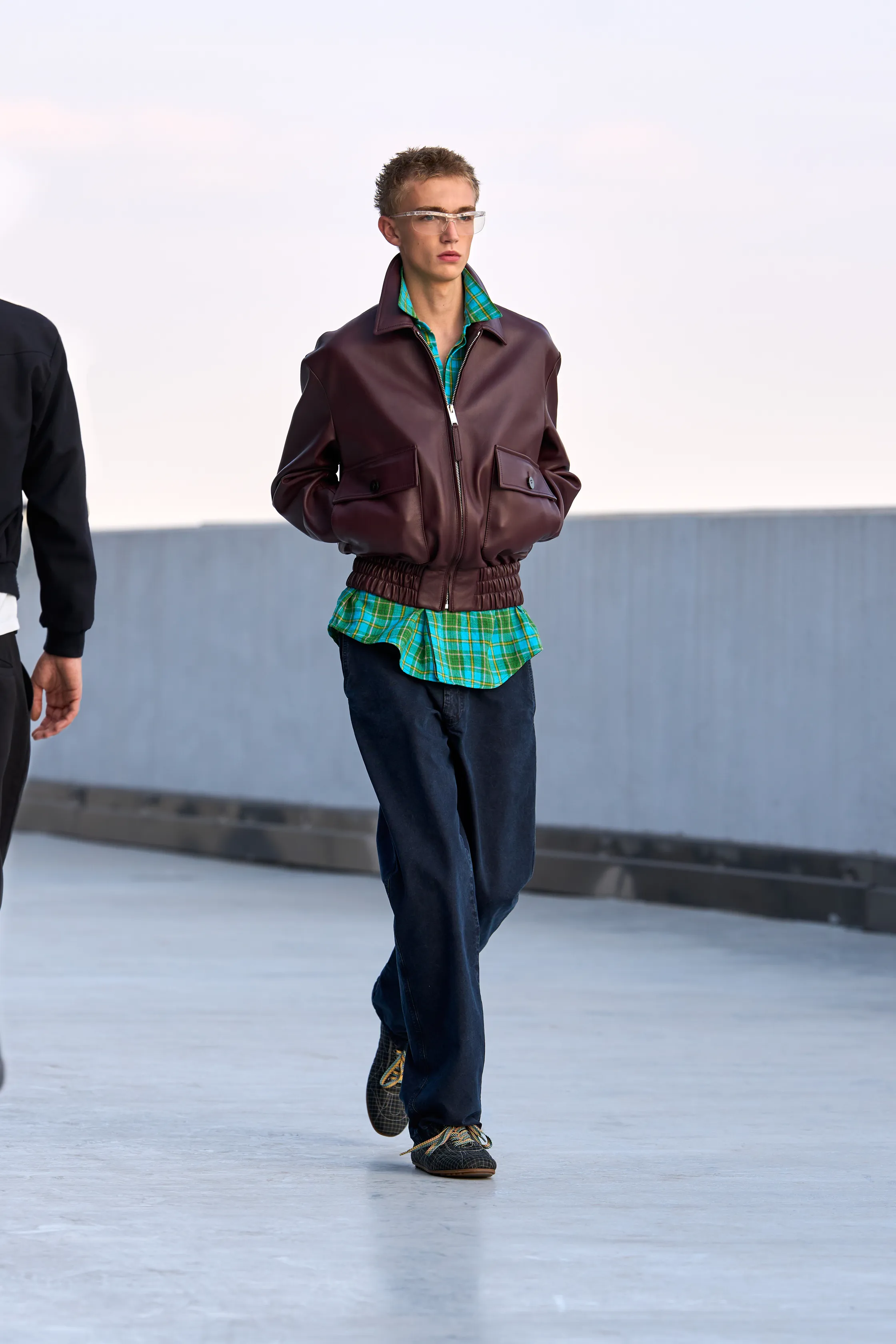
About the author
Nicole Cohen
Fashion editor and writer covering design, image-making and the creative networks connecting Southeast Asia.